
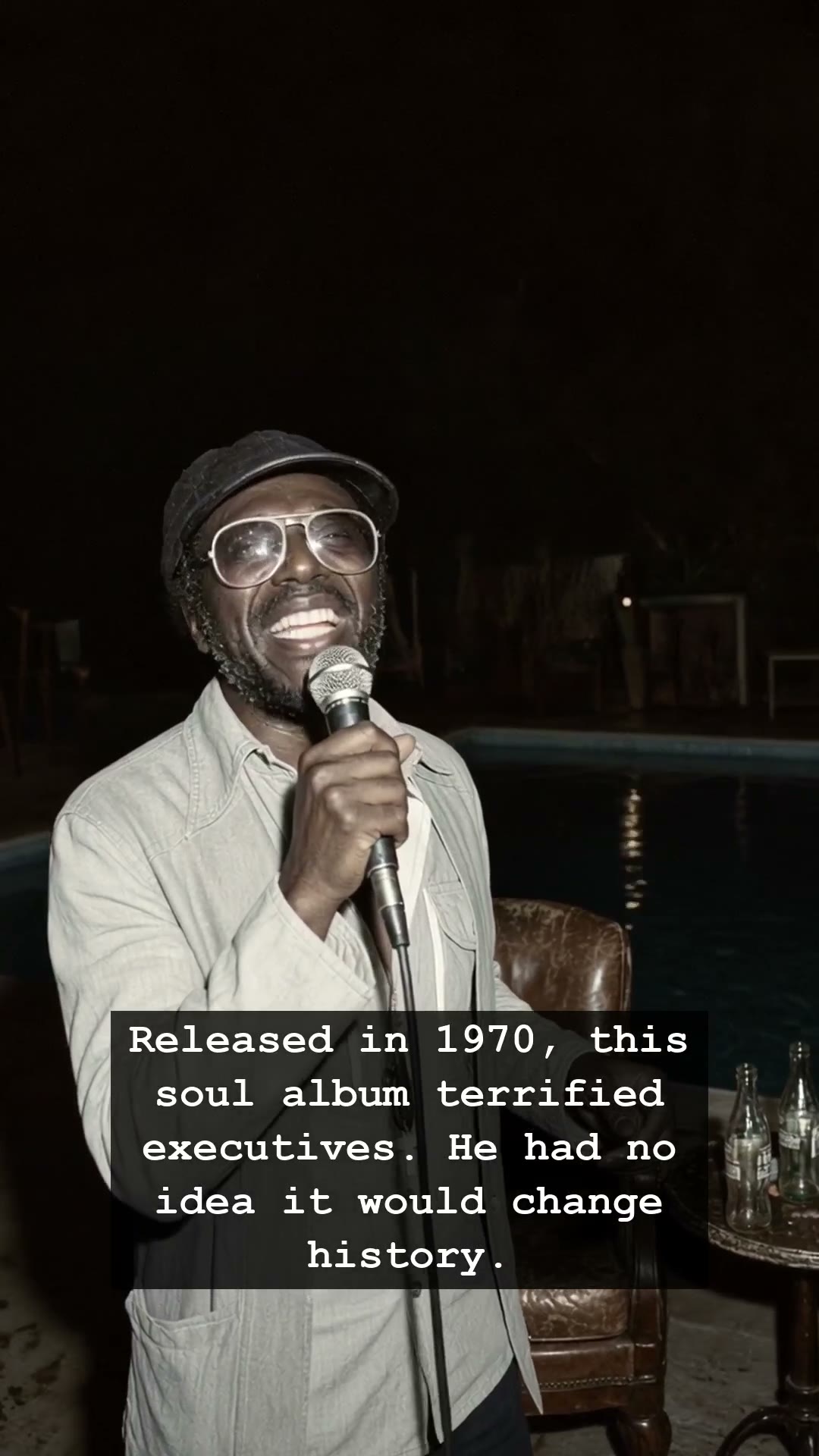
In 1970, the air in the United States was thick with tension, buzzing with the static of protest and the shifting tide of the Civil Rights Movement. Music executives in the ivory towers of record labels expected soulful, polished, and apolitical hits that would sit comfortably on a jukebox. Instead, they received a sonic earthquake from Curtis Mayfield. Walking away from his legendary group The Impressions at the height of their fame, Curtis Mayfield embarked on a solo career that did not just change his sound; it challenged the very fabric of American society. When he walked into the studio to record his self-titled debut album, he wasn’t looking for a radio-friendly hook; he was looking to hold a mirror up to a nation in pain.
Executives were genuinely terrified. They looked at the tracklist for Curtis Mayfield and saw something dangerous. It was raw, it was unfiltered, and it spoke of ghetto life, systemic inequality, and the relentless search for dignity in a world that often refused to provide it. The label heads feared this new direction would alienate the suburban listeners who were just starting to get comfortable with the smooth sounds of the era. They didn’t understand that Curtis Mayfield was tapping into an authentic pulse that no amount of corporate marketing could simulate. He had an uncanny ability to turn complex political strife into melodic gold that felt both urgent and timeless.
To listen to Curtis Mayfield during that era was to experience a visceral shift in consciousness. Before the digital saturation of modern life, before everyone had a Walkman or a streaming playlist, his music reached listeners through crackling transistor radios and shared vinyl sessions in smoke-filled living rooms. Tracks like Move On Up did not just fill space; they acted as anthems of perseverance. His sound was distinct—a blend of sharp, rhythmic guitar work, orchestrated soul, and lyrics that felt like street-corner wisdom passed down through generations. He wasn’t just performing; he was documenting history as it unfolded.
Behind the success of this monumental album lay a man burdened by the weight of his own conscience. The pressure was immense, often leading to the dark corners of fame where isolation reigns. Yet, Curtis Mayfield remained a beacon of integrity. He refused to soften his message, even when it meant risking his standing in an industry that preferred silence over subversion. His transition from the sweet vocal harmonies of the sixties to the gritty, psychedelic funk-soul of the seventies perfectly mirrored the country’s transition from idealism to the hard-fought reality of the post-Woodstock era.
Today, we look back at the work of Curtis Mayfield as a masterclass in artistic courage. His songs remain just as poignant as the day they were pressed onto wax. Every time a new generation discovers the rhythmic complexity of his compositions, the legacy of this visionary grows stronger. It is a reminder that music can indeed change the world, even when those in power try to turn down the volume. Do you remember the first time those soulful strings hit your ears, carrying the weight of a revolution?