
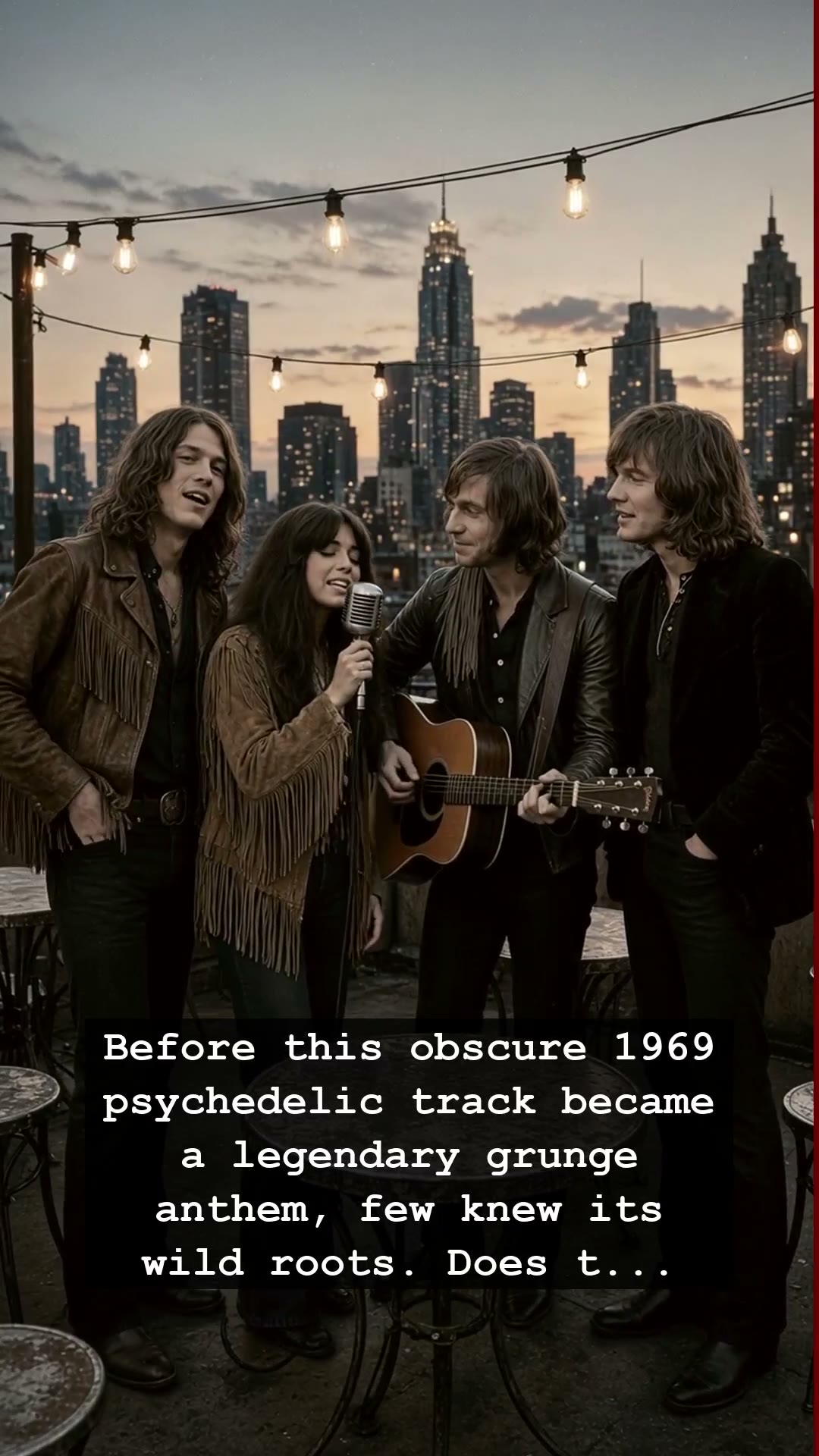
It started with a sitar riff so piercing and hypnotic that it threatened to snap the needles of vintage record players back in 1969. While the world was caught in the fever of Woodstock and the psychedelic revolution, a Dutch band named Shocking Blue was cooking up something uniquely volatile. Most people today remember the heavy, sludge-filled basslines of the nineties grunge era, but the true DNA of that sound wasn’t born in a damp Seattle garage. It was birthed in a dimly lit European studio, where the members of Shocking Blue unknowingly laid the blueprint for a musical revolution that would not reach its peak until decades later. The song, of course, is the legendary Love Buzz.
The members of Shocking Blue were masters of a specific kind of atmospheric dread. Led by the enigmatic Mariska Veres, whose voice carried a haunting, otherworldly quality, the band thrived on the fringes of the global charts. In 1969, their sound was a kaleidoscope of sitar-drenched psychedelia and raw, garage-rock tension. When the needle hit the vinyl on a jukebox, you weren’t just hearing a track; you were being pulled into a vortex of sound that felt both ancient and futuristic. It was the kind of music that demanded your full attention, a perfect reflection of the social upheaval and experimental spirit that defined the late sixties.
Fast forward to the early nineties. A generation raised on the slick polish of MTV and the fading echoes of disco was suddenly hungry for something visceral and real. Enter a legendary grunge trio from the Pacific Northwest, who found the dusty 1969 Shocking Blue record in a bargain bin. They didn’t just cover Love Buzz; they weaponized it. By stripping away the psychedelic sheen and replacing it with pure, unadulterated distortion, they turned an obscure Dutch track into the cornerstone of their explosive debut. It was a bridge between eras, connecting the hippies of the past to the disillusioned youth of the grunge movement.
The beauty of this transformation lies in the persistence of great art. Despite being separated by thousands of miles and two very different decades, the essence of the Shocking Blue composition remained intact. It captured that raw, dark energy that defines rock at its best. Behind the scenes, the story of Shocking Blue is one of immense talent often overshadowed by the sheer velocity of the changing music industry. They were the architects of a mood, creating a soundscape that felt lived-in and dangerous, long before it became a staple of modern alternative radio.
As you listen to the iconic bassline of Love Buzz today, let it transport you back to the crackle of a warm turntable needle and the flickering lights of a bygone era. Whether you were there in 1969 or discovering the track through the lens of nineties grunge, the power of Shocking Blue remains undeniable. It is a testament to how music never truly dies; it just waits for the right time to explode again. Does this heavy bassline take you back to a moment you thought you had forgotten?