
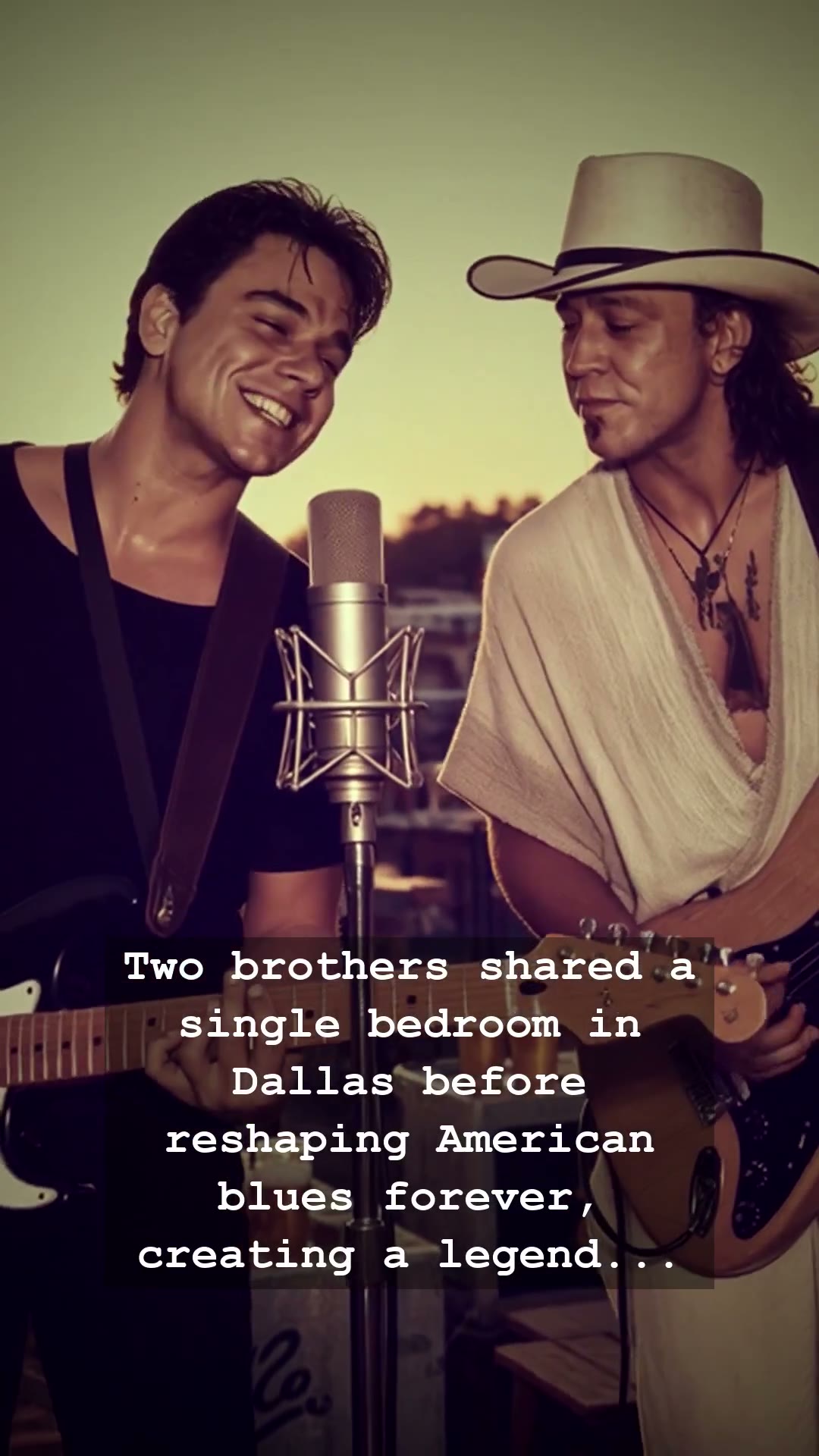
In a cramped, modest bedroom in Dallas, two brothers huddled over their guitars, unaware that the notes they were striking would eventually ignite a global blues revival. Before the fame, the sold-out arenas, and the neon glow of the eighties music scene, Stevie Ray Vaughan and Jimmie Vaughan were just two boys bound by a shared obsession. Their story is not just one of incredible musical prowess; it is a haunting narrative of a brotherhood that survived the harsh realities of the industry only to be fractured by an unspeakable tragedy. When we look back at the era dominated by the synthesized sounds of the radio, the raw, visceral power of the Vaughan bloodline stood as a defiant, soulful anomaly.
Stevie Ray Vaughan, with his iconic hat and battered Stratocaster, became the face of a Texas flood that washed away the pop-heavy fatigue of the mid-eighties. Yet, every string he bent carried the history of his older brother, Jimmie Vaughan. They grew up in a household where the blues wasn’t just a genre, but a language of survival. While Jimmie carved his own path with the Fabulous Thunderbirds, their professional lives were deeply intertwined. Their collaboration on the album Family Style remains a testament to a deep, unspoken connection—a conversation held in minor keys and blues scales that few siblings ever achieve.
However, the golden era of their partnership was tragically cut short. On a foggy night in August 1990, after a legendary performance alongside icons like Eric Clapton, the world lost Stevie Ray Vaughan in a devastating helicopter crash. The loss was not just the silencing of a guitar hero; it was the abrupt end of a creative symmetry that had defined the blues for a generation. Jimmie Vaughan was left to navigate the silence of a world that suddenly felt hollow without the rhythmic counterpoint he had practiced with his brother since their Dallas childhood.
This story still resonates today because it captures the ephemeral nature of greatness. Behind the legend of Stevie Ray Vaughan lies the vulnerability of a man who fought his own demons and lived for his instrument. The brothers represent a time when music felt dangerous, tactile, and deeply human—a stark contrast to the sterile, calculated production of modern hits. Their legacy is etched into the very fabric of rock and blues history, reminding us that true artistry often stems from the simplest beginnings shared in the quiet corners of a bedroom.
Today, listening to their music feels like stepping into a time machine. You can almost smell the cigarette smoke of the juke joints and feel the heat of the stage lights. Jimmie Vaughan continues to honor their shared heritage, keeping the fire alive long after the tragedy. As we look back at their contributions, we are reminded that while their time together was far too short, the sound they cultivated remains an immortal pillar of American music, echoing through the corridors of time for every aspiring guitarist who dares to bend a string in the dark.