
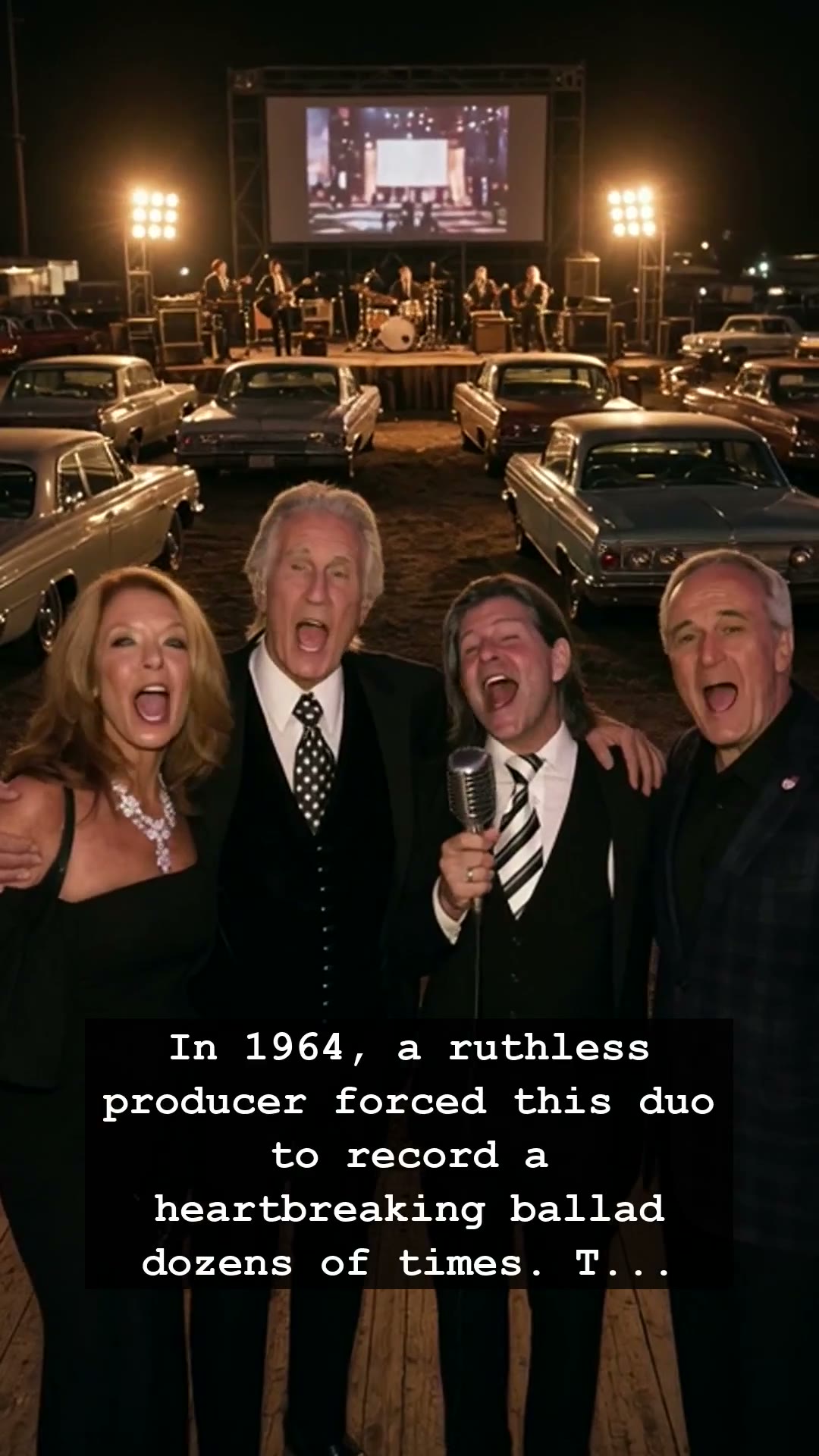
It was 1964, and the air in the recording studio was thick with a tension that felt more like a battlefield than a creative space. Bill Medley and Bobby Hatfield, the iconic duo known as The Righteous Brothers, stood before a microphone, their voices raw and trembling. They had no idea they were about to create one of the most enduring anthems in music history. The man orchestrating this madness was Phil Spector, a producer notorious for his Wall of Sound technique and an uncompromising, borderline cruel, demand for perfection. He didn’t just want a take; he wanted the soul of the performers laid bare, even if it meant pushing them to the absolute breaking point.
For hours on end, Spector forced the duo to repeat the lyrics of You’ve Lost That Lovin’ Feelin’ until their throats were scorched and their patience had vanished. He demanded take after take, relentlessly insisting that they tap into a reservoir of heartbreak that felt almost too deep to bear. Medley later recalled the grueling process as a form of psychological warfare, where every inflection had to be precise, and every gasp of air had to be perfectly placed. The Righteous Brothers were blue-eyed soul pioneers, but in that claustrophobic room, they were merely instruments in Spector’s grand, obsessive design. They were exhausted, frustrated, and ready to walk away from the microphone for good.
Yet, when the final master was pressed and sent out into the world, the result was nothing short of miraculous. The song surged through the radio waves, dominating the charts and becoming a permanent fixture of the golden era of American music. It captured the specific, aching longing of the mid-sixties, a time when the Jukebox was the heartbeat of every roadside diner and the promise of romance felt as fragile as a spinning 45-rpm record. The track hit a nerve, resonating with anyone who had ever stared at a dim ceiling light wondering where love had gone, transforming The Righteous Brothers from mere session singers into absolute legends of the soul genre.
Decades later, the song remains a haunting masterpiece. It evokes the neon-soaked memories of a bygone era, long before the digital age, when music was experienced through the crackle of a needle and the collective hum of a crowded dance floor. The sheer drama behind its creation adds a layer of sorrow to the performance that listeners can still feel today. When you hear that deep, resonant bass line open the song, it serves as a portal back to a time where production value was measured in sweat and tears rather than software presets. The Righteous Brothers achieved immortality not by accident, but by surviving the crucible of a perfectionist’s ego.
Looking back, we realize that the friction between the producer and the performers is exactly why the song sounds the way it does. It is a document of human exhaustion turned into artistic gold. We still listen because the song refuses to fade, much like the memories of the people who first heard it on their car radios while driving down endless stretches of American highway. Do you remember where you were when those opening chords first captured your heart?