
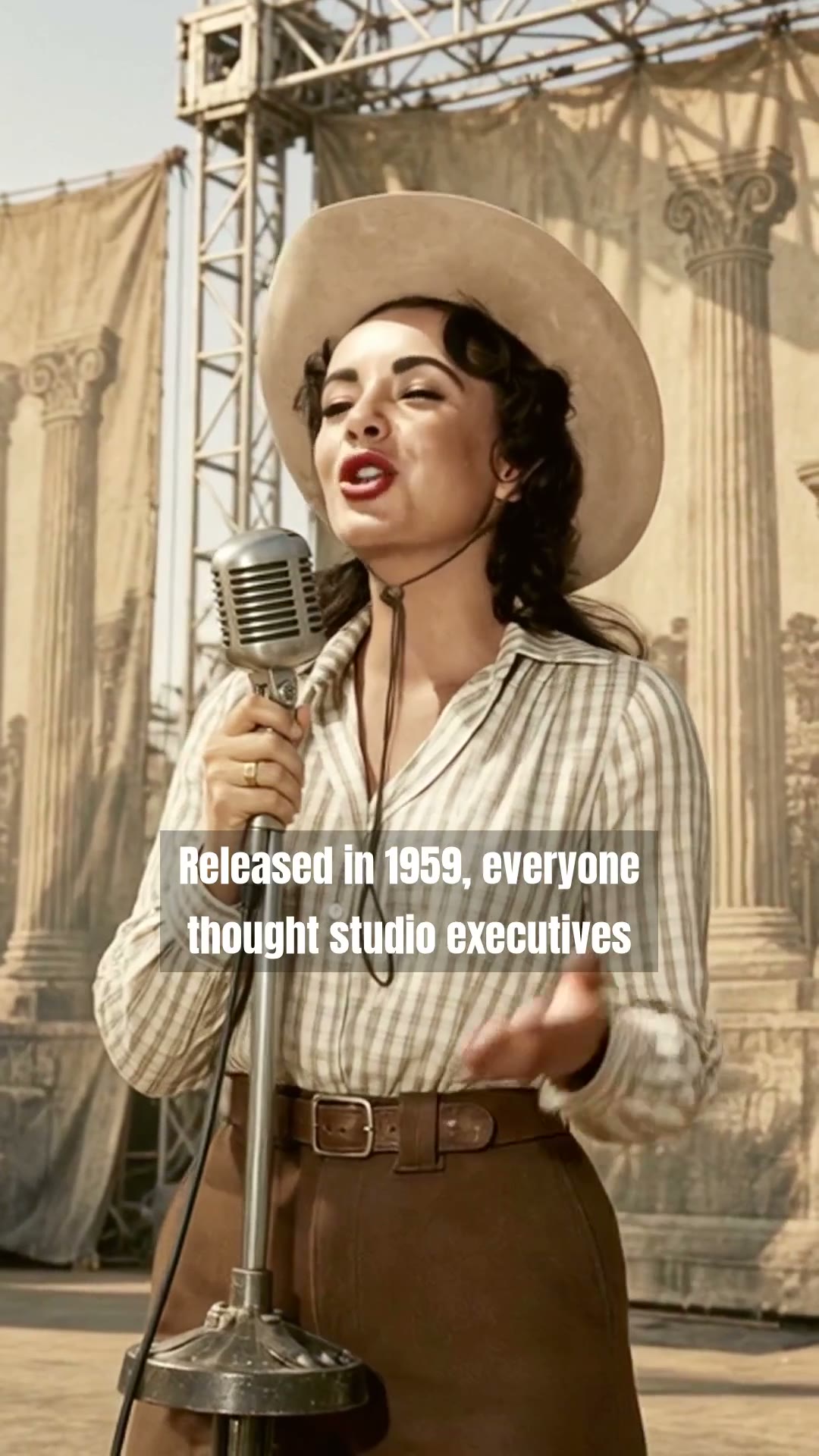
The year was 1959, and the iron grip of the studio system was beginning to fray at the edges. For decades, actors were treated as mere commodities, bound by rigid contracts that dictated every move of their professional lives. Then came Elizabeth Taylor, a woman whose beauty had long captivated the silver screen, but whose business acumen was about to shatter the status quo forever. When she demanded a million dollars for her role in Cleopatra, the industry gasped. It was considered an impossibility, a reckless gamble that defied the established hierarchy of the Golden Age of Hollywood. Yet, Elizabeth Taylor was not merely an actress; she was a force of nature who understood her own worth better than any executive in a boardroom.
To understand the magnitude of this demand, one must recall the era of the late fifties and early sixties. This was a time when the star system functioned like a finely tuned machine, with studios wielding absolute power over their stable of talent. Elizabeth Taylor stood at the peak of her fame, having already proven her mettle with powerful performances in Cat on a Hot Tin Roof and Suddenly, Last Summer. She possessed that rare, magnetic quality that could turn a simple film into a cultural phenomenon. Her courage to stand firm in her negotiations did not just secure her a payday; it reclaimed the autonomy of the performer in an industry that had long forgotten the human element behind the glamour.
Her victory sent shockwaves through the corridors of power, effectively ending the era where studios held all the cards. Elizabeth Taylor proved that the magic of the movies relied not on the accountants or the production lines, but on the legends whose faces adorned the billboards. She paved the path for future stars to demand fair compensation, forever altering the landscape of blockbuster cinema. This moment was not just about money; it was a defiant statement of self-respect that reverberated through the decades to follow, marking her as a pioneer of the craft who demanded that art be valued in its entirety.
Beyond the headlines and the million-dollar checks, Elizabeth Taylor remained a deeply human presence. Those of us who grew up during this golden period remember the hush that fell over the room when she appeared on the silver screen. Whether she was walking the red carpet or stepping onto a set to perfect her method acting, her presence was transformative. She carried the weight of her life experiences into every role, turning her personal trials into art that still speaks to the soul today. We watched her grow, falter, and rise again, finding in her life a reflection of our own passage through the years.
Even now, as we revisit her films on worn-out VHS tapes or in crisp digital restorations, the spark remains. Elizabeth Taylor was more than a screen icon; she was a trailblazer who refused to be diminished by an industry that favored tradition over progress. Her legacy is not just in the Oscars she won or the films she headlined, but in the doors she opened for every artist who followed. She taught us that staying true to oneself is the ultimate act of power. As the sun sets on the era that defined our youth, her light remains undimmed, a timeless reminder of a golden age that we are truly fortunate to have witnessed.