
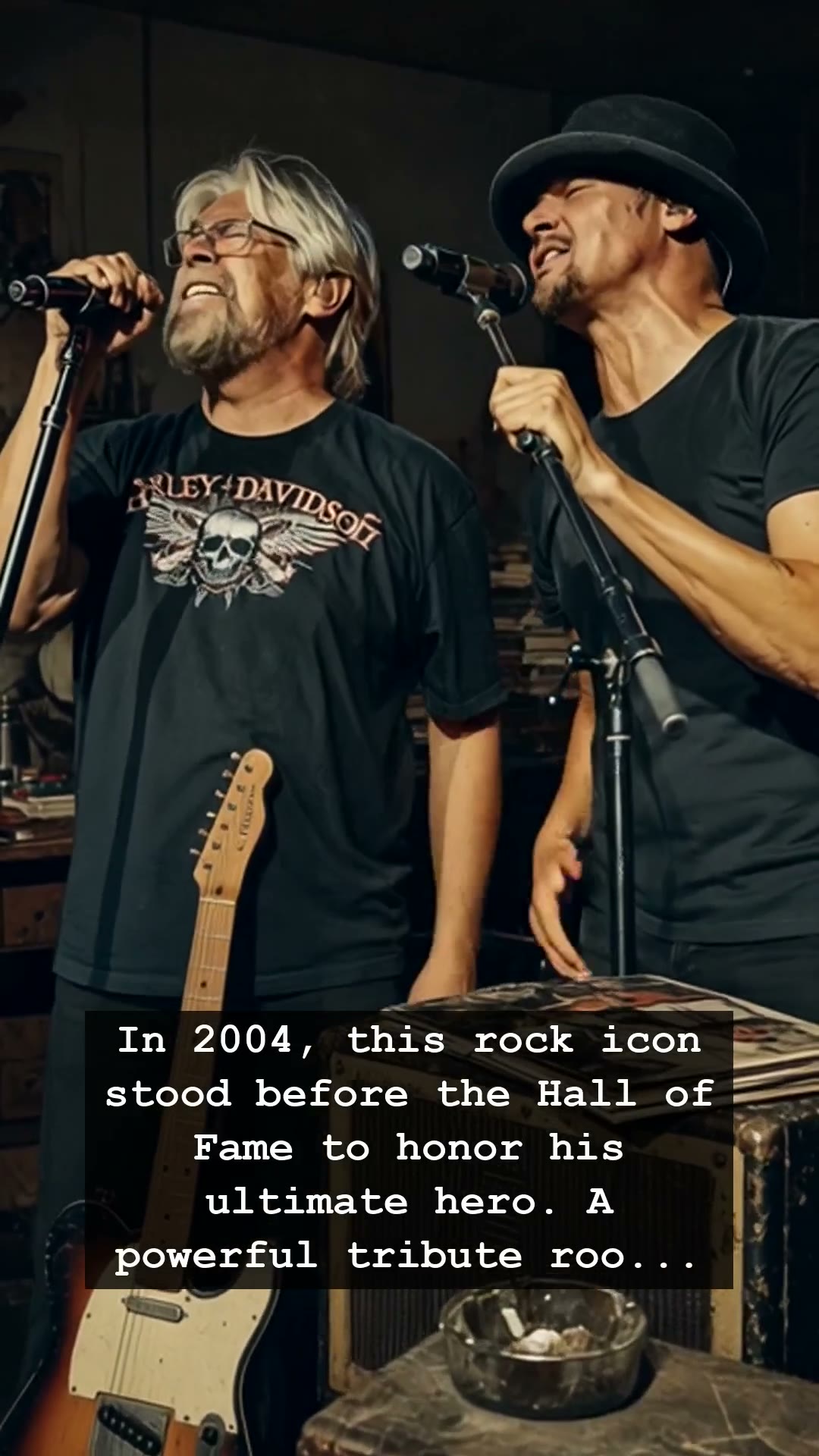
The year was 2004, and the air inside the Rock & Roll Hall of Fame crackled with a rare, heavy electricity. Kid Rock, usually known for his rowdy stage presence and genre-defying bravado, stood before the podium with a rare sense of reverence. He wasn’t there to incite a riot or tear down the house; he was there to honor a man who had built the very blueprint of his musical soul. As he spoke, the audience caught a glimpse of a different side of the Detroit rebel—a side defined by the gritty, blue-collar roots that bound him to his ultimate hero, Bob Seger.
To understand the gravity of that moment, you have to look back at the industrial landscape of Detroit in the late 1960s and 70s. This was a city that hummed with the sound of assembly lines and the soulful thrum of the Jukebox in every corner bar. Bob Seger emerged from this backdrop as the poet laureate of the working class. With tracks like Night Moves and Turn the Page, he captured the ache of late-night highways and the bittersweet sting of faded dreams. For a young Kid Rock, growing up in the shadow of the Motor City, Seger was more than just a musician; he was the sonic manifestation of a lifestyle.
Their brotherhood was forged not in the glamorous hills of Hollywood, but in the tough, honest taverns and local circuits where music was a survival mechanism. While the rest of the world was dancing under the strobe lights of Studio 54 or getting lost in the synth-pop revolution of the 80s, these two men stayed true to the visceral, guitar-driven storytelling that defined American heartland rock. This connection went far beyond simple mentorship. It was a shared language of resilience that translated across generations, proving that the raw honesty of rock and roll remains timeless.
During that 2004 induction ceremony, the atmosphere felt like a culmination of decades of hard work. Kid Rock’s tribute served as a reminder that the lineage of Detroit rock is sacred. He spoke of the lessons learned on the road and the quiet nights spent listening to records that shaped his own career. It was a moment of vulnerability that resonated with fans of all ages, bridging the gap between the classic boomers who followed Bob Seger from the start and the newer generation who found their edge through Kid Rock’s explosive style.
The legacy of Bob Seger and his influence on artists like Kid Rock continues to ripple through modern music. It reminds us that behind the arena tours and the massive stage shows, there is always the ghost of an old guitar and a story that needs to be told. Whether you remember the era of vinyl records or you discovered these legends through digital playlists, the heartbeat of Detroit remains loud and clear. Their story isn’t just about music; it’s about the enduring strength of brotherhood and the grit it takes to keep the spirit of rock and roll alive.