
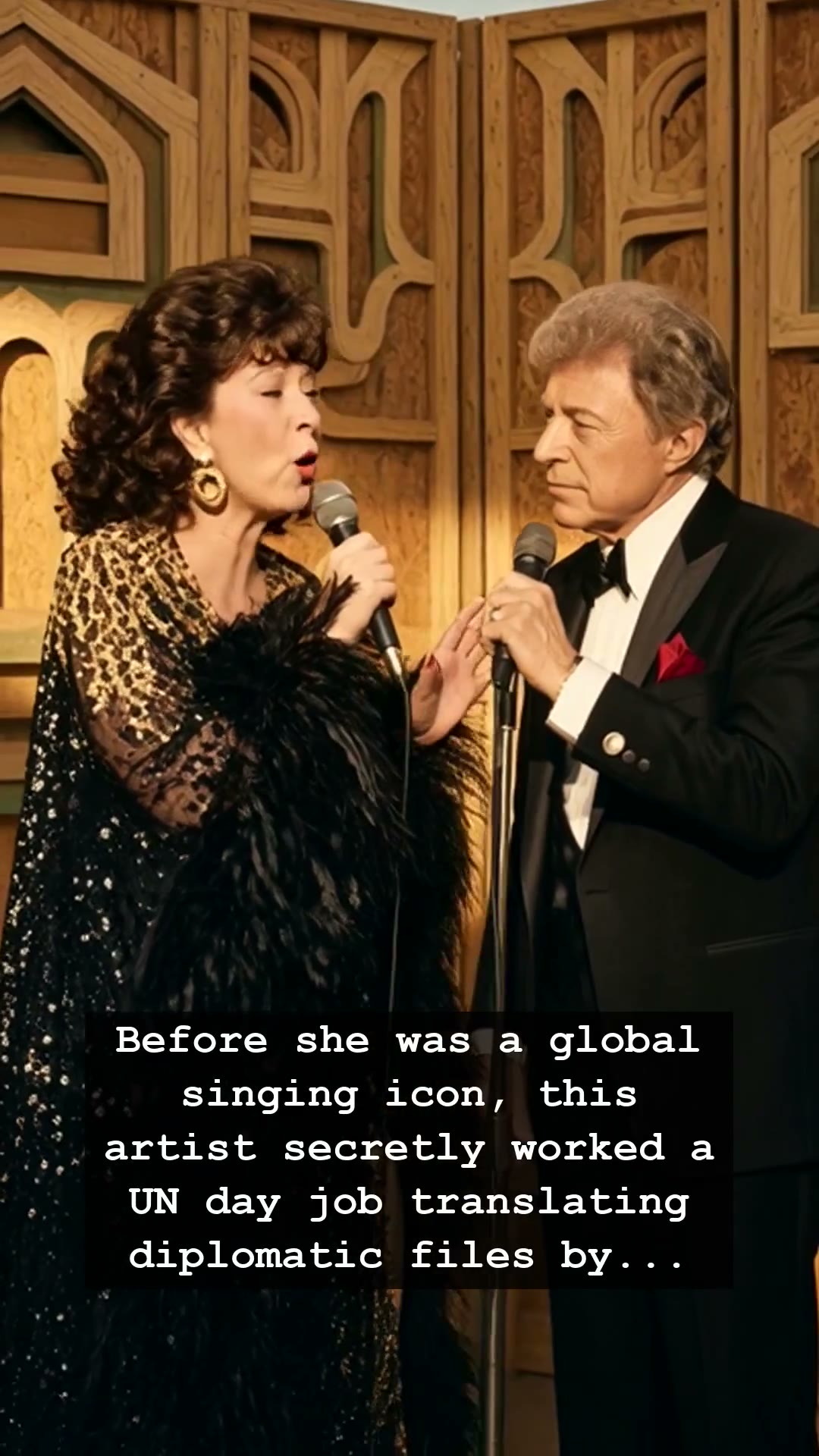
Most legends are born under the neon glare of the spotlight, but the story of Eydie Gormé began in the hushed, sterile corridors of the United Nations headquarters. Before her voice became the gold standard for American pop and Latin boleros, she lived a double life that would feel right at home in a Cold War thriller. By day, this Bronx-born talent sat behind a desk, meticulously translating diplomatic documents and navigating the complex linguistic webs of international relations. By night, she shed the professional facade, stepped into a shimmering gown, and transformed into the powerhouse vocalist who would define the golden era of big band and orchestral pop.
Imagine the contrast: while the world was gripped by the uncertainty of the post-war era, Eydie Gormé was balancing high-stakes global politics with the rhythmic pulse of the nightclub scene. She wasn’t just a singer; she was a woman of immense intellect who treated her musical craft with the same precision she brought to her UN transcripts. This wasn’t a time of digital streaming or the instant fame of social media. It was the era of the Jukebox, where a song had to command the room, and the smoke-filled lounge was the ultimate proving ground for raw talent. Her bilingual brilliance didn’t just help her navigate a day job; it allowed her to bridge cultural divides, eventually leading her to capture the hearts of audiences across the Americas.
Her climb to stardom remains one of the most compelling narratives of the mid-century music landscape. After leaving the diplomatic world behind, Eydie Gormé became a fixture on television variety shows and a chart-topping sensation alongside her husband, Steve Lawrence. Their chemistry was electric, a quintessential symbol of the American entertainment dream that defined the 1960s and 70s. Yet, even as she graced the stages of grand theaters and became a household name, you could still sense that grounded discipline—the legacy of a woman who knew what it was like to hold the secrets of world leaders in her hands before the sun went down.
Today, as we look back through the nostalgic lens of the pre-MTV era, her story resonates as a reminder of a different kind of ambition. In an age before the polished PR machines took over, Eydie Gormé built her reputation on sheer versatility and undeniable vocal prowess. She thrived in a world of brass sections, lush arrangements, and live broadcasts, bringing a level of sophistication to pop music that is rarely seen in our modern, synthetic soundscapes. Her career serves as a bridge between the world of international diplomacy and the emotional intimacy of a perfectly delivered ballad.
Whether she was tackling a soulful bolero or a soaring standard, her voice possessed a warmth that felt like a familiar memory, even if you were hearing it for the first time. The dual existence of Eydie Gormé—the translator turned icon—remains a fascinating piece of musical history, reminding us that behind every great hit, there is often a life far more complex and intriguing than the music itself. She remains a testament to the idea that with enough talent and a little bit of mystery, you can truly write your own destiny.