
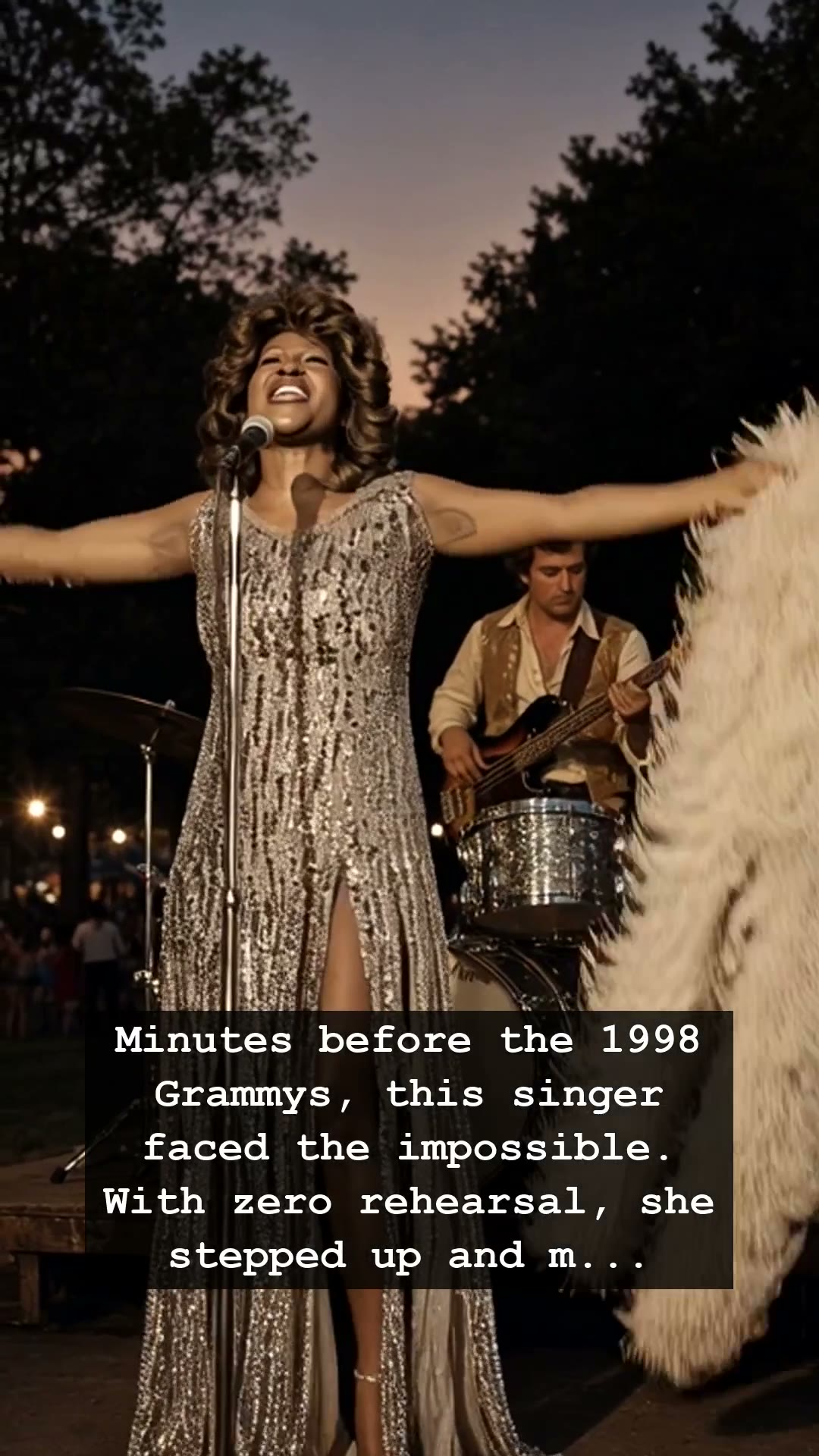
The year was 1998, and the atmosphere at the Grammy Awards was thick with nervous energy. Everyone was waiting for the centerpiece performance: Luciano Pavarotti, the world’s most celebrated tenor, was set to perform the soaring, operatic aria Nessun Dorma. But behind the glitz of the stage, a crisis was unfolding. Minutes before the curtain was supposed to rise, Pavarotti was struck by a severe sore throat, leaving the production team in a state of sheer panic. The show had to go on, but who could possibly fill those shoes? In the heart of the chaos, the Queen of Soul, Aretha Franklin, stepped forward with an offer that sounded impossible. With zero rehearsal and not a single note of preparation, she decided to take on the most challenging aria in the classical canon.
Aretha Franklin was already a titan of American music, a voice that had defined the Motown and Soul era, but opera was a different beast entirely. As she walked onto the stage, the audience in the Shrine Auditorium held their collective breath. You could feel the weight of the moment; this wasn’t just a performance, it was a high-wire act of artistic courage. As she began to sing, the room seemed to shrink. She didn’t just mimic the tenor’s delivery; she infused the aria with her own gospel-trained grit, finding the perfect key on the fly. It was a masterclass in raw, unfiltered talent that left even the most seasoned critics speechless.
This miraculous moment remains one of the most iconic turning points in Grammy history. For those of us who grew up with the steady sound of her voice on the radio, it wasn’t just a display of vocal range; it was a reminder of why Aretha Franklin earned the crown. Her ability to pivot from the rhythmic soul hits that filled jukeboxes across America to the demanding heights of Italian opera proved that she was a musician without borders. It was a stark contrast to the polished, synth-heavy pop production that had dominated the airwaves during the MTV era of the late 80s and 90s.
Behind this triumph lay the reality of a life lived in the spotlight, where the pressures of fame often demand the superhuman. Throughout her career, Aretha Franklin navigated the turbulent waters of industry expectations, personal heartbreak, and the grueling pace of touring, yet she always managed to return to the music. That night in 1998, she transcended the drama of the backstage collapse, turning a potential disaster into a moment of pure, resonating history that feels just as powerful today.
Watching the footage now, you can still feel the electricity in the room. It is a testament to an artist who understood that music is not just about perfection; it is about presence. Long after the lights of the 1998 Grammys faded, the echo of that performance persists. It serves as a beautiful, haunting reminder that even legends have to face the impossible, and sometimes, that is exactly when they shine the brightest.