
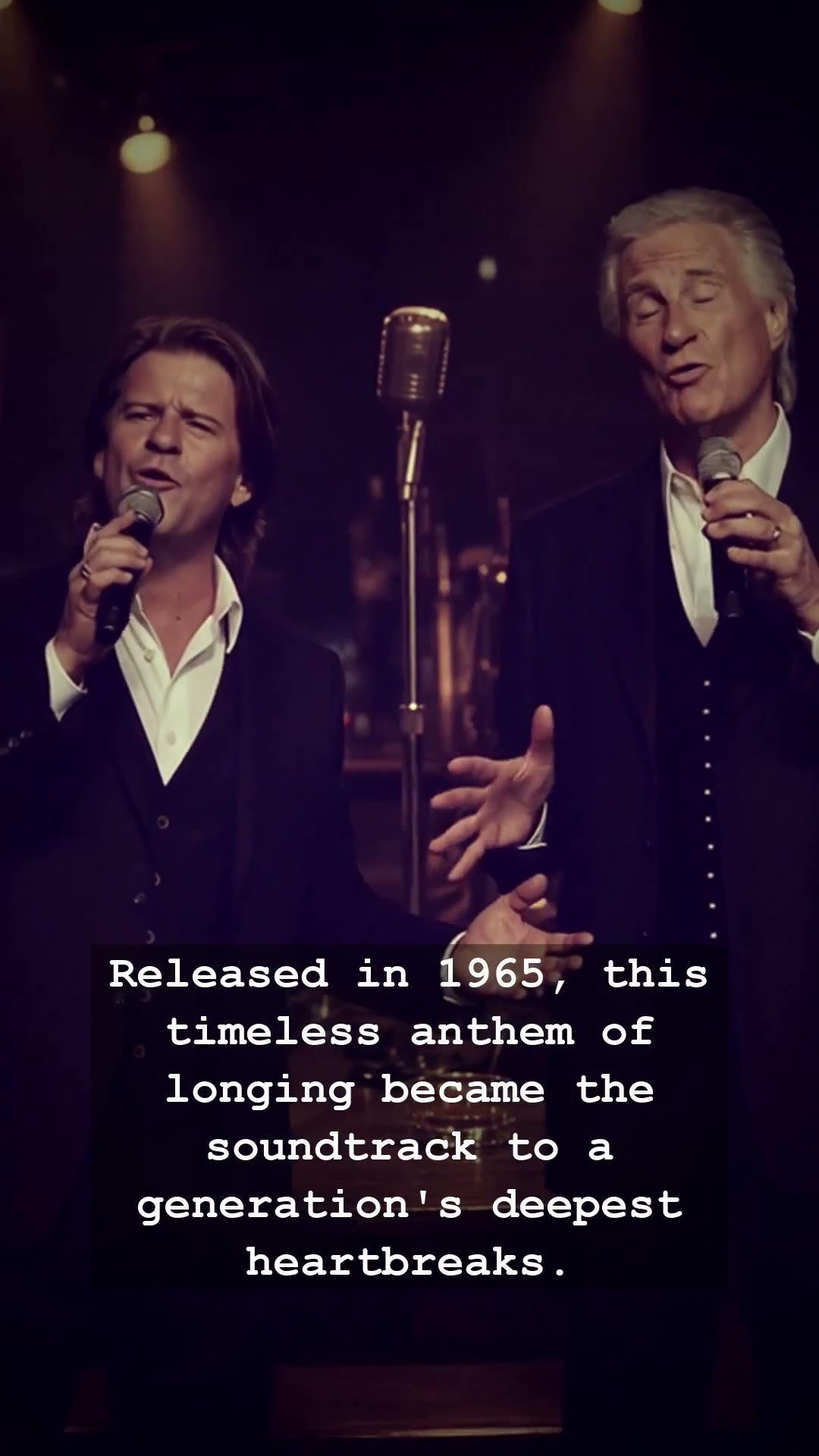
The needle drops on the vinyl, a soft crackle fills the room, and suddenly, you are transported back to 1965. Before the neon lights of Studio 54 or the static roar of the MTV generation, there was a voice that seemed to pull the very air from your lungs. The Righteous Brothers captured a specific kind of ache with their masterpiece, Unchained Melody. It was not just a song; it was a sonic photograph of a generation’s deepest longings, recorded during an era when radio waves were the primary bridge between lonely hearts in the dark.
While many believe Bill Medley and Bobby Hatfield were brothers, they were simply two blue-eyed soul singers from California who possessed an uncanny ability to turn heartbreak into harmony. The song itself was not new, but when it hit the airwaves in 1965, it transcended its origins. As the track plays, you can almost hear the ghost of the jukebox humming in a roadside diner, the smell of cigarette smoke clinging to leather booths, and the feeling of a first love slipping through your fingers. The power of The Righteous Brothers lay in their authenticity; they did not just sing about yearning, they embodied it.
Behind the velvet-smooth production of the era, however, lay the grind of the music industry. The Righteous Brothers navigated a landscape that was rapidly changing. While the British Invasion was redefining pop culture, they stayed true to their gritty, orchestral soul roots. This dedication to their sound during the mid-sixties created a stark contrast to the emerging psychedelic revolution. It was a time of immense pressure, where artists were pushed to churn out hits to feed the insatiable demand of teenage fans clutching their portable radios. Yet, in the middle of this chaos, The Righteous Brothers delivered a performance that felt frozen in time, stripped of all artifice.
There is a profound, almost tragic beauty in how Bobby Hatfield delivers the song’s climax. He wasn’t just hitting notes; he was pouring the weight of his own existence into the microphone. It is said that in the studio, the air was thick with the kind of focus that only comes when artists realize they are creating something immortal. They were masters of the slow burn, holding onto the listener with a grip that remains just as tight today as it was over half a century ago. For those who grew up in that golden age, the song acts as a key to a locked room in the memory, reopening feelings of summer nights that never truly ended.
Today, we look back at the legacy of The Righteous Brothers not just as musicians, but as architects of our emotional history. Even as the decades roll by and the technology we use to listen to music evolves, the soul of Unchained Melody remains untouched. It is a reminder of a time when music was the most powerful thing in our world, capable of turning a simple moment into a lifelong memory. When you listen to it today, does it still take you back to where you first heard those opening chords?