
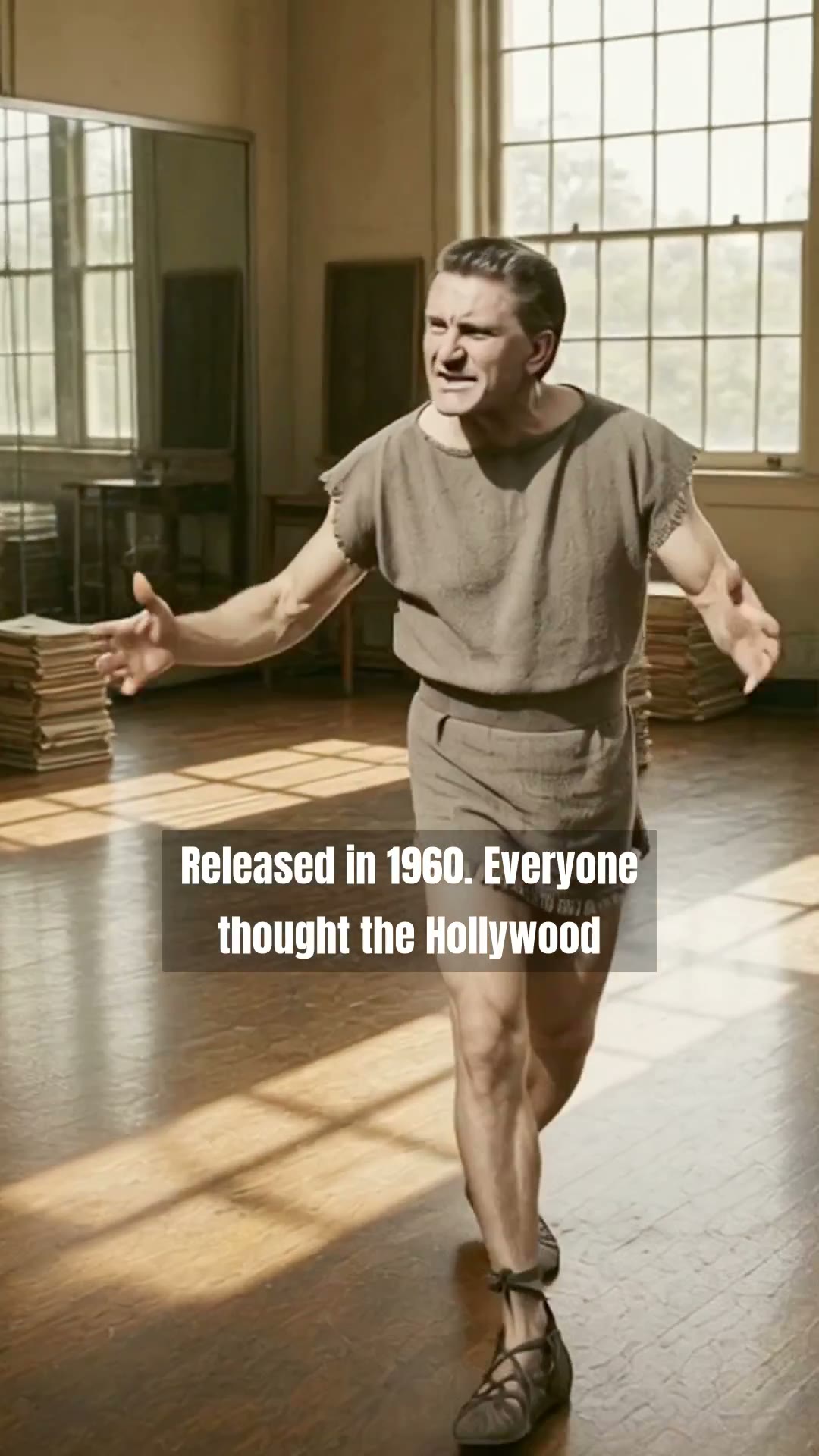
There is a specific, golden glow that emanates from the films of the mid-20th century, a time when the silver screen felt larger than life and the actors held a certain gravitas that transcended mere celebrity. Among the titans of the Golden Age of Hollywood, few possessed the steel-eyed intensity and moral backbone of Kirk Douglas. While many remember him for his rugged roles and that iconic, dimpled chin, his most profound performance took place off-camera, during a period when the industry was shackled by the shadows of fear and political paranoia.
In the late 1940s and throughout the 1950s, the Hollywood blacklist cast a suffocating pall over the creative community. Talented writers, directors, and actors were suddenly deemed untouchable, their careers dismantled by accusations and deep-seated suspicion. It was a dark chapter in the history of cinema, one where silence was often the only shield against professional ruin. For years, the industry operated under this cloud, with legendary names forced into exile or compelled to work under aliases just to put bread on the table. It seemed that the blacklist was an unbreakable institution, designed to sanitize the silver screen of anyone considered ideologically inconvenient.
Everything changed in 1960 with the release of the epic masterpiece, Spartacus. At the height of his fame, Kirk Douglas made a decision that would define his legacy as much as any Oscar-nominated performance. He refused to hide the name of Dalton Trumbo, a brilliant screenwriter who had been blacklisted for years. By insisting that Trumbo receive official screen credit for his work on the film, Kirk Douglas effectively shattered the wall of silence that had choked the industry for over a decade. It was a risky, bold move that placed his own reputation and the project’s success in the crosshairs of those who preferred to keep the status quo.
Looking back at that era of VHS tapes and late-night movie marathons, it is easy to view these events as mere footnotes in textbooks. Yet, for those of us who grew up with the magnetic pull of the Method Acting era, the story of Kirk Douglas represents something deeply human. He understood that the sanctity of art was far more important than the temporary comfort of conformity. He proved that even in the high-stakes environment of a blockbuster production, one individual with the courage of their convictions could shift the tide of an entire culture.
Today, as we revisit the classics on the silver screen or pull a dusty tape from the shelf, we honor Kirk Douglas not just for the characters he brought to life, but for the man he was behind the lens. He walked the Walk of Fame as a champion of creative freedom, proving that a true hero is defined by who they stand up for when it matters most. As we reflect on his monumental career, let us remember that the light of the silver screen is brightest when it reflects the courage of those who dared to challenge the darkness.