
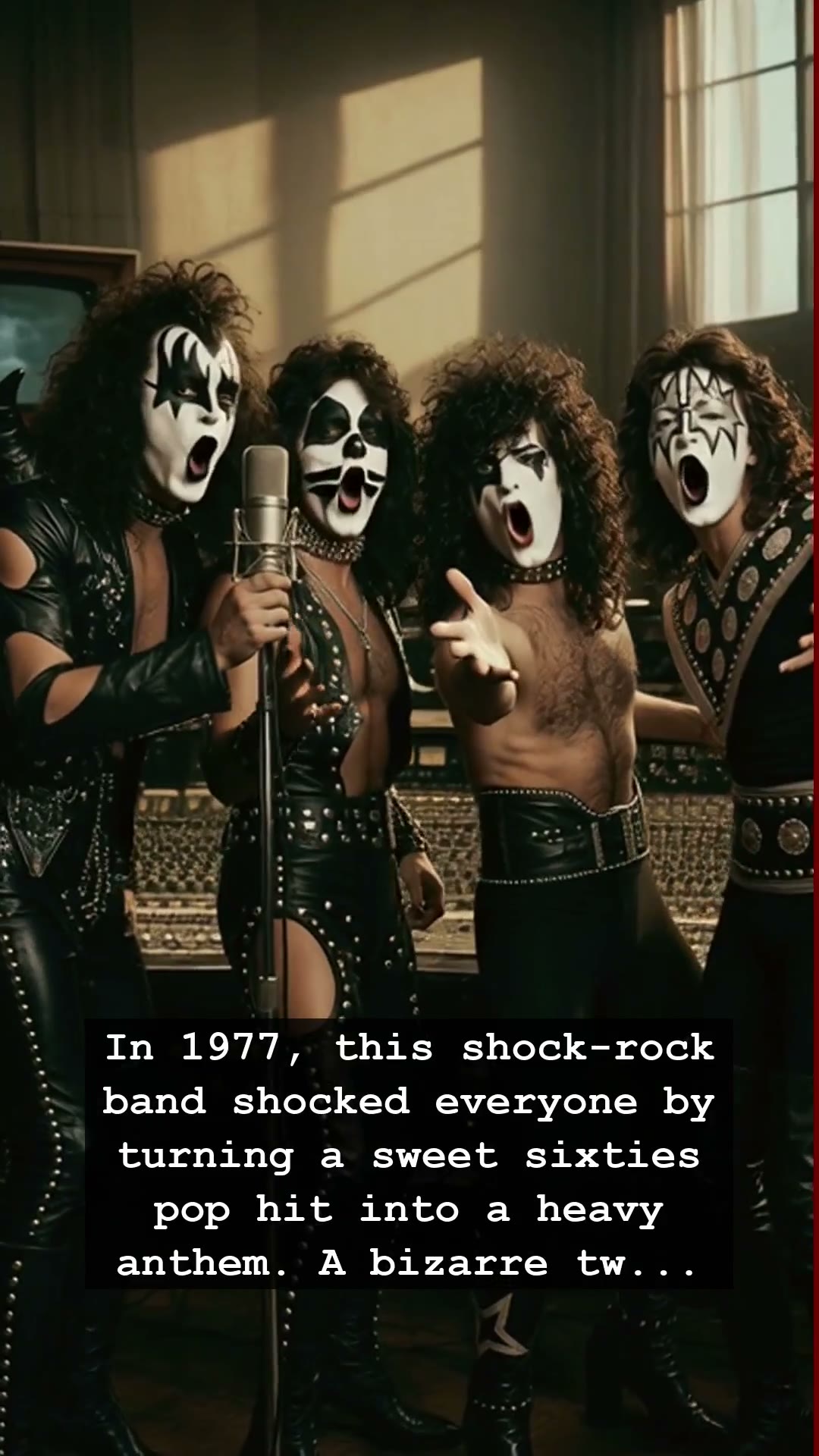
The year was 1977. The airwaves were saturated with the glittery excess of disco and the polished sheen of the FM radio boom, but underneath the surface, something much darker was brewing. Kiss, the masked demigods of shock-rock, were at the zenith of their cultural dominance. With their pyrotechnic displays and face-paint mythology, they had become the architects of the modern arena rock spectacle. But even their most die-hard fans—the ones who spent their weekends glued to their Walkman or lining up for Jukebox hits—were caught completely off guard when they unveiled their latest studio transformation. They didn’t choose a gritty blues riff or a thunderous original anthem; instead, they plucked a sweet, bubbly pop melody from the heart of the sixties and turned it into a heavy-hitting, bone-rattling monster.
That song was the 1964 girl-group classic, Then He Kissed Me, originally by The Crystals. For a band synonymous with blood-spitting, fire-breathing, and gothic stage personas, covering a breezy Phil Spector-produced hit felt like a deliberate act of sonic rebellion. Yet, in the hands of Gene Simmons, Paul Stanley, and the rest of the Kiss lineup, the track was surgically dismantled and reassembled with distorted guitars and aggressive percussion. It was a bizarre, jarring, and utterly genius twist that challenged the boundaries of what a rock band was supposed to sound like during the height of the glam era. It was as if they were stripping away the innocence of the decade that birthed them, forcing the past to reconcile with their aggressive, leather-clad present.
Looking back, this creative detour was a masterclass in musical irony. Kiss had always been about the performance, the theater, and the shock value, but this particular move proved that their mastery of melody ran deeper than the face paint. They understood that the greatest rock anthems often carried the DNA of classic pop hooks, even if they were buried under layers of feedback and bombast. The decision to record the song for their album Love Gun shocked critics, yet it became a hidden gem for fans who appreciated the band’s cheeky audacity. It captured that specific transition point in the late seventies when the innocence of the mid-sixties was being officially cannibalized by the high-octane energy of the arena rock explosion.
Today, the legacy of that moment remains a testament to the unpredictable nature of Kiss. It serves as a reminder of an era when artists were bold enough to experiment, to bridge the gap between genres, and to keep their audience guessing. Whether you were there at the time or discovering these legends through the lens of history, the story of this cover song is a window into a wilder, more daring period of American music history. It reminds us that behind the calculated masks and the larger-than-life personas, there was always a genuine, messy, and incredibly talented group of musicians trying to rewrite the rules of rock and roll. Let the needle drop on that old vinyl one more time and feel the beautiful, strange friction of an era that will never be forgotten.