
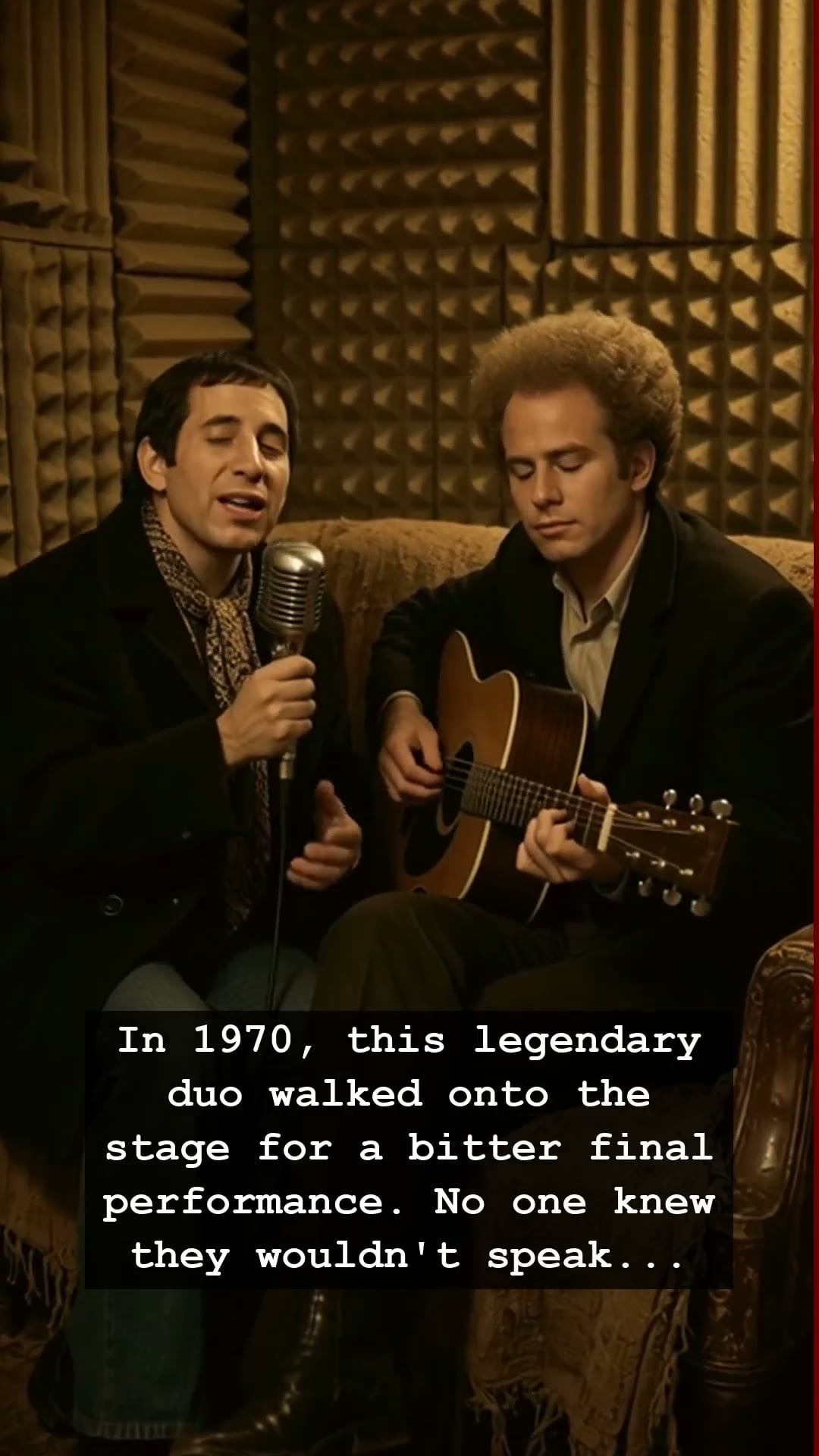
In 1970, the air at Forest Hills Stadium was heavy with more than just the cooling evening breeze of a New York summer. Simon and Garfunkel, the folk-rock duo that had defined the soundtrack of a generation, stepped onto the stage for what many fans assumed would be another triumphant night of melodic harmony. Little did the thousands in attendance know that they were witnessing the final act of a legendary partnership. As the last notes of their iconic hits faded, a cold, suffocating silence began to form between the two men—a silence that would last for an entire decade. It was the end of an era, marked not by a grand announcement, but by an unspoken, bitter departure into separate lives.
To understand the fracture, one must look at the immense pressure they faced during the late 1960s. Paul Simon, the brilliant but restless songwriter, and Art Garfunkel, the soaring, angelic voice that gave life to those compositions, were trapped in a classic creative tug-of-war. They were the architects of the folk-rock revolution, influencing the post-Woodstock cultural landscape, yet the toll of fame had become unbearable. While they stood side-by-side on stage, their personal visions had drifted into opposing worlds. Simon was increasingly focused on his own songwriting legacy, while Garfunkel felt overshadowed by the very songs he had helped immortalize. The friction was palpable, buried beneath the surface of their polished, radio-friendly harmonies.
The breaking point was a long time coming, exacerbated by the relentless demands of a music industry that consumed artists like fuel. Behind the scenes, the partnership had curdled into a toxic blend of resentment and creative exhaustion. By the time they reached that final performance at Forest Hills, the music that had brought them together had become the very thing keeping them apart. The transition from the intimacy of a jukebox-era harmony to the isolating heights of stadium-rock fame had fundamentally changed the dynamic between Paul Simon and Art Garfunkel. They were no longer the two young boys singing in a basement in Queens; they were tired men lost in the wake of their own success.
Looking back, the silence of Simon and Garfunkel feels like a somber relic of a bygone age. It reminds us of a time when the myth of the rock star was crumbling under the weight of ego and reality. Their story was not just about music; it was about the fragility of human connection in the spotlight. Even today, their songs continue to resonate with listeners, evoking a deep sense of nostalgia for a simpler, yet more emotionally complex, period in American history. It is a haunting lesson that even the most beautiful harmonies can hold a hidden, tragic dissonance.
Though they would eventually reunite for the monumental concert in Central Park, that decade-long rift remains the most poignant chapter in their career. The next time you find yourself listening to their records, pay attention to the space between the voices. You might hear the echoes of that long-forgotten cold night, a reminder that even for the greatest legends, fame often comes with a devastating price. Does the music still sound the same to you, now that you know the story behind the silence?