
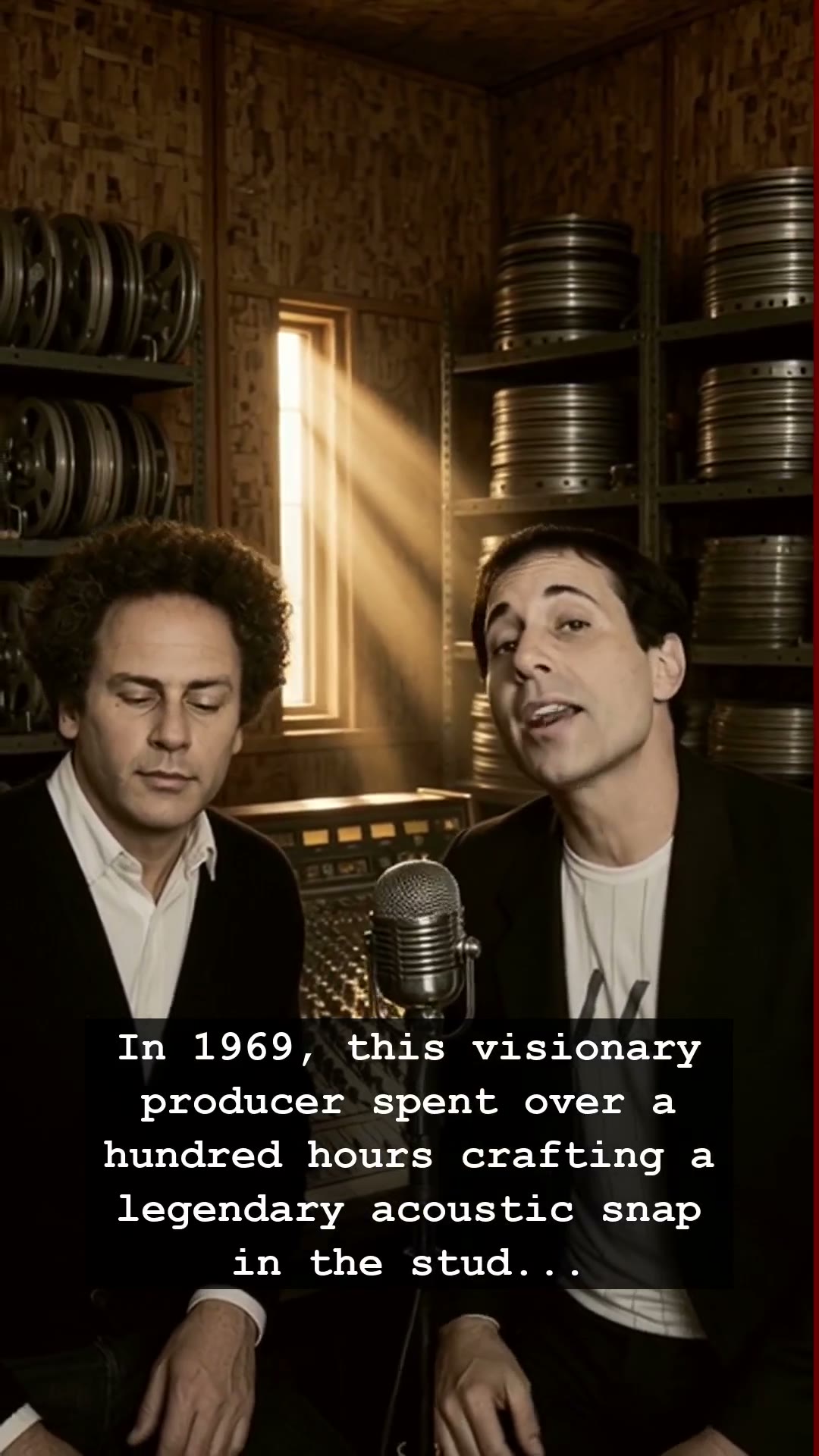
In the spring of 1969, while the world was distracted by the lunar landing and the impending chaos of Altamont, a quiet war of precision was being fought inside a dimly lit recording studio in New York. Paul Simon and Art Garfunkel, already global icons, were entangled in a frantic pursuit of a singular, fleeting sound. It was not a grand orchestral swell or a complex electric riff that haunted them; it was the crisp, organic snap of an acoustic guitar string. For over a hundred hours, the duo and their team of visionary engineers obsessed over capturing a heartbeat of acoustic perfection, a moment of sonic purity that would eventually define the folk-rock movement forever.
To understand the gravity of this obsession, one must remember the era. The late sixties were a time of sonic experimentation, with artists like Jimi Hendrix and The Beatles pushing the limits of studio technology. Amidst the psychedelic haze, Simon and Garfunkel stood as the masters of restraint. Their music relied on the delicate interplay of two voices and the rhythmic foundation of a guitar. When they sought that specific acoustic snap, they were trying to prove that even in the age of emerging synthesizers and complex production, the raw, human touch could still be the most powerful weapon in music. This wasn’t just a recording session; it was an attempt to freeze time itself.
The tension within the studio was palpable. The dynamic between Paul Simon, the relentless architect, and Art Garfunkel, the golden-voiced dreamer, was famously fragile. During these hundred hours of labor, the strain began to show. Every failed take was a bruise to their ego, and every successful resonance brought them closer to the breaking point of their partnership. They were chasing a ghost—a sound that felt like the folk clubs of Greenwich Village but carried the cinematic weight of their rising fame. It was a high-stakes gamble that pushed them toward the eventual fracturing of their creative bond, but the resulting tracks remain etched into the collective memory of a generation.
When listeners finally heard those tracks, they didn’t realize they were hearing the byproduct of sleep-deprived engineers and a duo pushed to their absolute limits. The songs sounded effortless, as if they had simply floated out of the speakers, yet they were born from the grueling alchemy of the studio. This obsession with nuance is precisely why their music still resonates today. In an era of digital perfection and artificial production, the Simon and Garfunkel sound remains a warm, tangible reminder of a time when every note was earned through blood, sweat, and endless repetition.
Looking back, the story of those hundred hours serves as a testament to the perfectionism that defined the golden age of American music. It reminds us that behind every classic song lies a story of conflict, dedication, and the relentless desire to achieve something truly immortal. As the needle drops on a weathered vinyl record, you aren’t just hearing a melody; you are listening to a moment where two men refused to settle for anything less than perfection. Do you still feel the echo of that acoustic snap every time you hear their harmony?