
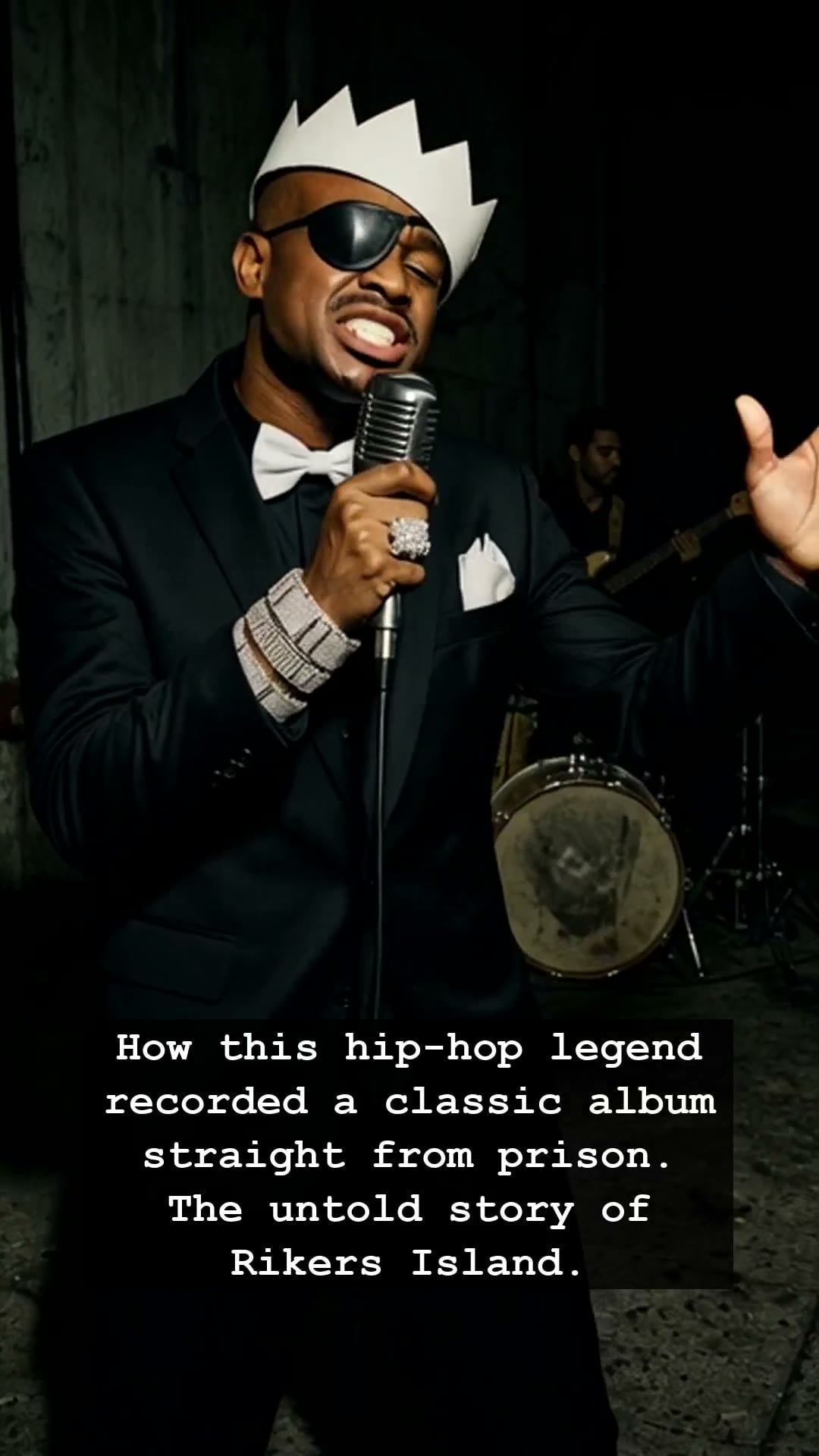
The year was 1991, and the world of hip-hop was moving at a breakneck pace. Golden age icons were battling for radio dominance while the cultural landscape shifted toward the gritty reality of urban life. Yet, one of the most legendary stories of the era didn’t emerge from a high-tech Manhattan studio or the flashy neon lights of a label headquarters. Instead, it was born behind the cold, unforgiving steel bars of Rikers Island. Slick Rick, the undisputed king of storytelling rap, found himself in a legal nightmare at the height of his fame. But not even a prison sentence could stop the creative fire that defined his sophomore album, The Ruler’s Back.
Most fans remember the polished rhymes and the effortless flow that made Slick Rick an icon, but few truly understand the cloak-and-dagger operation required to bring that music to life. Imagine the scene: the rhythmic clanking of cell blocks replaced by the hum of a makeshift recording booth. Thanks to a series of secret prison furlough passes, Slick Rick was granted brief, fleeting windows of freedom. He wasn’t walking out to party or reclaim his status; he was being escorted from the bowels of a detention facility directly into the recording booth. It was an act of artistic defiance that remains almost unbelievable by today’s standards.
This wasn’t just about finishing a contract; it was a desperate race against time. Slick Rick risked everything to ensure his legacy didn’t fade while he was confined. Every vocal take was recorded with the shadow of his incarceration looming over him, adding an unmistakable urgency and a raw, gravelly edge to the tracks. The studio air felt different during those sessions. There were no entourages, no opulent perks, just a man, a microphone, and the burning need to translate his reality into a story that the world could hear. The album became a testament to the fact that true talent transcends the physical limitations of a jail cell.
Looking back at the early nineties, the story of Slick Rick captures a specific moment when music felt truly dangerous and authentic. This was long before the digital age sanitized the industry. It was an era defined by the crackle of vinyl, the boom of the Walkman, and the raw storytelling that turned rappers into modern-day poets. By managing to complete a platinum-selling project under such extreme duress, Slick Rick proved that the spirit of an artist is impossible to cage. It is a haunting, cinematic chapter in hip-hop history that feels like a scene straight out of a classic noir film.
Decades later, The Ruler’s Back stands as a symbol of resilience. Whenever those familiar, smooth-talking bars fill a room, we aren’t just hearing a hit; we are hearing the echo of a man who refused to let his voice be silenced by the system. It serves as a powerful reminder of why we stay so deeply connected to the legends of the past. So, the next time you drop the needle or hit play on those vintage tracks, listen closely. You might just hear the faint, underlying struggle of a legend who literally recorded his way to freedom, one verse at a time.