
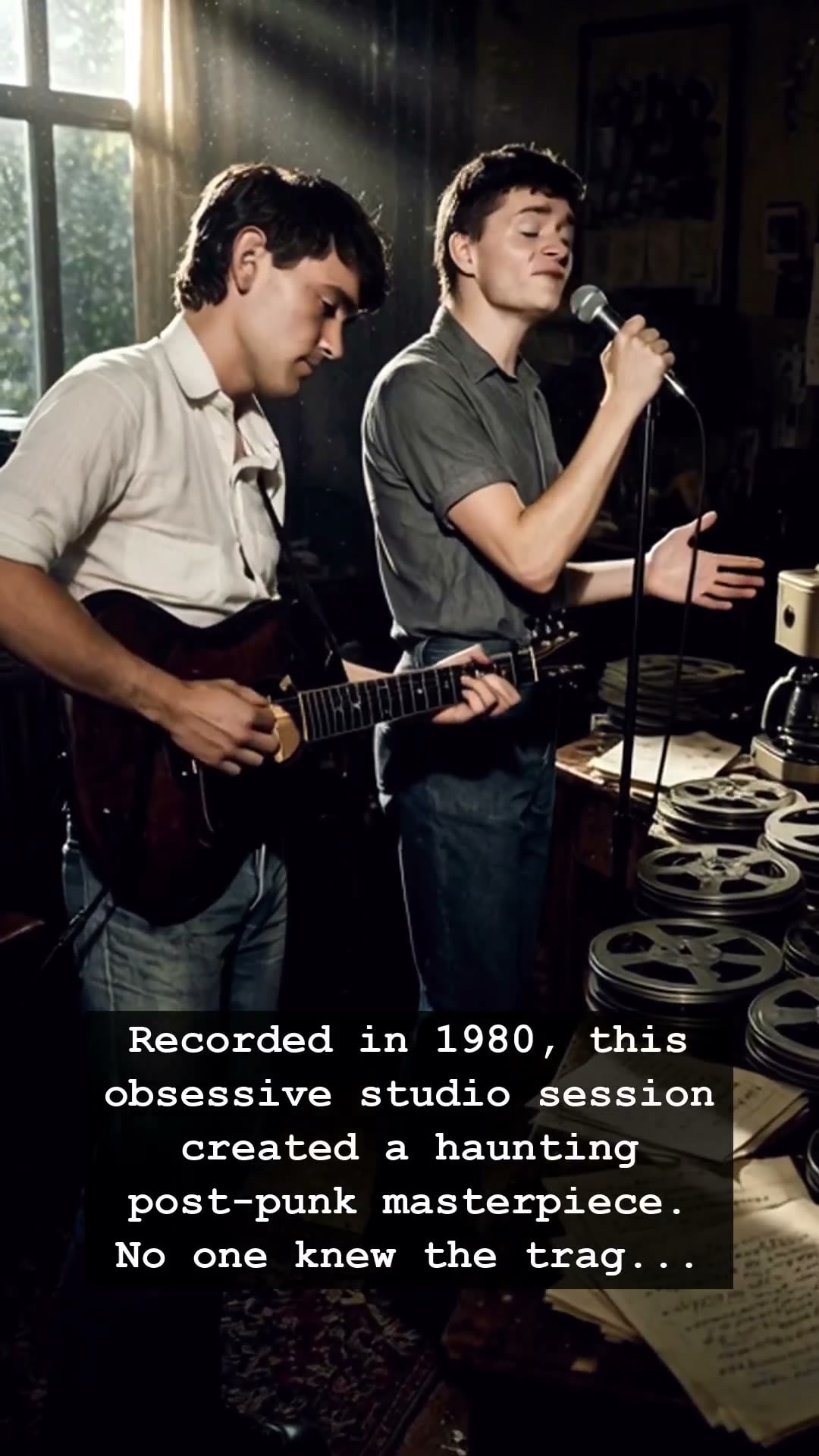
The year was 1980, and the air inside the recording studio felt heavy with a suffocating, almost predatory silence. It was here that the legendary post-punk band Joy Division was busy crafting what would eventually become one of the most haunting albums in music history, Closer. Outside the studio walls, the world was on the cusp of a technological revolution, with the Walkman beginning to change how we consumed melodies, but inside, the atmosphere was purely psychological. The band members were pushed into a state of forced isolation, subjected to the brutal, obsessive demands of their producer, Martin Hannett. He sought a sound that wasn’t just music; it was a cold, sonic manifestation of desolation. No one in that room realized that they were capturing the final echoes of a life on the edge, creating a masterpiece that would forever be tethered to an inevitable tragedy.
Joy Division was never a band that fit neatly into the jukebox culture of the era. Led by the enigmatic Ian Curtis, whose baritone voice carried the weight of a thousand existential crises, they defined a sound that was stark, industrial, and deeply human. As they worked on the sessions for Closer, the tension was palpable. The production process became an exercise in emotional endurance, with Hannett meticulously stripping away every warmth to reveal the raw, skeletal nerves of the songs. It was a pressure cooker of artistic ambition and personal unraveling. While the music surged with a dark, rhythmic pulse, the band members were struggling to reconcile their rising fame with the crumbling reality of their lead singer.
Looking back, it is impossible to listen to tracks like Atmosphere or Heart and Soul without feeling the chilling weight of what was transpiring behind the scenes. The music of Joy Division during this period served as a mirror to the bleak industrial landscapes of Manchester, yet it spoke to a universal ache that resonated far beyond the UK. Their sonic evolution—moving from the jagged energy of their earlier work to the synth-heavy, atmospheric depths of their final recordings—remains a watershed moment in rock history. The genius of Joy Division lay in their ability to translate profound personal suffering into a soundscape that felt both alien and intimately familiar to every listener.
Tragically, just as their influence began to solidify in the early eighties, the shadows engulfed the band. Ian Curtis’s passing marked a sudden, violent end to a trajectory that seemed destined to reshape the landscape of modern rock. The irony remains that the very isolation that made their final studio sessions so hauntingly perfect also contributed to the isolation of the artist. The world lost a visionary, but they left behind a sonic blueprint that continues to inspire generations of post-punk revivalists. Today, those recordings serve as a somber monument to the fleeting, fragile nature of genius.
Decades later, Joy Division remains a pillar of authentic, raw musical expression. The ghost of their influence hangs over the post-punk genre, reminding us that true art often demands everything from its creator. Whether you are revisiting these tracks on a pristine vinyl pressing or discovering their depth for the first time, the music continues to command your full attention. It stands as a testament to a moment in time where sorrow was translated into an eternal, icy beauty. Do you still remember the first time those opening chords reached out to touch your soul?