
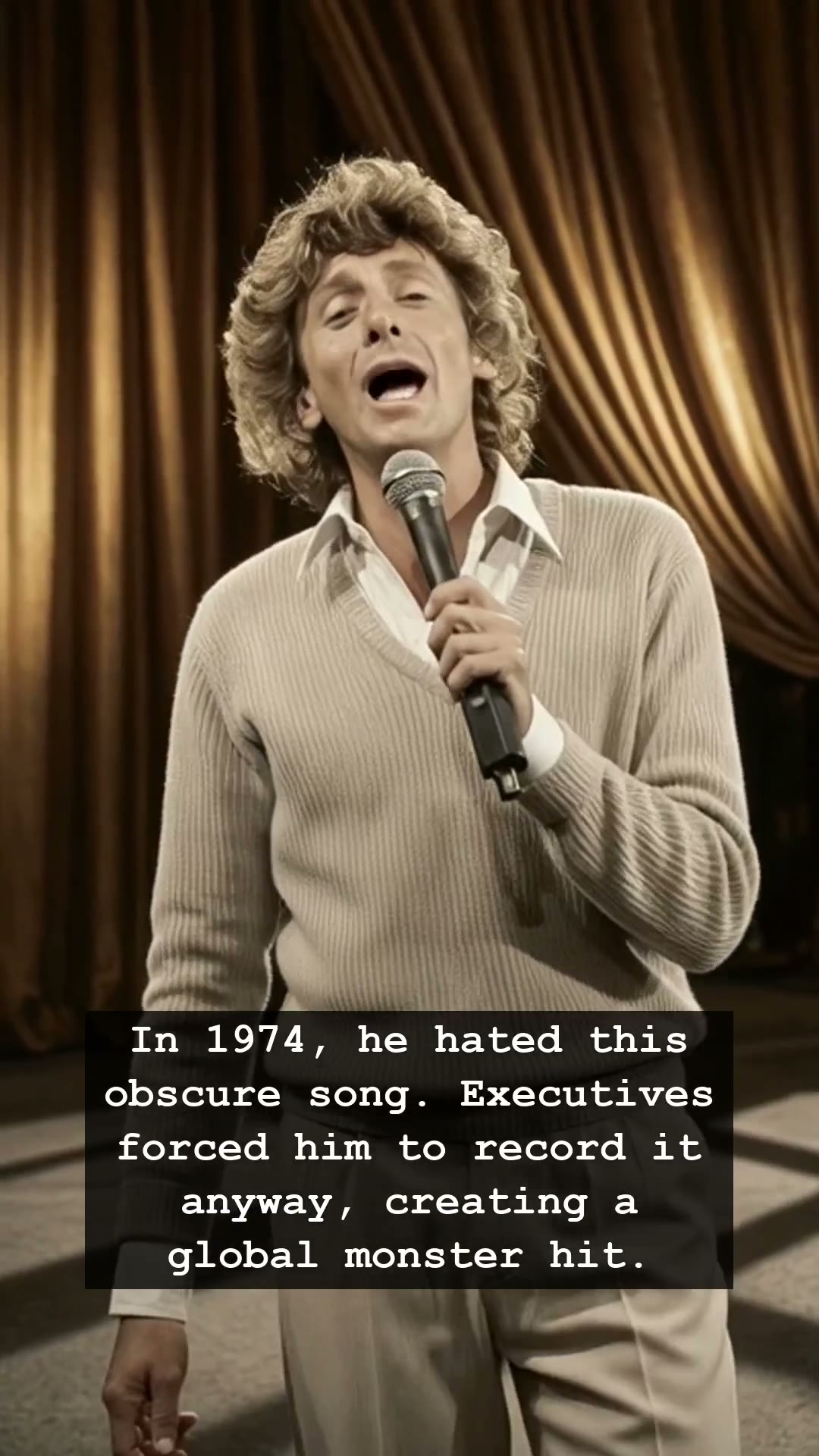
It was 1974, a time when the AM radio waves were crowded with the shimmer of disco and the introspective glow of soft rock. Inside the sterile confines of a professional recording studio, Barry Manilow sat slumped, staring at a sheet of paper that contained the lyrics to what would soon become a cultural phenomenon. He despised the song. He thought the melody was saccharine, the lyrics too sentimental, and the arrangement far too theatrical for a budding artist trying to carve out a serious reputation. Yet, label executives were adamant. They saw something in the ballad that the artist himself couldn’t—or wouldn’t—see. They pushed him to record it, little knowing they were mid-wife to a monster hit that would define an entire generation.
The song was Mandy. When Barry Manilow reluctantly stepped up to the microphone, he was fighting his own artistic instincts. The track, originally a folk tune titled Brandy, felt like a compromise of his creative vision. He had dreams of being a songwriter’s songwriter, not a purveyor of pop sentimentality. However, the studio lights were hot, the pressure from his management was mounting, and the era of the Jukebox was demanding catchy, radio-friendly hooks. With a sigh of resignation, Barry Manilow poured his frustration into the recording, unwittingly delivering a vocal performance so raw and emotionally resonant that it would soon be heard in every living room across America.
Once it hit the airwaves, the transformation was instantaneous. Listeners were hooked. The song climbed the Billboard charts with a ferocity that caught everyone off guard, including the man who sang it. Suddenly, Barry Manilow was no longer an obscure jingle writer; he was a household name. The song became a quintessential staple of the mid-seventies, evoking the smell of vinyl records and the cozy, dimly lit atmosphere of that decade. It was the kind of anthem that invited you to sing along, a bittersweet lullaby that transcended the simple pop structures of the time.
Looking back at that moment, it serves as a fascinating study of the disconnect between an artist and their audience. While Barry Manilow spent years trying to distance himself from the perceived cheese of his early success, the public embraced it with open arms. It represents a specific brand of American nostalgia—a time when a piano-driven melody could unite a nation before the rise of the Walkman and the fragmentation of music genres changed the landscape forever. That tension between his disdain for the song and the public’s adoration for it created a unique aura that still surrounds the track today.
Decades later, the irony is not lost on anyone who follows the history of pop music. What was once a personal point of contention for Barry Manilow has become his enduring legacy, a monument to the unpredictable nature of fame and the alchemy of the recording studio. Sometimes, the songs we least want to record are the ones the world needs to hear the most. Whether you loved it then or rediscovered it on a dusty cassette tape, Mandy remains a perfect snapshot of 1974. Do you remember where you were when those opening chords first filled the air?