
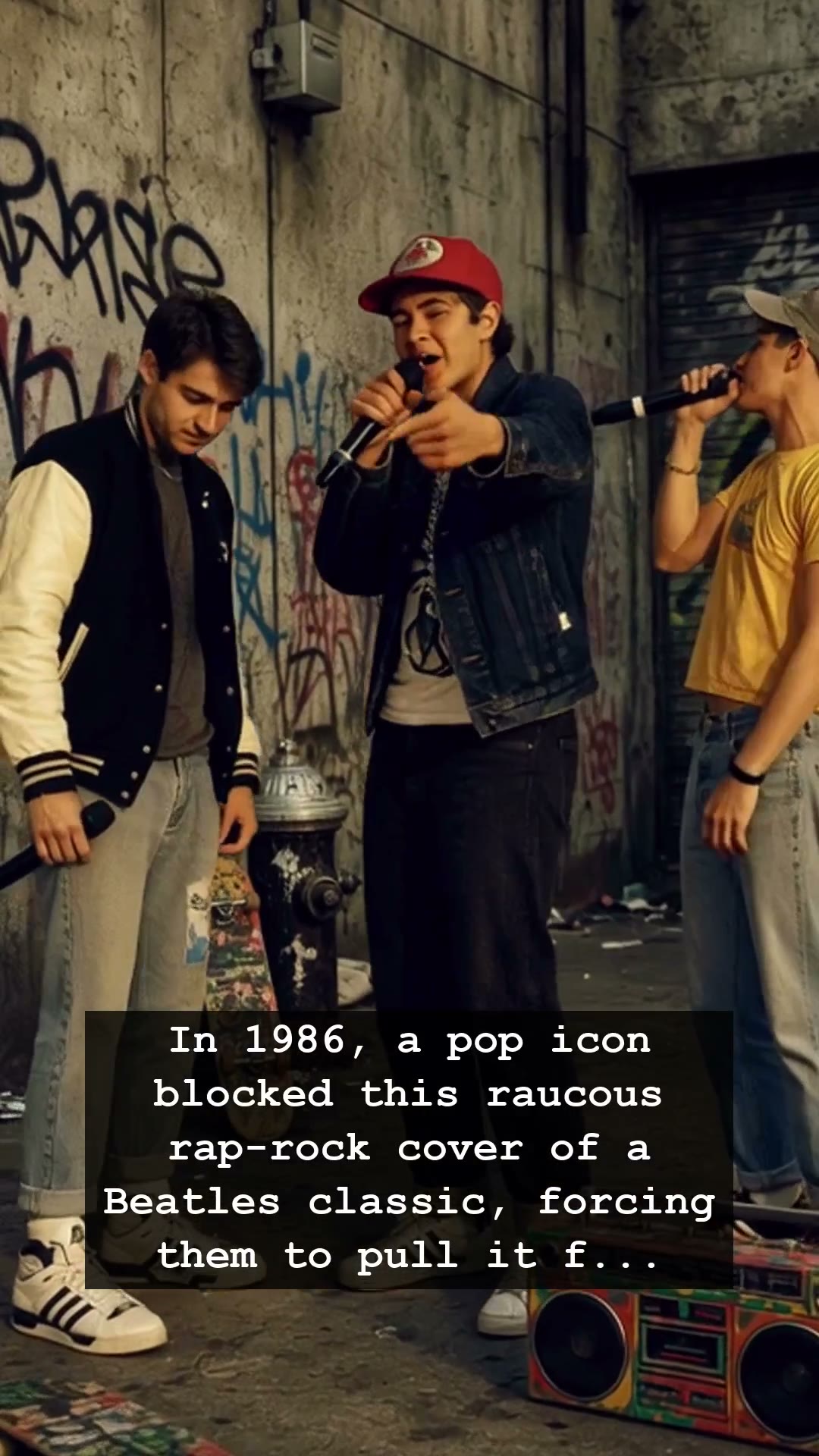
In 1986, the music world was shifting under the weight of the Beastie Boys and their debut album Licensed to Ill. It was a time when the Jukebox was being replaced by the hiss of cassettes in a Sony Walkman, and the boundaries of genre were being torn down by three rowdy kids from New York. Yet, amidst the chaos of their meteoric rise, one track—a raucous, distorted rap-rock cover of a legendary Beatles classic—was pulled from the final pressing. It wasn’t just a creative choice; it was a silencing order delivered directly from the upper echelons of pop royalty. The Beastie Boys had dared to re-imagine a masterpiece, but they hadn’t counted on the iron grip of the surviving Fab Four.
The song in question was an unhinged, high-energy take on I’m Down. To the Beastie Boys, it was a tribute, a piece of the rock-n-roll fabric that shaped their rebellious energy. They recorded it with the same grit that defined their early live shows, where beer-soaked stages and chaotic energy were the norm. But back in the mid-eighties, copyright clearance wasn’t just about paperwork; it was about protecting a legacy. When the track reached the ears of those managing the Beatles’ catalog, the verdict was swift and unforgiving. The rap-rock interpretation was deemed a violation of the sanctity of the original, forcing the group to shelf the track before it could reach the shelves of record stores everywhere.
This incident highlights the intense tension between the rising culture of sampling and the established guard of the sixties. For the Beastie Boys, Licensed to Ill was meant to be a loud, unapologetic manifesto, but this blocked cover became a ghost in their discography—a “what if” moment that fans would whisper about for decades. It reminds us of a time when the music industry operated like a closed club, where an icon could stop a record with a single phone call. The story resonates today because it marks the precise moment when the raw, subversive spirit of hip-hop collided head-on with the pristine, untouchable history of the Beatles.
Looking back at the eighties, one can almost smell the hairspray and feel the static of an emerging MTV era. The Beastie Boys were the anti-heroes of this landscape, blending punk attitude with boom-bap beats. Had that track been released, it might have changed the trajectory of rap-rock collaborations forever. Instead, it became a piece of folklore, a hidden relic of a time when the industry was still figuring out how to handle the disruptive power of artistic remixing.
Ultimately, the loss of this track only added to the mystique of the Beastie Boys. It serves as a reminder that behind every legendary album lie stories of rejected tapes, legal battles, and the relentless pressure of fame. Whether it was the influence of the Beatles or the sheer audacity of the rap-rock pioneers, that moment remains a fascinating snapshot of musical history. Do you think the cover would have been their greatest hit, or was it destined to remain in the shadows of the past?