
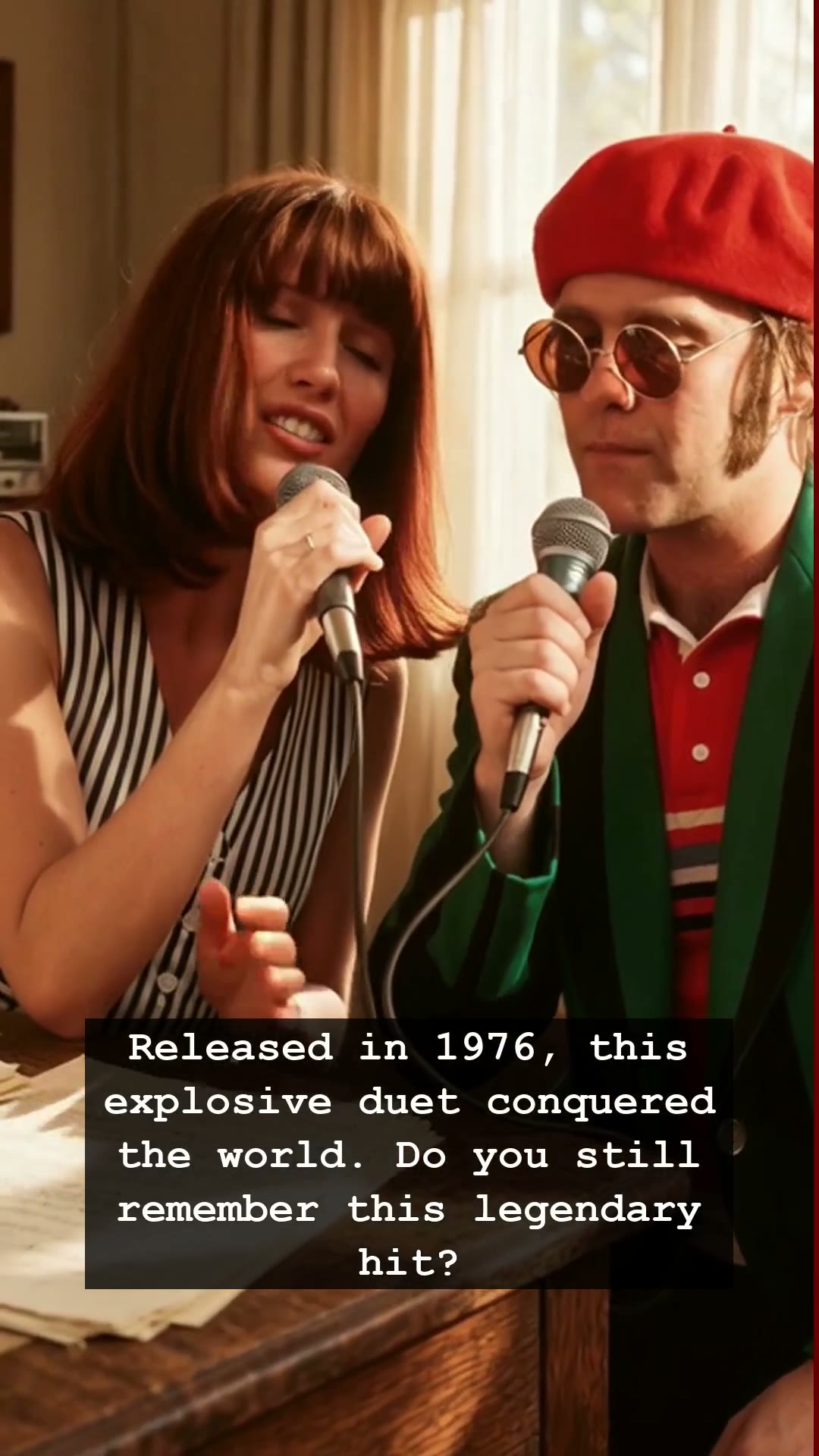
It was 1976, a year where the world felt like it was shifting on its axis. Disco was beginning its glittering climb to the top of the charts, and the airwaves were dominated by the glow of the television and the iconic crackle of the radio. Amidst this cultural whirlwind, a song emerged that felt less like a studio production and more like a lightning strike. When Elton John and Kiki Dee released Don’t Go Breaking My Heart, they didn’t just top the charts; they captured a specific, golden euphoria that would define the era. Yet, behind the infectious melody and the playful banter of the music video, there lies the story of two artists at a pivotal intersection of pop royalty and hidden exhaustion.
At the time, Elton John was arguably the biggest star on the planet, a man whose flamboyant stage costumes and relentless touring schedule were pushing him toward a dangerous, silent burnout. His partnership with Kiki Dee, a talented vocalist who had been grinding away in the British music scene for years, provided a rare moment of levity. While the public saw a carefree, high-energy duet, the recording process was actually a testament to the sheer velocity of the 1970s music machine. Elton and Kiki recorded the track at Toronto’s Eastern Sound studios, often working under immense pressure to deliver hits for a hungry global audience that demanded more, faster, and louder.
What makes this track stand out in the annals of music history is how it bridged the gap between classic Motown-inspired soul and the polished pop production that would dominate the late seventies. The song carries the rhythmic heartbeat of a jukebox classic, yet it possesses a lyrical simplicity that felt fresh in the shadow of the looming punk rebellion. Elton John’s piano work is characteristically brilliant, serving as the steady anchor for Kiki Dee’s effortless, soaring vocals. Their vocal chemistry was undeniable, a spark of genuine friendship that managed to cut through the heavy industry politics of the mid-seventies.
It is fascinating to look back at the footage from that era, observing the transition from the vinyl record era to the early days of televised music promos. Don’t Go Breaking My Heart became a staple of early music video history, acting as a precursor to the visual dominance that MTV would force upon the world just a few years later. For many, hearing that iconic opening piano riff is a teleportation device, bringing them straight back to the feeling of dancing in a living room, unaware of the corporate machinery or the personal trials that the artists were facing behind the velvet curtain of fame.
Today, the legacy of Elton John and Kiki Dee’s collaboration remains untarnished by the decades. It stands as a timeless reminder of a time when pop music felt spontaneous and joyous. While the music industry has changed beyond recognition since the days of Walkmans and physical record stores, the emotional core of this song remains unchanged. It is a testament to the power of a simple, honest melody to outlive the scandals and the shifting trends of time, reminding us all why we fell in love with music in the first place.