
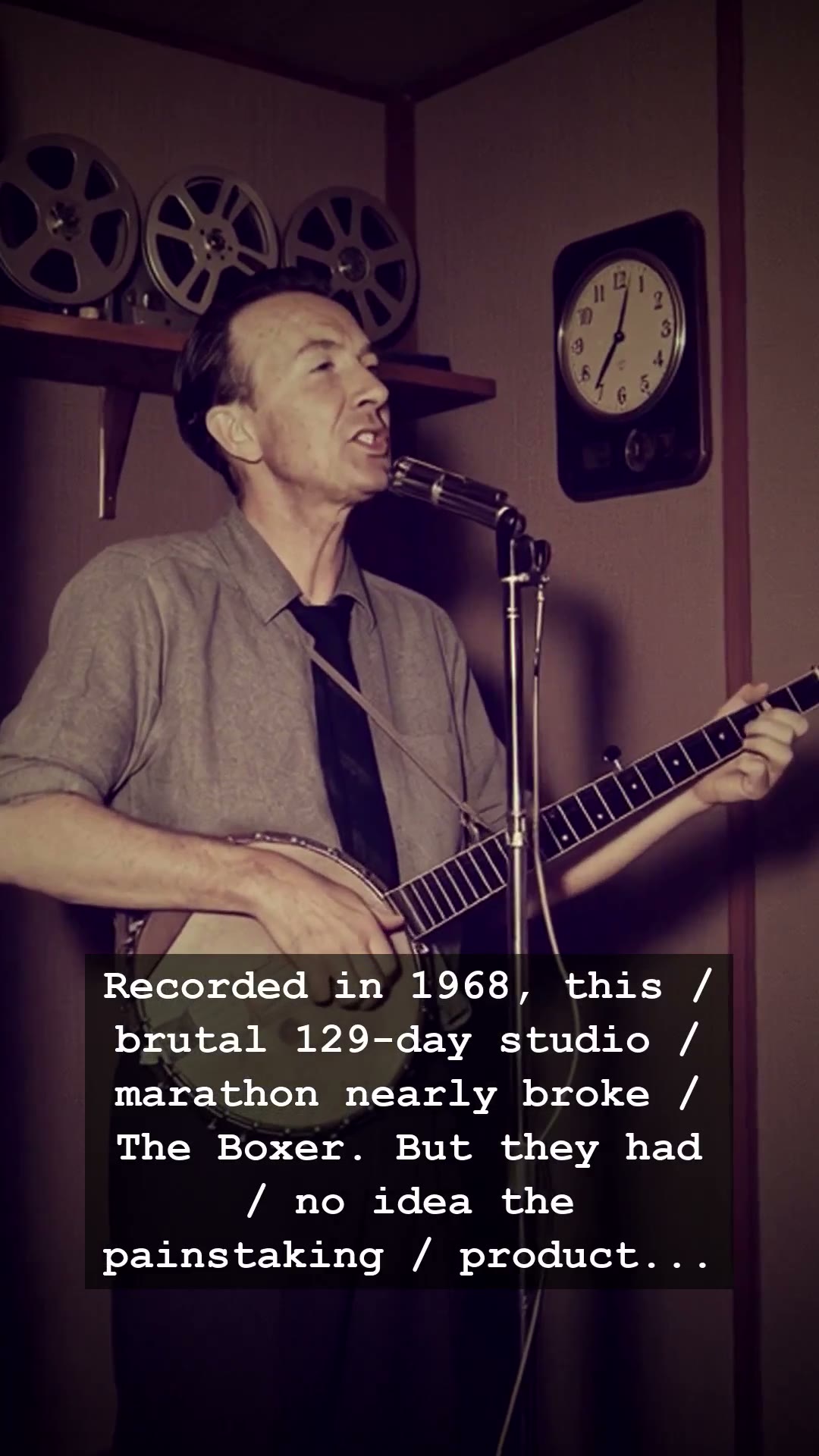
The year was 1968, a time when the world seemed to be shifting on its axis. While the psychedelic haze of the late sixties swirled through the streets and Woodstock was just a dream on the horizon, two men were locked in a claustrophobic, high-pressure battle inside a recording studio. Paul Simon and Art Garfunkel, the folk-rock legends whose harmonies defined a generation, were embarking on what would become one of the most grueling recording sessions in music history. They were chasing perfection for a single song, The Boxer, and the toll it took on their relationship was almost as significant as the track itself.
Over the course of 129 agonizing days, the duo moved between the bustling streets of New York and the sonic landscapes of Nashville. For the perfectionist Paul Simon, the song was a deeply personal narrative about struggle, poverty, and the fight for survival in a city that often chews up its dreamers. Every syllable had to be pristine, and every guitar pluck needed to carry the weight of the lyrics. The studio became their sanctuary and their prison, a place where their creative synergy was tested to the breaking point by the relentless pursuit of an elusive, perfect sound.
One of the most vivid remnants of this period is the legendary story behind the song’s thunderous percussive snap. Desperate for a sound that felt like a punch to the gut, the producers and musicians resorted to unconventional tactics. They didn’t just rely on standard drums; in a stroke of genius born from exhaustion and frustration, they recorded the sound of a heavy bass drum being dropped down an elevator shaft. That distinct, booming echo captured in the concrete stairwell provided the rhythmic backbone of the masterpiece, a raw industrial texture that grounded the ethereal vocal harmonies of Simon and Garfunkel.
This era was defined by the rise of the high-fidelity sound, the crackle of a vinyl record hitting a needle on a turntable, and the late-night airwaves of FM radio. Simon and Garfunkel were at the zenith of their cultural impact, yet behind the polished exterior, the tension was palpable. The 129-day marathon did more than just capture a classic song; it documented the fraying threads of their partnership. The Boxer stands as a monument to that friction—a blend of delicate acoustic beauty and the harsh, metallic reality of studio experimentation.
Today, when you listen to The Boxer, you are hearing more than just a folk anthem. You are listening to the sound of two artists pushing their limits, sacrificing their comfort, and using an elevator shaft to etch their legacy into the stone of music history. It remains a haunting reminder that the greatest art is often born from the most uncomfortable, obsessive, and brutal processes. It is a timeless piece of our collective past that continues to resonate with anyone who has ever felt the weight of the world pushing back. As the final notes fade out, you can still hear the echoes of 1968, reminding us that even the most fragile harmonies are built upon an unshakable foundation of human struggle.