
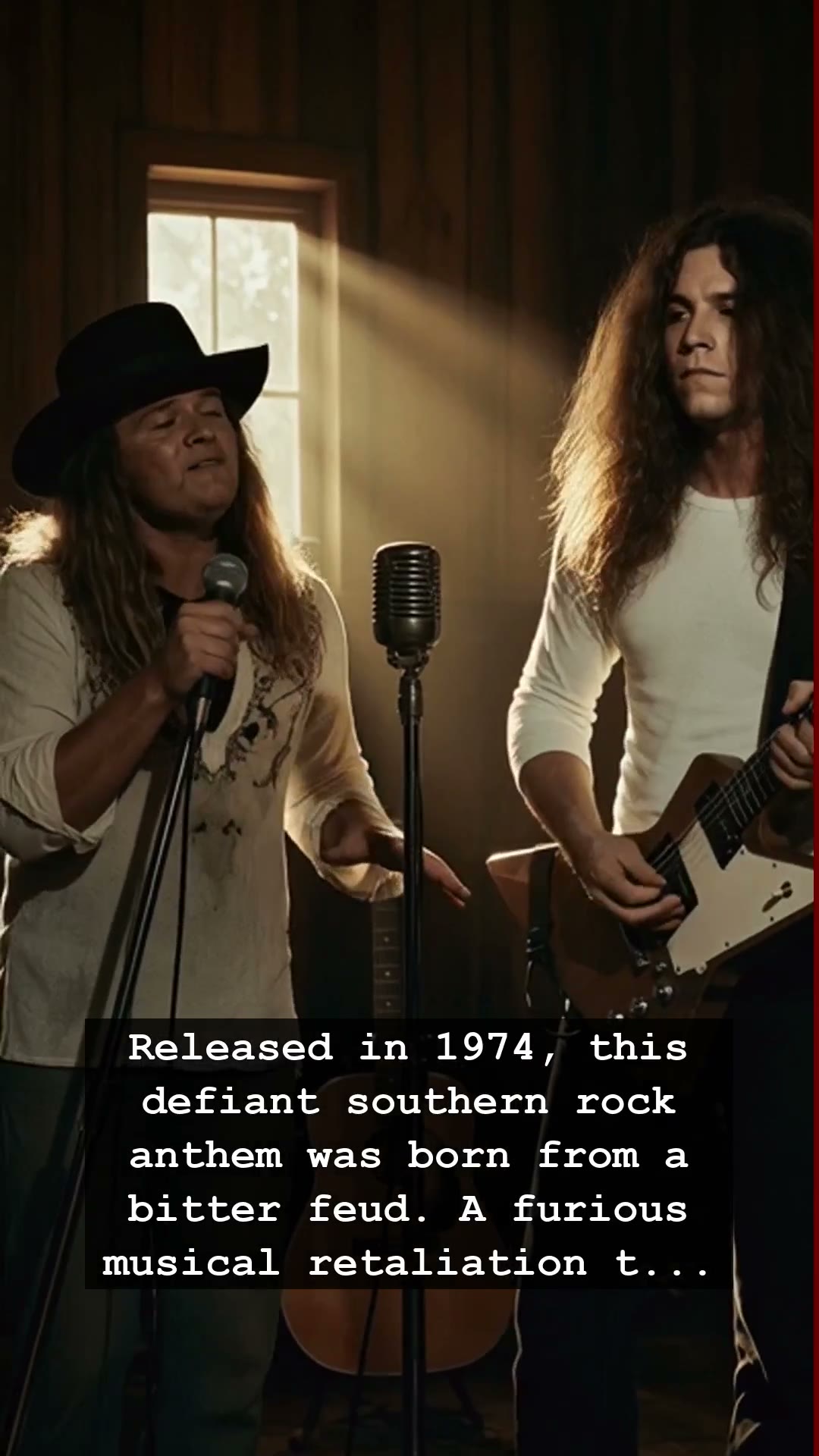
It started with a name drop, a sharp lyrical jab that stung like a wasp in the sweltering heat of the American South. In 1974, the airwaves were dominated by the folk-rock sensibilities of Neil Young, but a group of scruffy, hard-living musicians from Jacksonville, Florida, had a very different message. Lynyrd Skynyrd was not a band to take criticism lying down. When Young released Southern Man, painting a bleak and generalized portrait of the South, the boys in Lynyrd Skynyrd felt the sting of moral superiority and decided to fire back. The result was not just a song; it was a defiant, gasoline-soaked declaration of identity that would echo through generations.
The tension between Neil Young and Lynyrd Skynyrd is one of rock history’s most fascinating intellectual clashes. Ronnie Van Zant, the magnetic and formidable frontman of Lynyrd Skynyrd, believed that Young had lumped all Southerners together as narrow-minded bigots. In a cramped rehearsal space, fueled by a desire to defend their home, the band began to weave a counter-narrative. They didn’t use political manifestos; they used the raw, gritty power of southern rock. The opening chords of Sweet Home Alabama hit like a thunderclap, serving as both a musical retort and a celebration of a way of life that the band felt was being unfairly caricatured by northern elites.
Yet, the true genius of the song lies in its complexity. While it served as a stinging rebuke to Young, the band members actually held a deep respect for his songwriting prowess. In a twist of irony that only music history can provide, Ronnie Van Zant was often seen wearing a Neil Young t-shirt, and Young himself later admitted that he deserved the public dressing down. The rivalry, which could have destroyed both parties, instead birthed an immortal anthem. It became a cultural touchstone that defined the 1970s, playing on jukeboxes from dusty roadside diners to the glittering, cocaine-dusted heights of the era’s major concert halls.
For those of us who remember the crackle of a radio playing through a cassette deck or the feeling of freedom as that iconic guitar solo kicked in, Lynyrd Skynyrd represents the soul of an unvarnished America. The track survived the tragic plane crash that silenced many of the band’s voices in 1977, transforming from a simple retaliation into a mournful, triumphant symbol of legacy. It captures the tension of a divided nation, a snapshot of a time when rock and roll was the primary battleground for social commentary and cultural identity.
Today, the legacy of Lynyrd Skynyrd remains untouchable, transcending the politics of the mid-seventies. It serves as a reminder that the most enduring music is often born from the friction of real human emotion. As the years fade into memory, that defiant spirit still lingers. The next time those opening notes catch your ear, listen closely to the pride embedded in every chord. Do you still hear the rebellion that defined an entire generation?