
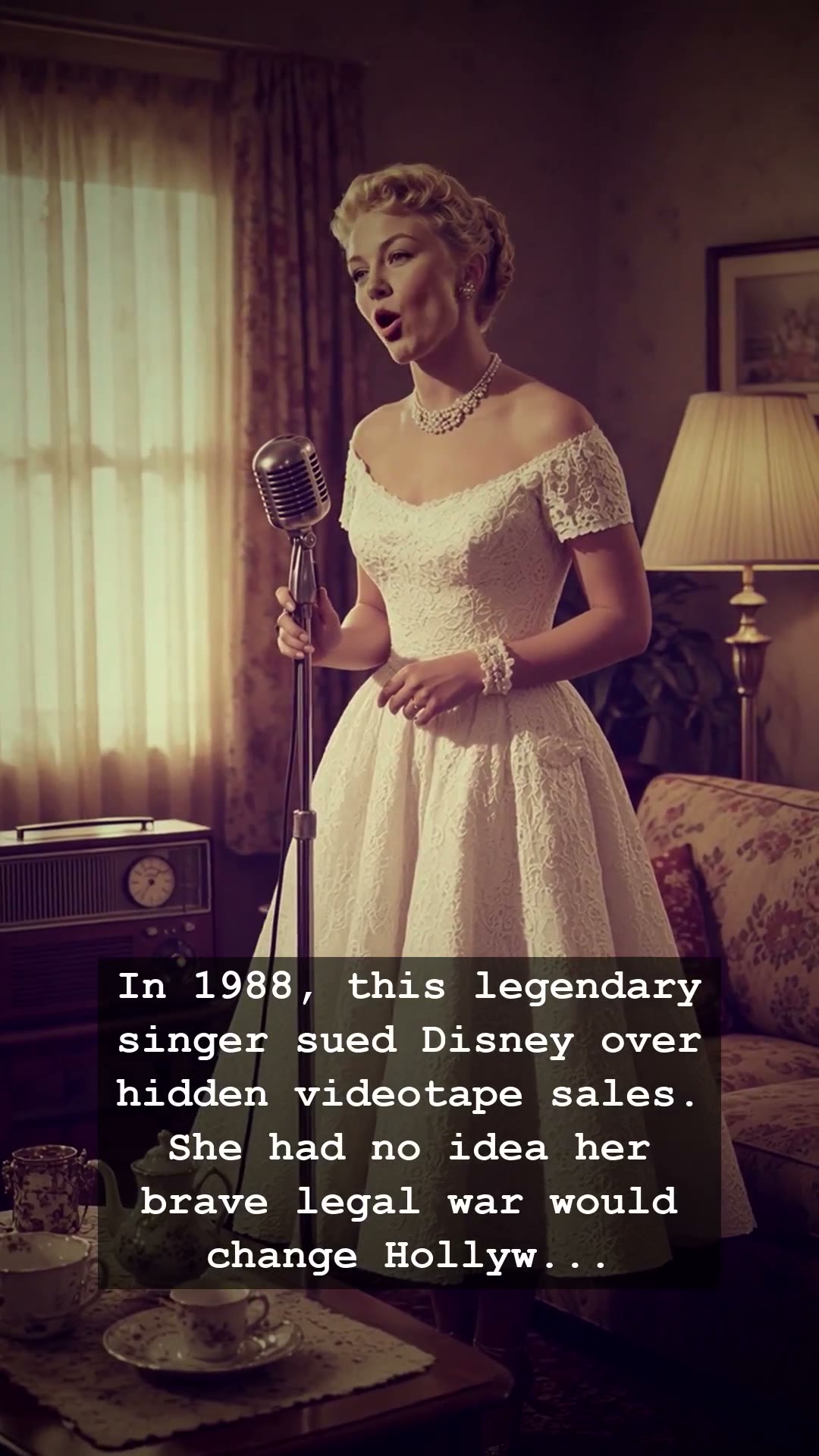
It was 1955, and the world was falling under the spell of the animated masterpiece Lady and the Tramp. Among the whimsical melodies, the sultry, smoke-filled voice of Peggy Lee brought the character Darling and the mischievous Peg to life. Her contribution was more than just a vocal performance; she was a co-writer, a creative force, and the heartbeat of the film’s musical soul. Yet, beneath the velvet curtains of the Golden Age of Hollywood, a shadow of betrayal was waiting to emerge three decades later. The shimmering lights of the industry often blinded artists to the fine print, but Peggy Lee was a woman who knew exactly what her talent was worth.
By 1988, the landscape of home entertainment had shifted dramatically. The rise of the VCR and the convenience of the home videotape had transformed how the world consumed cinema. As Disney began flooding the market with home releases of their classic animated features, Peggy Lee noticed something suspicious. Her contract for the original film had never explicitly covered this newfangled medium of home video. The studio, in an attempt to keep their pockets lined, decided that since the technology did not exist in 1955, they owed the legendary singer absolutely nothing for the millions of tapes sold to households across America.
Peggy Lee did not take this slight lying down. At sixty-eight years old, with the grace of a jazz icon and the spirit of a gladiator, she filed a groundbreaking lawsuit against the most powerful entertainment giant in the world. It was a David versus Goliath narrative that rocked the industry to its core. During the trial, the courtroom became a stage for a much larger argument about the rights of legacy artists in an evolving digital world. She wasn’t just fighting for her own paycheck; she was fighting for every musician who had seen their work exploited by shifting technological tides.
Her courage sent shockwaves through the boardrooms of Hollywood. The battle was long, grueling, and at times felt like a lonely crusade against the titan of animation. However, the victory she eventually secured was monumental. The court sided with the songstress, acknowledging that the spirit of an artist’s contract must evolve alongside the media that carries it. This landmark ruling effectively forced the industry to reconsider how they compensated stars for the reproduction of their work in new formats, creating a legal precedent that still protects performers to this day.
Today, when we listen to the soft, enchanting cadence of Peggy Lee singing He’s a Tramp, we hear more than just a classic jazz standard. We hear the legacy of a woman who stood her ground when it mattered most. She proved that even in the cutthroat era of the late twentieth century, the voice of an artist could silence the roar of a corporate machine. Her triumph reminds us that the music we cherish is built on the sweat, blood, and integrity of legends who refused to let their brilliance be silenced by a contract’s fine print. Next time you spin a record or queue a classic film, remember the woman who fought for the rights of every artist who came after her.