
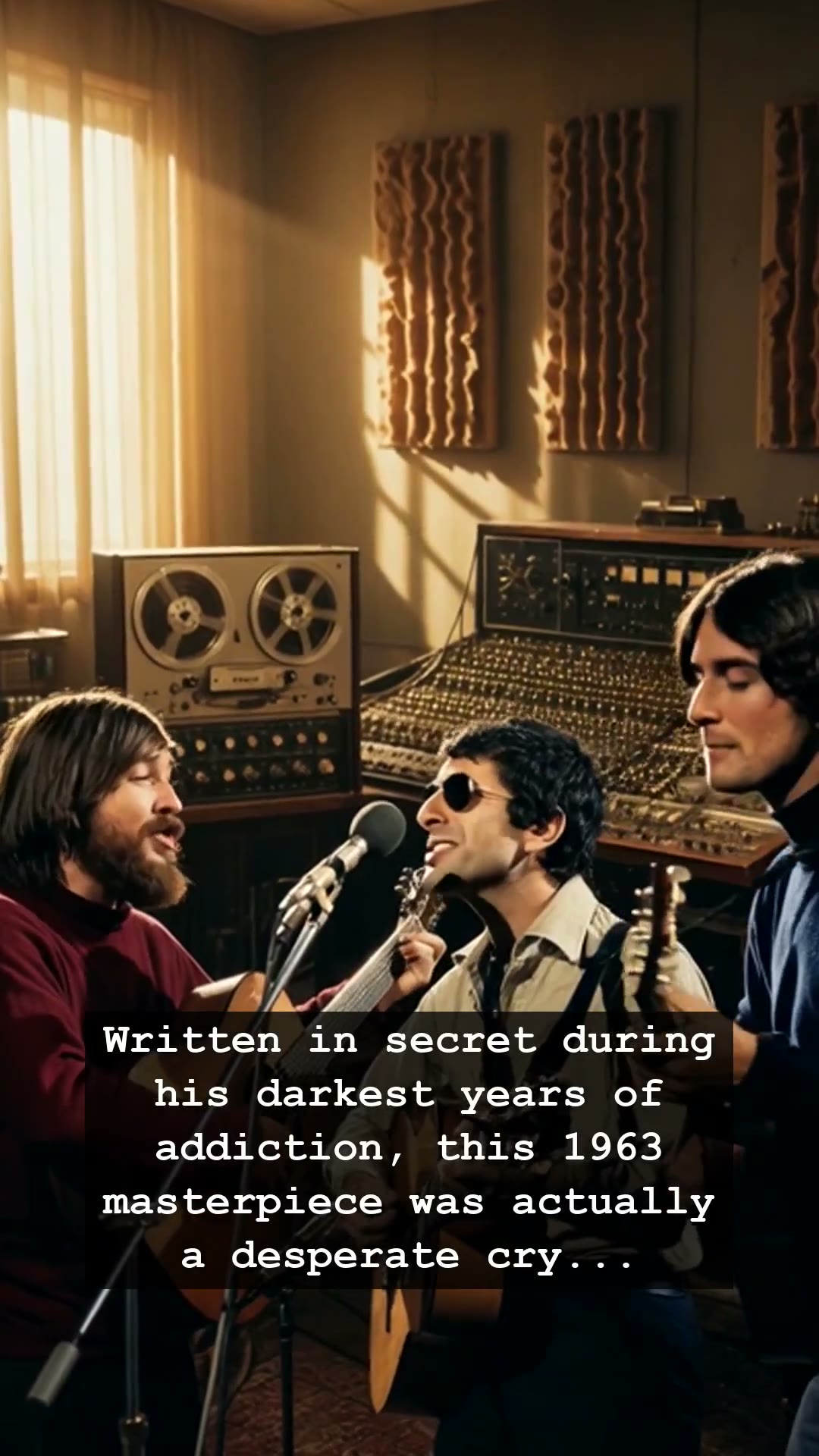
It was 1963, a year defined by the crackle of vinyl on jukeboxes and the shifting tides of American culture. While the world was dancing to the upbeat rhythm of pop, Johnny Cash was spiraling into a living hell of addiction, lost in the shadows of fame and self-destruction. From those depths emerged a song that would become his signature anthem: Ring of Fire. To the millions who bought the record, it was a catchy, mariachi-infused hit. But behind the brass and the booming baritone, the song was actually a desperate, secret confession of forbidden love, written by June Carter to describe the terrifying agony of watching the man she loved crumble under the weight of his own demons.
At the time, the romance between Johnny Cash and June Carter was far from the fairy tale the public would later celebrate. They were two broken souls circling each other in the tempestuous landscape of the touring circuit. June, a pillar of the legendary Carter family, was deeply in love with Johnny, yet he was spiraling, trapped in a cycle of substance abuse that threatened to consume him entirely. She watched helplessly as his life spiraled into a chaotic orbit. The metaphor of a ring of fire was not just poetic invention; it was a visceral description of the suffocating, burning desire and the sheer terror of loving someone who was hell-bent on their own destruction.
June Carter, struggling with her own private heartbreak, channeled this intense vulnerability into the lyrics. She did not write them for fame or fortune; she wrote them as a plea for survival. When Johnny eventually recorded the track, he added the iconic, stinging trumpet arrangement that gave it a frantic, desperate edge. It sounded like the soundtrack to a man walking through flames, perfectly mirroring the psychological turmoil of that era. During those years, the music industry was a brutal machine that often chewed up artists, leaving them to find solace in the very vices that destroyed them. Johnny Cash was no exception, as he navigated the dark corridors of hotel rooms and high-stakes tours while trying to find a reason to hold onto life.
Today, decades after the song first climbed the charts, it still resonates with a haunting, timeless power. It stands as a testament to the fact that the greatest art is often born from the most agonizing personal tragedies. The story of Johnny Cash and June Carter remains one of the most compelling narratives in music history because it was grounded in raw, unvarnished truth. It wasn’t just about a hit record; it was about two people tethered together by faith, obsession, and the undeniable magnetism of a love that refused to burn out, even when everything else was turning to ash.
As you listen to those opening notes today, try to hear past the familiar melody. Listen for the ghost of the man Johnny Cash was fighting to become and the woman who refused to let him fade away. Their story is a reminder that behind every legendary song from that golden era of American music, there is a human heart beating—or breaking—against the backdrop of history. Does this haunting melody still move you the way it moved the world back in 1963?