
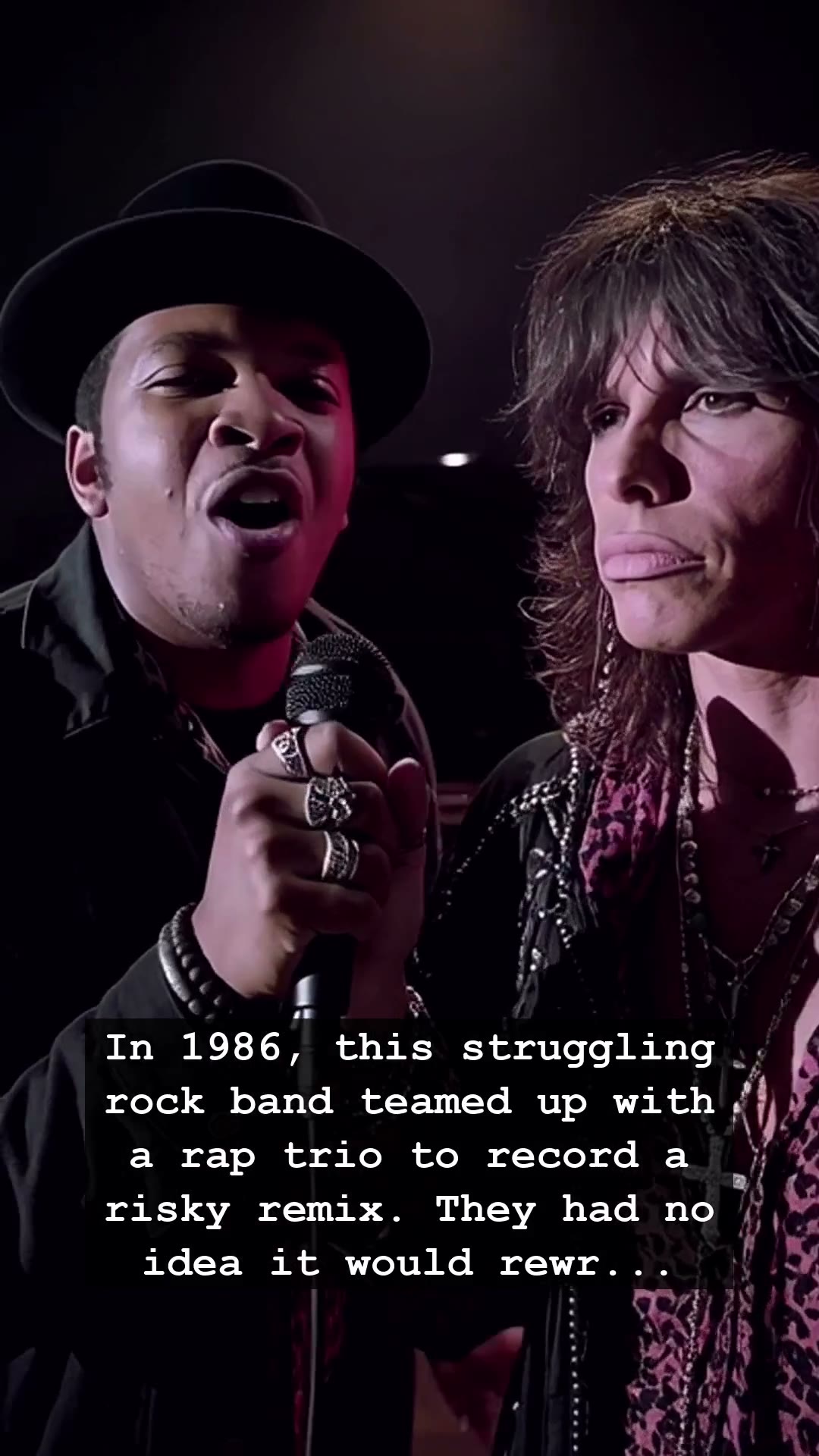
It was 1986, and the air in the music industry was thick with tension. The divide between rock and rap felt like an unbridgeable canyon. On one side stood Aerosmith, the legends of seventies hard rock who were slowly fading into obscurity, their past glory hidden behind the heavy haze of addiction and internal strife. On the other side stood Run-DMC, a brash trio from Queens looking to bring the raw energy of hip-hop to the masses. When they converged in a studio to record a version of Walk This Way, nobody could have predicted that they were about to shatter the walls between genres and rewrite the rules of modern music forever.
At the time, Aerosmith was struggling to find their footing in an era dominated by the glitz of MTV and the emerging synth-pop landscape. Lead singer Steven Tyler and guitarist Joe Perry were barely on speaking terms, and their influence was waning. Meanwhile, Run-DMC was already making waves in the urban scene, but they needed a crossover hit to reach the suburban living rooms of middle America. The collaboration was risky. In those days, a rock band mixing with a rap group was considered social and musical suicide by purists on both sides. The studio session was reportedly chaotic, filled with skepticism, but the moment the iconic guitar riff met that infectious drum beat, the world changed instantly.
There is a vivid, almost cinematic quality to the memory of that recording session. Joe Perry’s jagged guitar licks, originally crafted over a decade prior, found new life when paired with the rhythmic, assertive delivery of Run-DMC. It wasn’t just a song; it was a cultural collision. When the track hit the airwaves, it broke down the invisible barrier that had kept rock and hip-hop in separate, isolated boxes. For a generation raised on Jukebox hits and the burgeoning cable television revolution, this was the definitive moment when they realized that musical boundaries were meant to be broken.
This partnership did more than just top the charts; it revitalized Aerosmith’s career, pulling the band back from the brink of total collapse and into a massive global resurgence. For Run-DMC, it cemented their place as trailblazers who brought hip-hop to the mainstream spotlight. The song became a permanent fixture on the radio, an anthem of defiance that proved music is a universal language. It stands as a testament to the idea that some of the best art is born from the most unexpected, and often uncomfortable, artistic unions.
Decades later, the legacy of Walk This Way remains untouched. It reminds us of a time when the music industry was willing to take bold, dangerous gambles, and it serves as a powerful bridge to our own nostalgic memories of MTV-fueled afternoons. Whether you were rocking out in your room or catching the rhythm on a Walkman, you likely felt the tectonic shift that this collaboration caused. It remains a historic reminder that when you smash down the studio doors and invite the unknown in, you might just build a throne that lasts forever. Do you remember where you were when you first heard those drums kick in?