
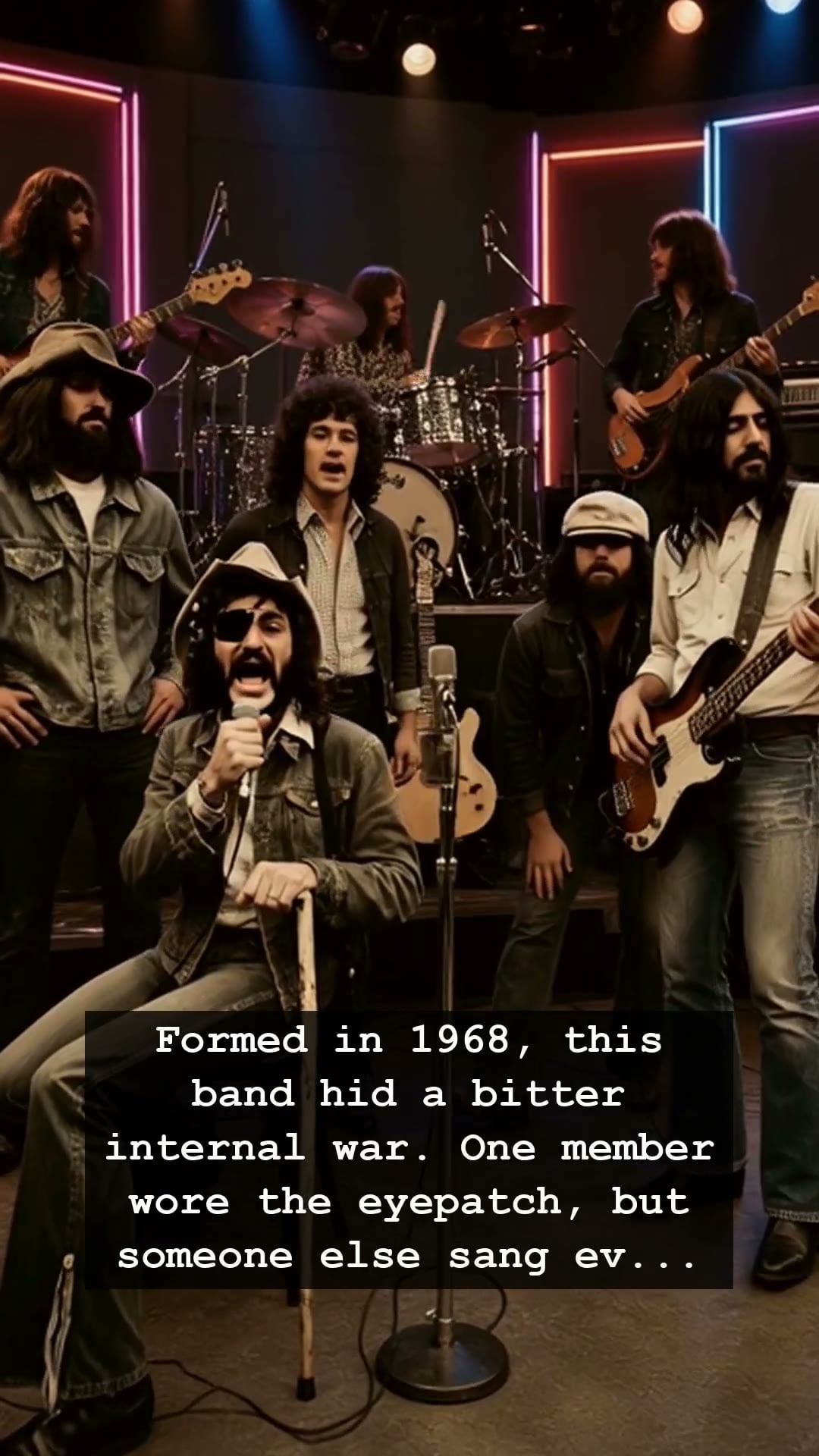
In the golden era of 1970s radio, few bands captured the gritty, irreverent soul of American life like Dr. Hook and the Medicine Show. Their hits, from The Cover of Rolling Stone to Sylvia’s Mother, were staples of every jukebox across the country. They were the masters of blending humor with heartbreak, soundtracking the lives of listeners who grew up in the shadow of the Vietnam War and the shifting cultural landscape of post-Woodstock America. Yet, behind the catchy choruses and the band’s whimsical, ragtag image, a bitter internal war was quietly simmering, one that would eventually threaten to tear their legacy apart.
For most fans tuning in through their trusty Walkman or catching the group on early televised specials, the identity of the band seemed simple. At the forefront was Ray Sawyer, the man who became the visual face of Dr. Hook. With his signature cowboy hat and the iconic black eyepatch he wore after a near-fatal car accident, Sawyer was the charismatic ringleader who commanded the stage. He looked like the definitive outlaw, the quintessential rock star of a band that didn’t play by the rules. But in a twist that defines the complexity of 1970s musical history, the man who provided the iconic, velvet-smooth vocals on their biggest chart-toppers was rarely the one center-stage.
While Ray Sawyer was the theatrical star, Dennis Locorriere was the true sonic backbone of the group. It was Locorriere’s versatile, emotive voice that breathed life into the band’s massive hits, providing the melodic glue that kept their records spinning on rotation. As the band’s popularity skyrocketed throughout the decade, a deep friction grew between the visual image and the vocal reality. This divide created a rift that often left the public confused about who was really driving the music. For the band members, this wasn’t just a creative disagreement; it was a fundamental conflict over the identity of Dr. Hook and the Medicine Show.
This tension was emblematic of a broader struggle in the industry during the 70s, where image began to clash with substance as marketing budgets and television exposure became as important as the music itself. The pressure of maintaining the Dr. Hook persona—a band that was supposed to be a carefree collective of misfits—masked a grueling schedule of touring and the personal tolls of instant fame. The internal drama, fueled by egos and the desire for recognition, eventually led to a fragmented dynamic that fans could only guess at through interviews and rare, candid snapshots from the road.
Today, the story of Dr. Hook and the Medicine Show serves as a poignant reminder of the human cost behind our favorite vintage tracks. It captures the essence of a time when the myth of the rock star was built on careful perception and clever branding. Despite the quiet conflicts that haunted their studio sessions, their music remains timeless, echoing the spirit of a generation that found solace in their songs. Whether you remember them from a dusty vinyl record or a classic rock compilation, the enduring legacy of Dr. Hook proves that even the most bitter internal battles cannot silence a melody that truly resonates with the soul.