
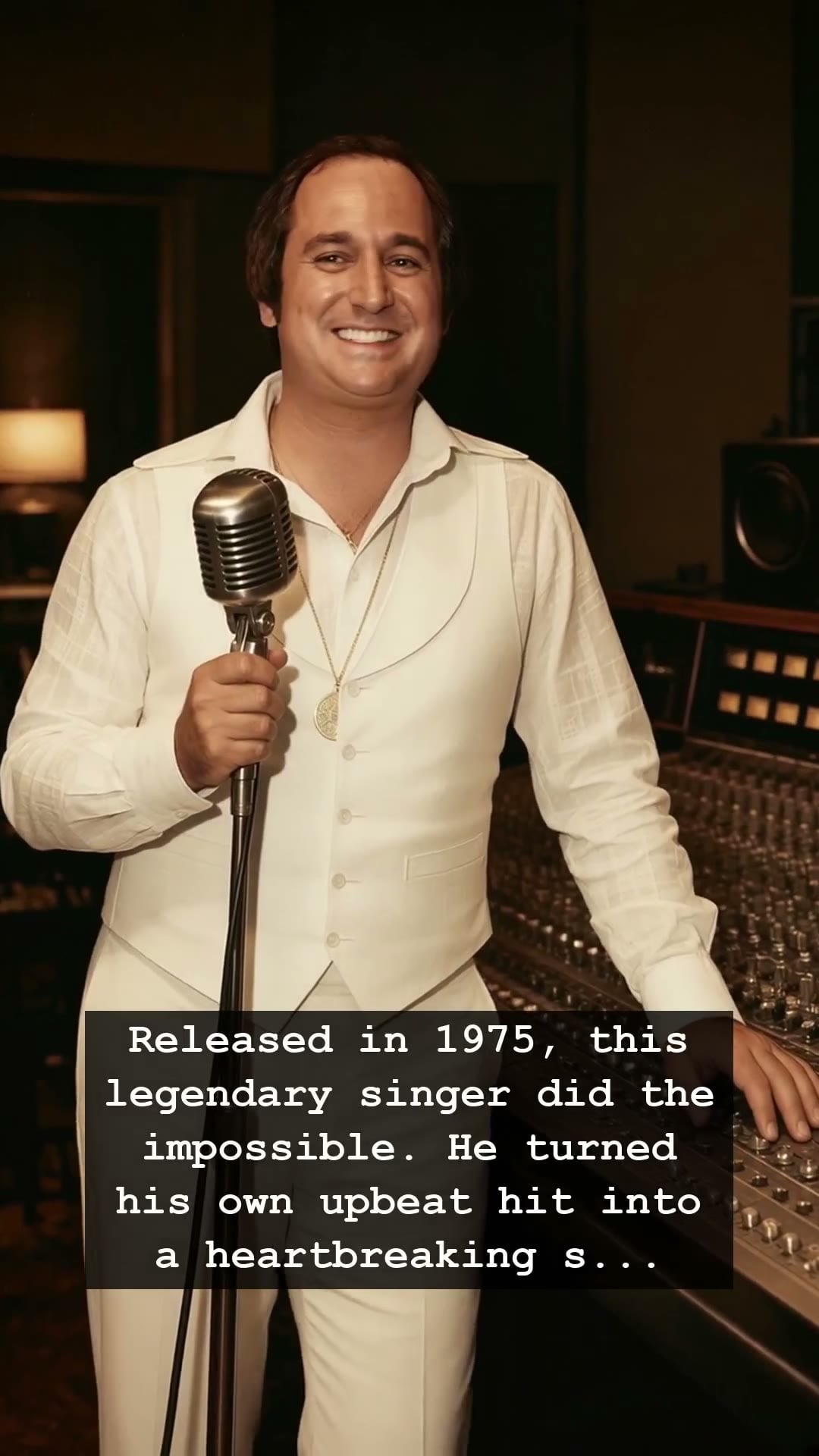
In the golden era of the 1970s, music was evolving at a breakneck pace. We were transitioning from the carefree days of the jukebox to the slick, neon-lit production of the disco age. Amidst this shifting landscape, Neil Sedaka, a man whose melodies had defined the early sixties, was fighting to stay relevant. Most artists of his generation were fading into obscurity, pushed aside by the rising tide of stadium rock and synthesized pop. But in 1975, Neil Sedaka did something truly impossible: he took a song he had already made famous, ripped its heart out, and transformed it into something entirely new, cementing his place in the history books twice.
The song in question was Breaking Up Is Hard to Do. When Neil Sedaka first released it in 1962, it was a quintessential, finger-snapping pop anthem. It echoed through transistor radios and dance halls, capturing the innocent, high-energy spirit of the early rock and roll years. It was a song about teenage heartbreak, yet it was played with a tempo that made you want to move. But thirteen years later, Neil Sedaka returned to the recording studio with a different vision. He slowed the tempo down to a crawl, stripped away the exuberant brass, and leaned into the raw, melancholic pain of the lyrics. The result was a haunting ballad that felt like a confession whispered in the dark.
This wasn’t just a gimmick; it was a revelation of how deeply the music industry had changed. By 1975, audiences were no longer looking for the rapid-fire energy of the early Motown or surf rock days. They were weary, perhaps a bit more cynical, and ready for a song that mirrored the weight of adult relationships. When this slow-burn version of Breaking Up Is Hard to Do hit the airwaves, it soared up the charts, making Neil Sedaka the first artist in history to reach number one with two different versions of the same song. It was a masterclass in artistic reinvention that left critics stunned and fans reaching for their tissues.
Beyond the chart stats, this moment represents the duality of the human experience in music. Neil Sedaka proved that a song is a living, breathing entity. The 1962 version was the scream of a teenager realizing life is hard; the 1975 version was the somber reflection of a man who finally understood why. It captures that specific vintage nostalgia we all crave—the feeling of hearing a familiar melody through a different lens, reminding us of who we were when we first heard it and who we have become since.
Even today, in an era of digital streaming and fleeting trends, the brilliance of Neil Sedaka remains untouched. His ability to bridge the gap between two very different decades shows the timelessness of a great composition. Whether you prefer the upbeat rhythm of the original or the aching vulnerability of the ballad, it is impossible to deny the genius of his craft. As you listen to it today, take a moment to look back at your own journey and think about how the soundtracks of our lives change right alongside us.