
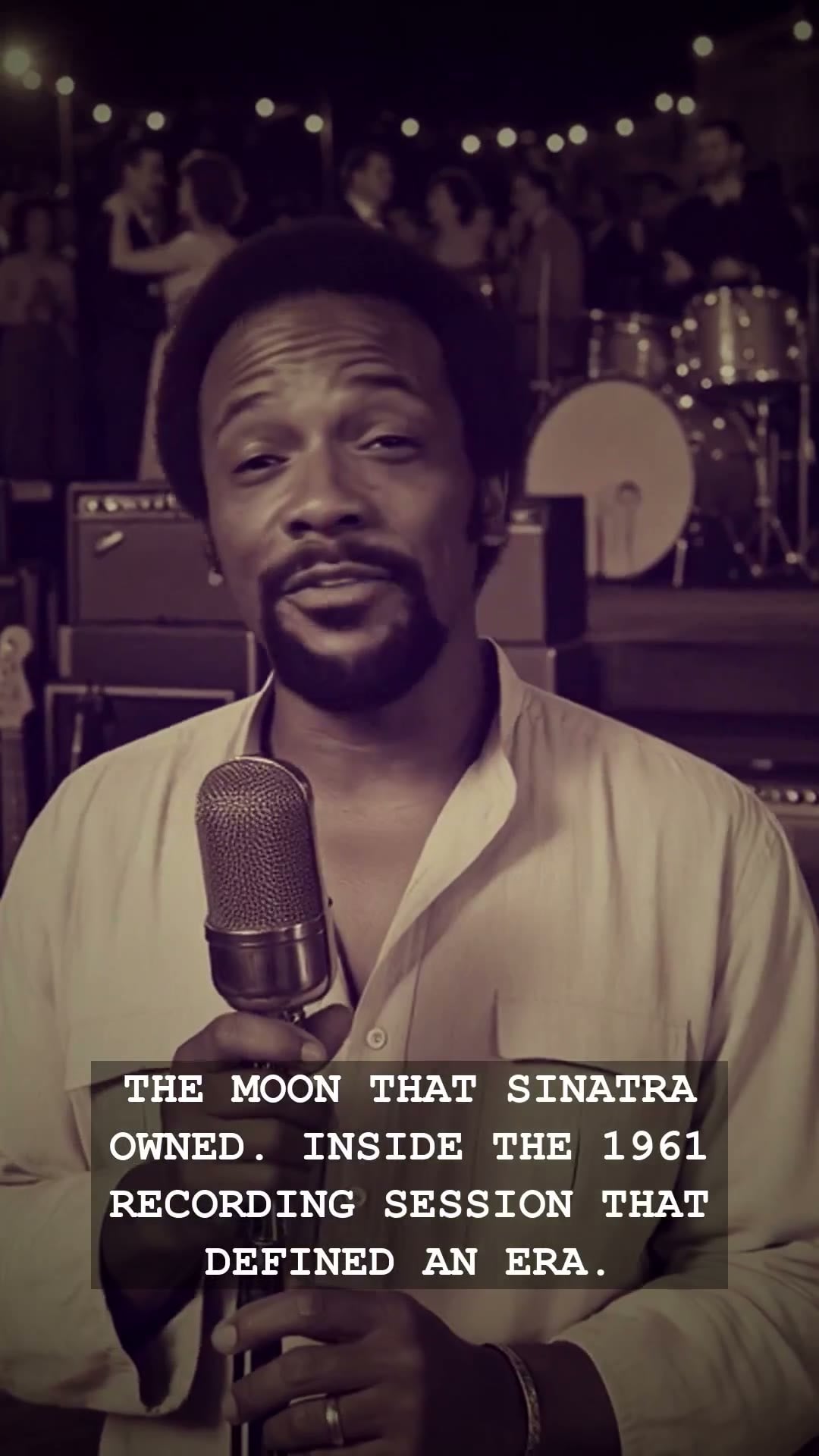
The year was 1961, a time when the world was shifting beneath the feet of a generation. America was caught between the remnants of postwar optimism and the looming shadow of the sixties, yet inside the soundproof walls of the studio, one man held time itself in a velvet grip. When Frank Sinatra stepped up to the microphone to record Blue Moon, he wasn’t just singing a standard; he was crafting a monument to the American soul. It was a moment of effortless swagger, a masterclass in vocal precision that seemed to distill the very essence of the mid-century era into a few minutes of pure, shimmering magic.
To understand the gravity of that session, one must look past the polished vinyl and the crackle of the jukeboxes that once lined the diners of every small town in America. By 1961, Frank Sinatra was no longer just a singer; he was an institution, a man who had survived the lean years and risen to become the ultimate arbiter of cool. The recording of Blue Moon was not merely a performance but a calculated act of dominance. Sinatra knew how to bend a melody to his will, using his voice like a precision instrument to convey the deep, lonely ache of a midnight ballad. It was a performance that demanded your full attention, leaving no room for the background noise of a changing society.
There was a dark, magnetic quality to the way Frank Sinatra operated in the studio during these years. He was notoriously demanding, a perfectionist who navigated the pressures of fame with a cocktail in one hand and an unrelenting standard of excellence in the other. Behind the scenes, the tension was palpable. The musicians knew that when Sinatra walked into the room, he brought a hurricane of expectations. His ability to capture the melancholy of the human condition—that sense of being solitary under a pale moon—was not a gift he took lightly. He lived those lyrics, channeling his own well-documented struggles with heartbreak and the crushing weight of public scrutiny into the microphone.
This specific era defined a cultural landscape where style meant everything. Before the digital age stripped music of its tactile mystery, the work of Frank Sinatra provided the soundtrack for the American dream, complete with its hidden cracks and shadowed corners. Even today, the recording feels incredibly intimate, as if you are sitting on a leather stool in the dim light of the booth, watching a legend breathe life into the air. It is a portal back to a time when music felt dangerous, sophisticated, and undeniably permanent.
Decades later, the resonance of that 1961 session remains untouched. While pop culture has moved through disco, grunge, and the digital revolution, the moon that Sinatra owned that day still hangs high in our collective memory. He taught us that true artistry is found in the confidence to be vulnerable. As we look back through the lens of history, we find that the genius of Frank Sinatra wasn’t just his voice, but his singular ability to make the world stand still. Put on the record, close your eyes, and listen to the man who made the moonlight sound like a secret whispered in the dark.