
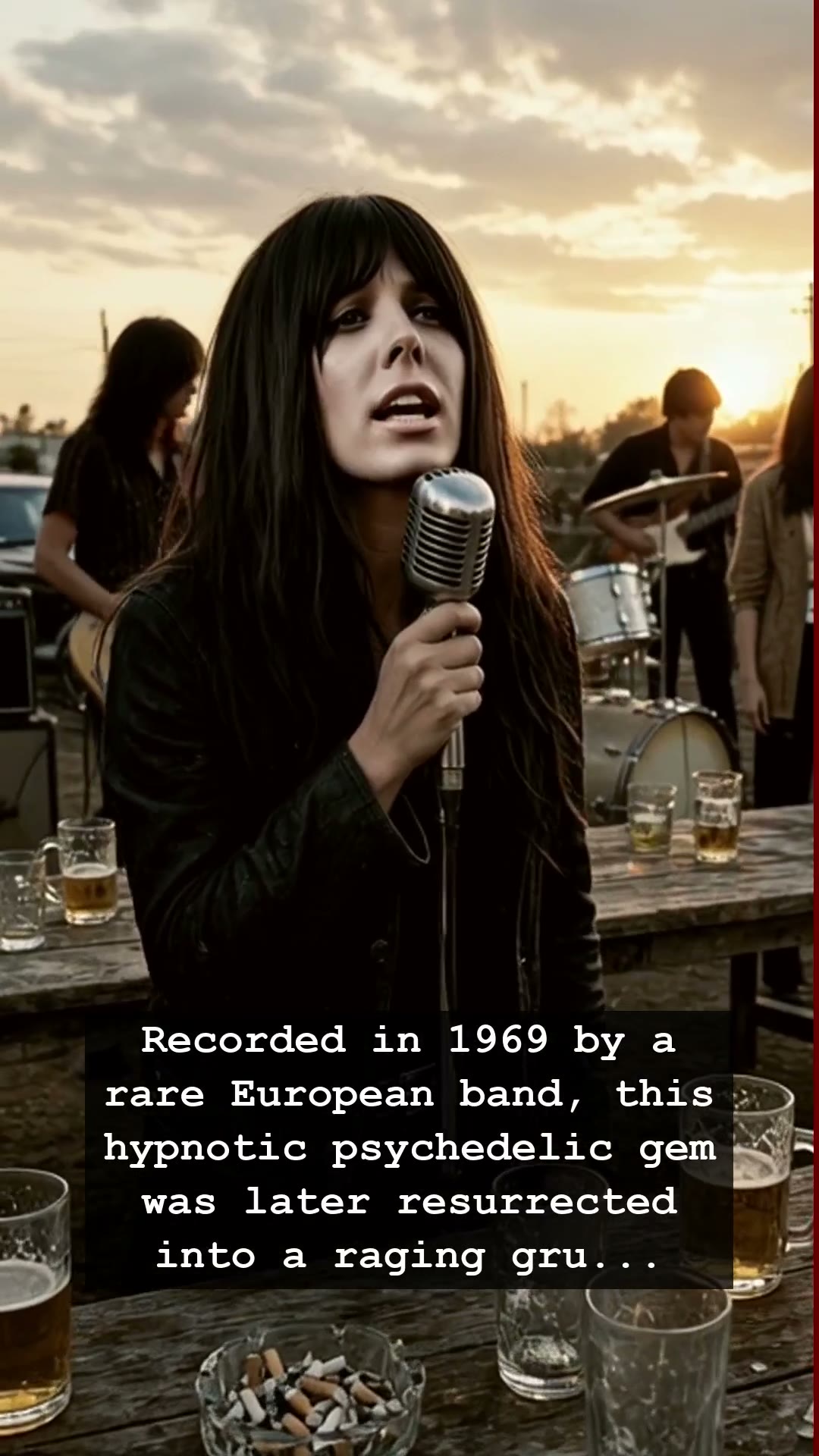
In 1969, the airwaves were dominated by the heavy distortion of Woodstock-era giants and the shimmering pop of the jukebox. Amidst this cultural explosion, a Dutch band called Shocking Blue emerged from the shadows of Europe to deliver a track so hypnotic and haunting that it seemed to vibrate with a life of its own. Venus, their most iconic achievement, was a masterpiece of psychedelic tension that captured the restless spirit of the late sixties. While the world remembers the hit, few truly recall the raw, atmospheric tension that Shocking Blue injected into the global musical consciousness, long before the industry became polished and predictable.
At the time, Shocking Blue was not just another group chasing the charts. Led by the enigmatic Mariska Veres, whose voice carried a primal, untamed energy, the band walked the fine line between folk-rock delicacy and psychedelic urgency. They were outsiders, a rare European force breaking into an American-dominated landscape. Yet, like so many stars of that chaotic era, the members of Shocking Blue faced the crushing weight of sudden fame. The internal friction and the intense pressure of constant touring eventually took their toll, turning their vibrant creative chemistry into a smoldering wreckage of lost potential and silent studio rooms.
For two decades, the legacy of Shocking Blue drifted into the archives of record store bins, gathering dust alongside worn-out vinyl and forgotten dreams. It wasn’t until the early 1990s that the underground scene, hungry for something authentic and biting, unearthed their sound. A legendary trio took that hypnotic melody and stripped it of its original sixties polish, injecting it with the raw, nihilistic grit of the nascent grunge movement. This resurrection transformed a psychedelic gem into a raging anthem, proving that the sonic DNA of the past was far more powerful than anyone dared to imagine.
This cycle of discovery is what makes the history of music so intoxicating. When we listen to those old, crackling recordings, we aren’t just hearing instruments; we are hearing the remnants of a time when the stakes felt higher and the boundaries were meant to be broken. The story of Shocking Blue serves as a bridge between the smoky, candle-lit clubs of the sixties and the flannel-clad mosh pits of the nineties. It is a testament to the fact that great art never truly dies; it simply waits in the dark for a new generation to find the frequency and turn the volume back up to maximum.
Today, when we look back at the trajectory of Shocking Blue, we see a band that defined the shift from traditional rock to a more complex, atmospheric style. They were pioneers of a mood that would eventually influence decades of alternative artists. Their music remains a haunting reminder that in the grand timeline of rock history, the most shocking moments are often the ones that echo the longest. If you ever feel the urge to disappear into a record sleeve, start with their discography and let the ghosts of 1969 lead the way back home.