
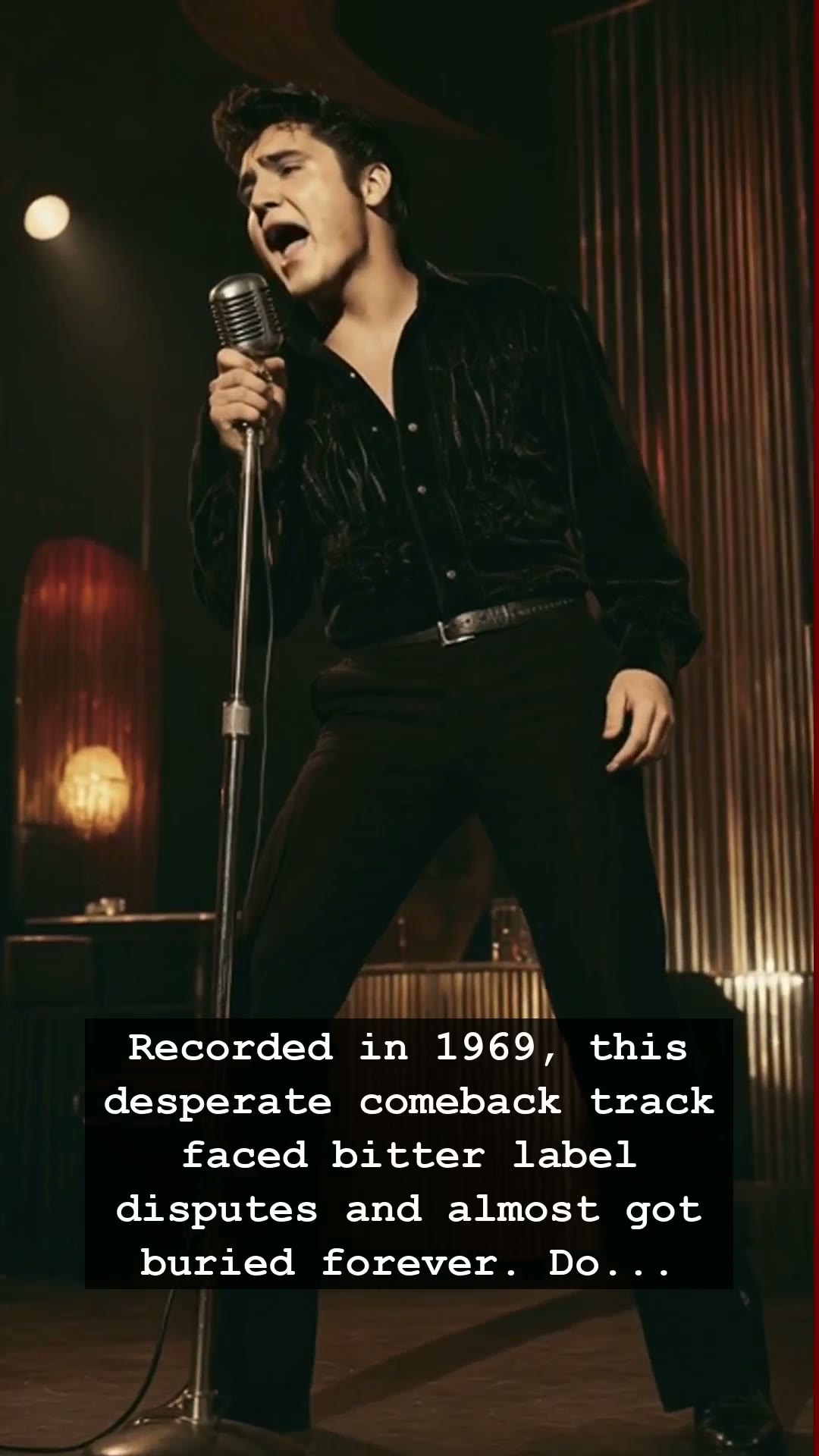
In the winter of 1969, the air in Memphis was thick with tension, not just from the biting cold, but from the crumbling reputation of a legend. Elvis Presley, once the undisputed King of Rock ‘n’ Roll, found himself at a career crossroads that felt more like a dead end. After years of being stifled by hollow Hollywood musicals and a lack of creative control, the man who changed the world with a shaking hip was dangerously close to irrelevance. The music industry had moved on, and his label, RCA, was ready to shelf his aspirations. Yet, inside the American Sound Studio, something electric was about to happen that would defy the corporate suits and silence the critics for good.
The song was Suspicious Minds. It was a desperate, jagged, and soul-baring cry for help, perfectly capturing the paranoia and heartbreak of a man feeling the walls of fame close in. But behind the scenes, the track was nearly sacrificed. Executives viewed it as too long, too complex, and frankly, unnecessary for an artist they deemed a nostalgia act. There were bitter disputes over the fade-out, the gospel-tinged production, and whether Elvis Presley even had the relevance to command the charts anymore. It was a battle of ego and artistic survival, a classic showdown between the raw soul of the performer and the cold calculation of the boardroom.
To understand the magnitude of this comeback, one must remember the era. The Jukeboxes of the late sixties were dominated by the British Invasion and the rising tide of Psychedelic Rock. The world was shifting, and Elvis Presley was fighting to keep his footing in a landscape that had quickly outgrown his image. But when the master tape began to roll, the friction disappeared. He channeled every ounce of his frustration, his loneliness, and his undeniable vocal power into the mic. It was no longer about being the King of the fifties; it was about being an artist who felt every word of the lyrics, a man desperate to prove his fire had not gone out.
When the track finally hit the airwaves, it didn’t just break through; it conquered. It became his final number-one single in the United States, a feat that felt like a cinematic victory against the odds. It proved that despite the label drama and the suffocating pressure of his past, the essence of Elvis Presley remained potent. For those of us who grew up with the crackle of a vinyl record on a Sunday morning, that song represents the last great stand of a musical titan. It remains a haunting, beautiful bridge between the golden era of rock and the modern pop world.
Even today, listening to the soaring, desperate climax of the track feels like peering into the private soul of a man whose life was dictated by both massive adoration and immense isolation. The story of this 1969 recording reminds us that even legends face the risk of being forgotten. If you find yourself spinning your old collection tonight, listen closely to those final, fade-out notes. It is the sound of a legend reclaiming his throne when everyone else had already turned the page.