
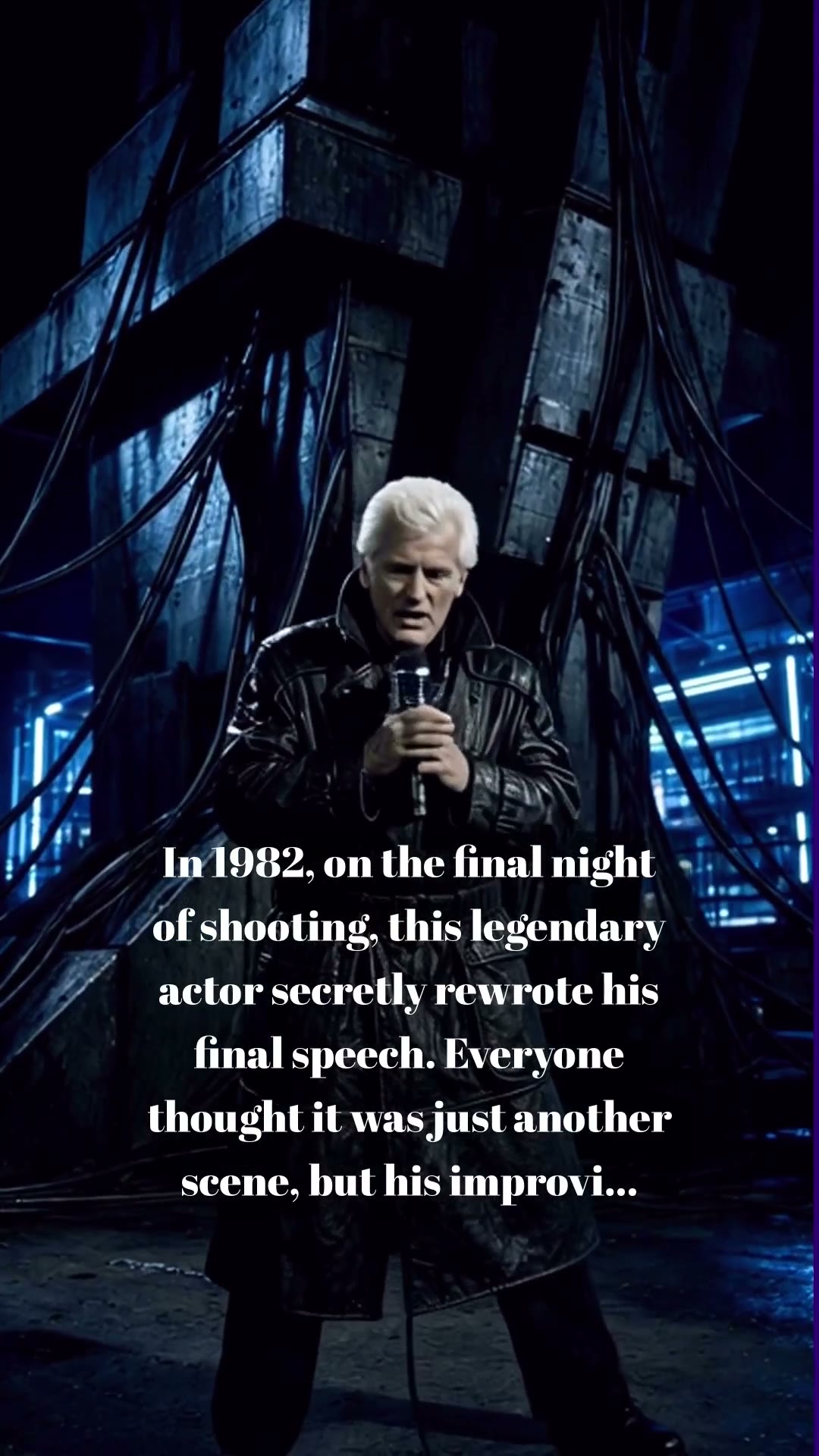
There is a specific kind of magic found only in the flickering light of a cathode-ray tube, the hum of a VHS player, and the grainy texture of 1980s celluloid. For those of us who grew up in the shadow of the Golden Age and transitioned into the raw intensity of New Hollywood, cinema was more than entertainment; it was a sanctuary. Among the countless performances that defined that era, few moments possess the haunting, transcendental power of Rutger Hauer in Ridley Scott’s 1982 masterpiece, Blade Runner. It was a film that redefined the sci-fi genre, blending noir aesthetics with profound existential questions, but it was Hauer who provided the heartbeat of the machine.
Rutger Hauer was never just a face on a poster; he was an actor of immense presence, a practitioner of that visceral, soulful method acting that sought to find humanity even in the most synthetic of roles. Playing the replicant Roy Batty, Hauer found himself tasked with a final monologue that felt, on the written page, a bit too wordy for the gravity of the scene. As the story goes, on that final, rain-drenched night of shooting, the atmosphere on set was thick with exhaustion and artistic tension. Hauer, ever the perfectionist, decided to take a quiet, solitary risk. He stripped back the dialogue, distilling the character’s entire existence into a few short, devastating lines that he had written in secret.
When the cameras rolled, the crew witnessed something that transcended the script. Rutger Hauer delivered those lines—speaking of attack ships on fire off the shoulder of Orion and C-beams glittering in the dark—with such a terrifying, fragile intimacy that the entire set fell into a stunned silence. The famous inclusion of the phrase ‘tears in rain’ was not a calculated studio move, but a spontaneous, brilliant gift from an actor who deeply understood the impermanence of life. It was a moment of pure alchemy where the line between the artificial man and the human spirit simply vanished.
Looking back from the vantage point of the present, this performance serves as a poignant reminder of a time when movie stars were crafted from grit and emotional vulnerability rather than digital effects. Rutger Hauer gave us a glimpse into the depth of the human condition, even while portraying a being denied that very humanity. It remains a cornerstone of 1980s cinema, a piece of art that continues to spark debate, reflection, and quiet awe among those of us who still cherish the tactile beauty of a film print.
Decades have passed since that rain-soaked night in Los Angeles, yet the legacy of Rutger Hauer remains unshaken. Like the flickering light of an old theater projector, his performance stays with us, reminding us that the most beautiful things in life are often the most fleeting. As we look back on the archives of cinema history, we recognize that while technologies change and blockbuster trends come and go, the raw, improvised genius of a true artist is the only thing that truly survives the test of time. May we never stop finding wonder in the stories that once shaped our worlds.