
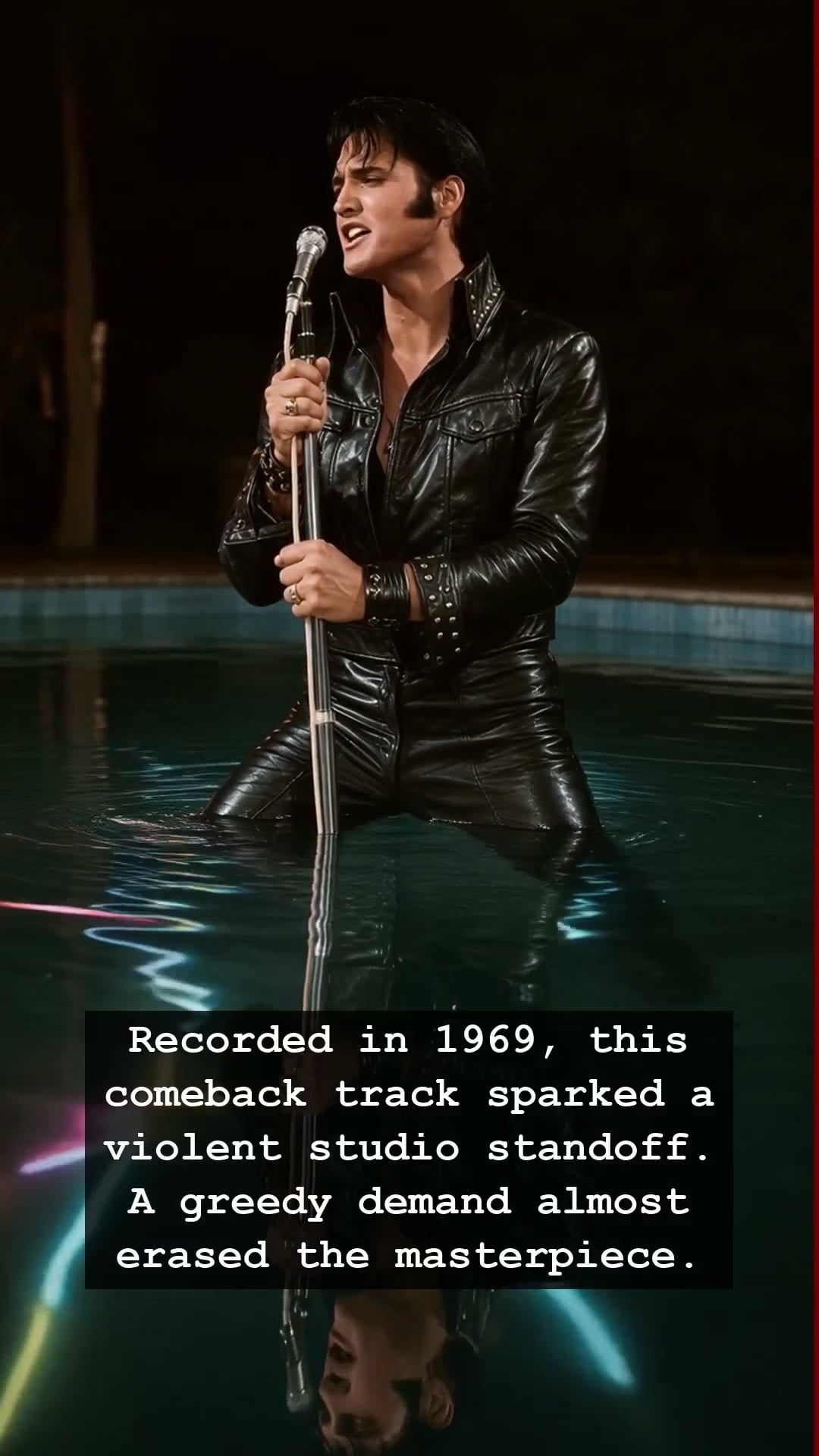
It was 1969, and the King of Rock ‘n’ Roll was fighting for his life—not against illness, but against irrelevance. The neon glow of the fifties had faded, the jukeboxes were changing their tunes, and Elvis Presley was desperate to prove he still commanded the throne. He retreated to American Sound Studio in Memphis, a gritty, no-nonsense environment that felt a million miles away from the polished, soulless movie soundtracks he had been forced to churn out for years. This session was meant to be his resurrection, a raw declaration of soul, but it nearly collapsed into a disaster that would have erased a piece of history forever.
As the tape rolled on what would become his legendary comeback tracks, the room was thick with tension. A brutal standoff erupted between his producer, Chips Moman, and the money men representing the publishers. These vultures demanded total creative control and a cut of the publishing rights, threatening to shut down the historic sessions entirely if Elvis Presley didn’t bow to their greedy terms. Moman, a man of fierce integrity, stood his ground, threatening to throw the suits out of the building. The air was charged with a palpable, dangerous energy that seemed to bleed into the music itself.
Elvis Presley, caught in the middle of this high-stakes power struggle, did something unexpected. He poured every ounce of his frustration, his regret, and his smoldering ambition into the microphone. You can hear it in his voice on tracks like Suspicious Minds—that trembling intensity isn’t just acting; it is the sound of a man pushing back against a machine that tried to own his spirit. The music became a volatile cocktail of gospel, soul, and pure, unfiltered desperation that captured the spirit of a changing America, caught somewhere between the tail end of the sixties and the uncertain dawn of the seventies.
This era was defined by this kind of tension. While the rest of the world was turning toward the counter-culture riots and the psychedelic fog of Woodstock, Elvis Presley was grounding himself in the visceral reality of Southern rhythm. He wasn’t just recording songs; he was reclaiming his identity. The standoff in the studio became a metaphor for his entire career—a constant battle to maintain his authenticity against the suffocating grip of commercial demands and the vultures lurking in the shadows of the industry.
Today, when we spin those vinyl records or listen to the crackle of those sessions, we aren’t just hearing a hit; we are hearing a miracle that almost never happened. It remains a testament to the fact that greatness is rarely born in comfort. It is forged in the fire of conflict, under the pressure of broken promises, and in the quiet, dangerous moments where an artist decides to fight for their truth. Elvis Presley finally walked out of that studio with his masterpiece intact, leaving us a reminder that even the King had to gamble everything to keep his crown.