
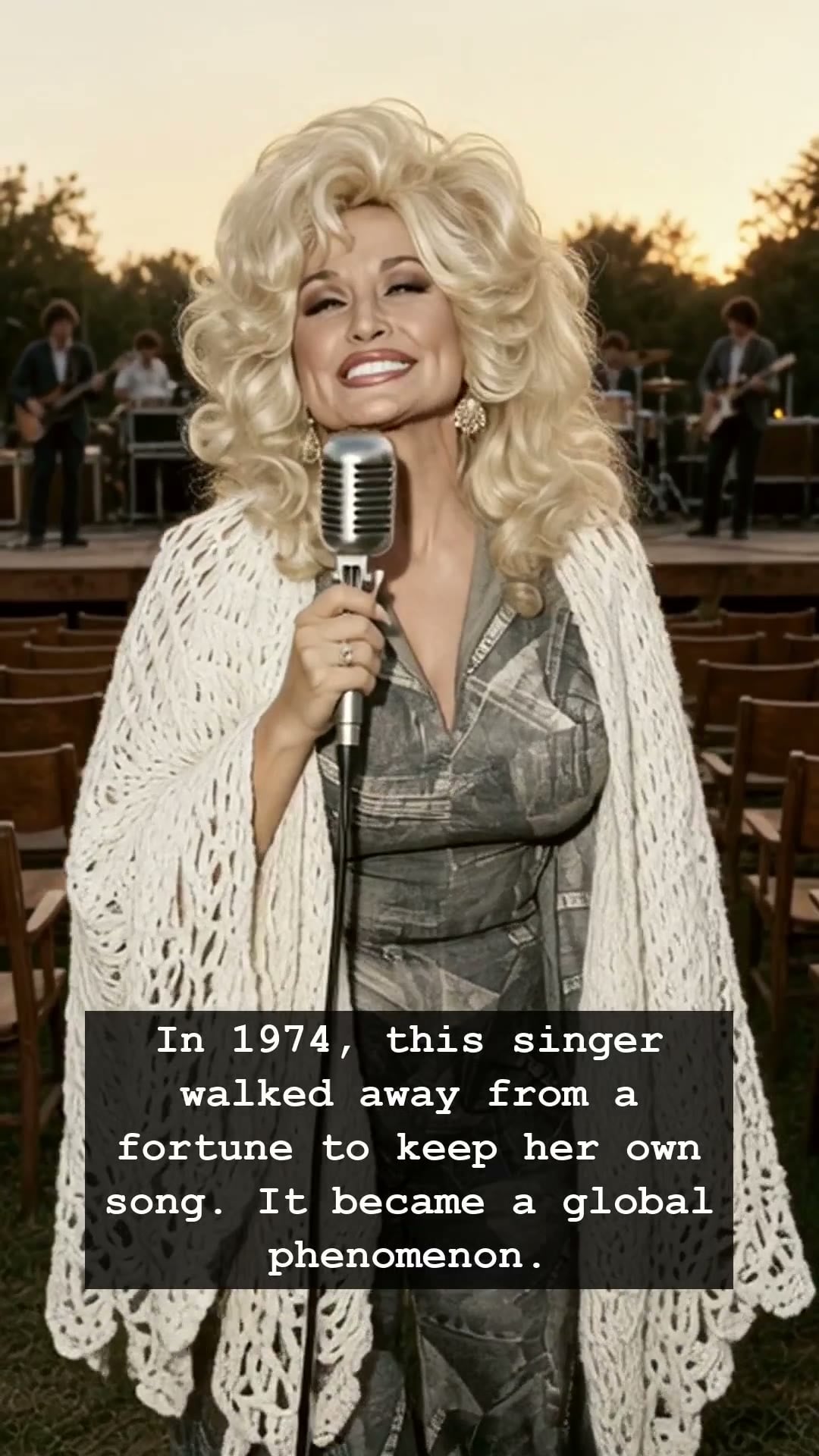
It was 1974, and the country music scene was still reeling from the shifting tides of the cultural revolution. In a dim recording studio, a young Dolly Parton was faced with an offer that would have tempted any rising star to the brink of insanity. Colonel Tom Parker, the formidable manager of the King of Rock ‘n’ Roll himself, Elvis Presley, had arrived with a golden ticket. He wanted Elvis to record a cover of a new song Dolly Parton had written, but there was a catch that felt more like a shackle: Elvis’s camp demanded half of the publishing rights. In the mid-seventies music industry, where jukeboxes were the heartbeat of every roadside diner and radio play was the ultimate currency, giving up ownership meant losing the soul of the work. Dolly Parton, often underestimated for her whimsical persona, proved she possessed the heart of a lioness. She politely, but firmly, walked away from a potential fortune, choosing to protect the integrity of her lyrics over a quick payday.
That song was I Will Always Love You. While history might have painted Elvis as the titan who could claim any hit he desired, this was the moment where the power dynamics of Nashville collided with the unwavering artistic integrity of one woman. Dolly Parton later admitted that the decision felt like losing out on a dream, but she felt a gut-wrenching need to hold onto the rights for her family and her future. Little did she know that by rejecting the King, she was not just preserving her own legacy; she was setting the stage for one of the most enduring ballads in global history. It was a gamble that spoke to the deeper, often brutal reality of how artists in the seventies struggled to retain control over their creative property while navigating the shark-infested waters of major label contracts.
Years later, when Whitney Houston breathed new, soaring life into the track for the film The Bodyguard, the world finally understood the weight behind Dolly Parton’s heartbreak. But the song was never truly about a romantic breakup in the way most listeners perceive it. It was a professional goodbye, a bittersweet severance of ties between Parton and her long-time mentor and partner, Porter Wagoner. The raw vulnerability captured in those verses remains a testament to the fact that the most painful goodbyes are often the ones we initiate ourselves. It reminds us of a time when music was an intimate confession rather than a polished product.
Today, as we look back at the golden era of the seventies, we see Dolly Parton not just as a rhinestone-studded icon, but as a fierce businesswoman who navigated a male-dominated industry with grace and steel. Her refusal to yield to the King remains one of the most legendary stories in music history. It serves as a haunting reminder that in an age of corporate influence, true artistry survives only when the creator refuses to sell their story short. So, the next time you hear that famous melody, remember that behind the glamour, it took a singular, defiant moment of courage to keep the song—and the soul—alive.