
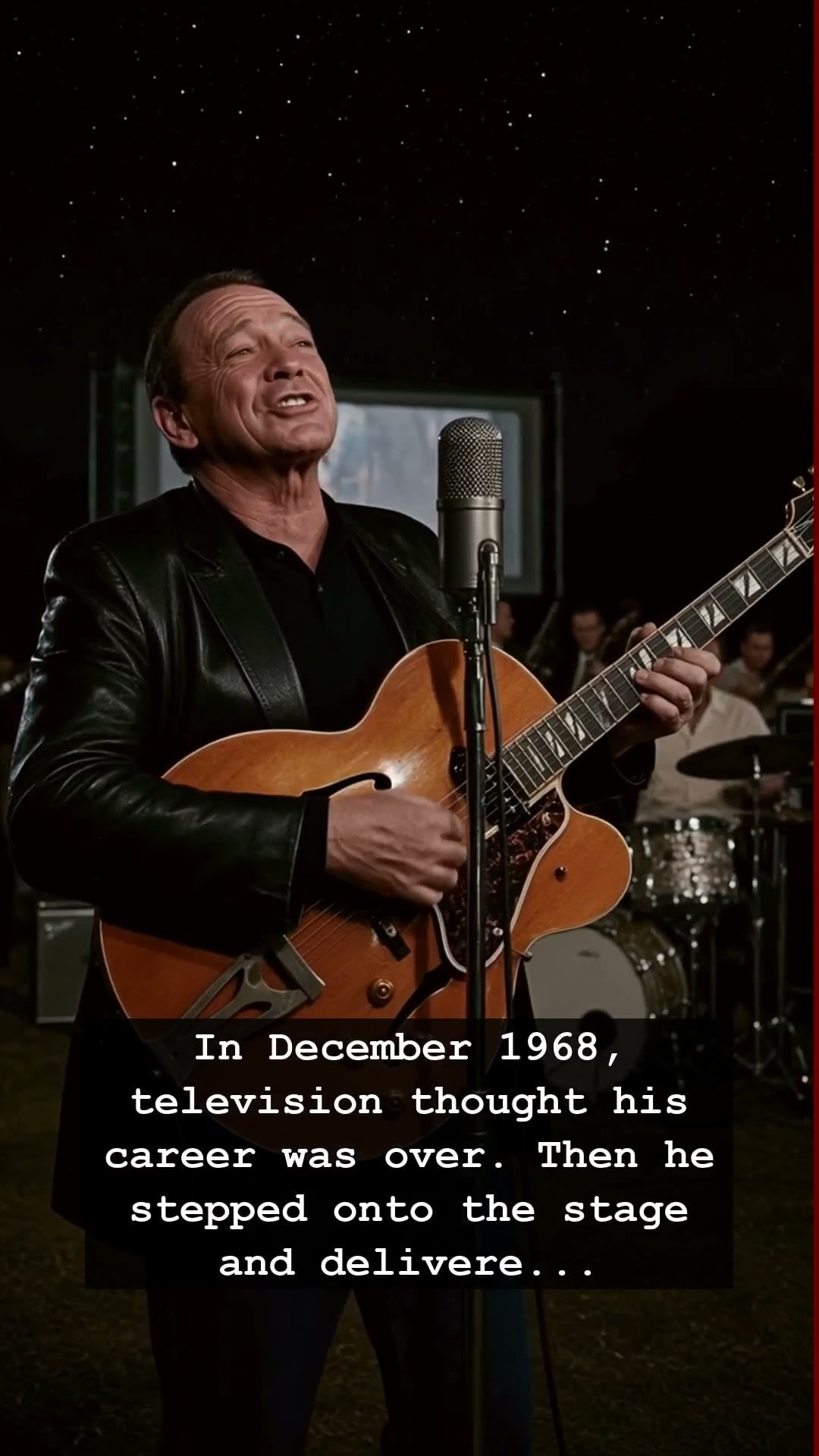
In December 1968, the King of Rock ‘n’ Roll was technically a ghost. For years, Elvis Presley had been drifting through a monotonous desert of mediocre Hollywood musicals, far away from the rebellious energy that once shook the foundations of American culture. The music industry had moved on to the British Invasion and the kaleidoscopic sounds of psychedelia. Television executives and cynical critics whispered that the boy from Tupelo was a relic of the past, a washed-up jukebox icon destined for the bargain bin of history. But they were about to be spectacularly wrong. When Elvis Presley finally stepped onto the soundstage for his legendary NBC special, the air in the room was thick with a tension that hadn’t been felt since the early days of Sun Studio.
He emerged not in the sequined jumpsuits that would later define his Las Vegas years, but in tight, black leather—a visual nod to the raw, dangerous edge he had lost somewhere between the silver screen and the studio. Behind the cameras, Elvis Presley was visibly terrified. He was a man who had spent his life under the crushing weight of fame, suffering from the exhaustion of a decade spent playing characters instead of being himself. Yet, as the cameras began to roll, the hesitation vanished. He gripped the microphone stand with a familiar, feral intensity, his voice finding that deep, bluesy resonance that reminded a nation why he had been crowned in the first place.
This was not just another television broadcast; it was a resurrection. As he performed songs like ‘If I Can Dream,’ the lyrics carried a weight of social consciousness and personal redemption that resonated deeply during a volatile year of political assassinations and cultural unrest. The audience sat in stunned silence as they witnessed a man reclaim his throne. It was raw, unscripted, and entirely authentic. For those watching at home, illuminated by the flicker of their television sets, it felt as though the soul of American rock had finally come home. The performance proved that even when the world thinks you are finished, you still have the power to redefine your own legacy.
Looking back, the ’68 Comeback Special serves as a poignant reminder of the fragility of fame and the resilience of true artistry. Elvis Presley didn’t just sing; he confronted his own ghosts on national television. It remains one of the most significant pivots in music history, bridging the gap between the rockabilly spirit of the fifties and the arena-rock dominance that would define the seventies. The grit and sweat captured in those frames still feel visceral today, acting as an anchor for anyone who appreciates the sheer magnetism of a performer who could command a room with nothing but his shadow and his voice.
Even decades later, we still reach for the recordings of that night, finding comfort in the imperfections of his performance. It stands as a testament to the fact that greatness is rarely a straight line; it is often a jagged path of setbacks, self-doubt, and eventual triumph. Elvis Presley showed us that you can always return to the core of who you are, provided you have the courage to face the spotlight one more time. Do you remember where you were when the King truly returned?