
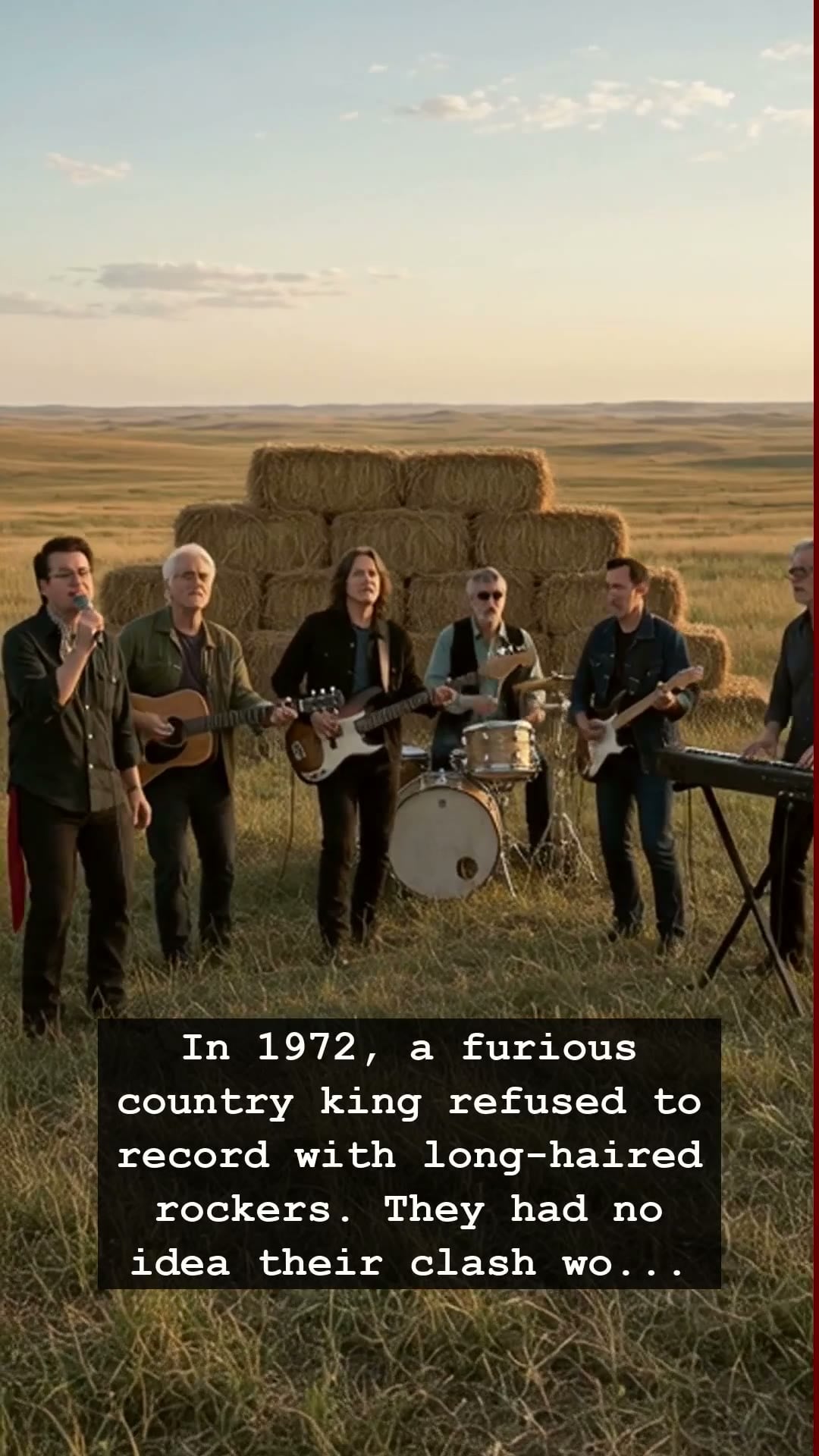
In 1972, the hallowed halls of Nashville were strictly for the polished and the professional. When the long-haired, psychedelic-tinged California rockers of the Nitty Gritty Dirt Band arrived in Tennessee, they were viewed as intruders in the sacred temple of country music. At the center of this tension stood Roy Acuff, the reigning King of Country Music, a man whose voice was the bedrock of the Grand Ole Opry. When the young band approached him to collaborate, Acuff flatly refused. He wanted nothing to do with these long-haired rebels, whose appearance represented the very counterculture that he felt was diluting the purity of American roots music. It was a clash of eras, a standoff between the established patriarch of tradition and the shifting tide of youth culture.
Yet, the music business often operates on a friction that eventually sparks genius. The Nitty Gritty Dirt Band was determined to bridge the generational divide, carrying the spirit of the Woodstock era into the heart of bluegrass. They persisted, driven by an unyielding respect for the legends who had built the foundation of American folk music. The tension in the studio was palpable; it was a quiet, suffocating pressure as the rockers waited for the old guard to either walk out or embrace the madness. They were not looking for a hit single to play on a transistor radio; they were looking to archive the soul of a nation before the old legends faded away.
Eventually, the armor of skepticism began to crack. Roy Acuff finally stepped up to the microphone, his voice resonating with the weight of decades of tradition. As the Nitty Gritty Dirt Band played their acoustic instruments with a reverence usually reserved for prayer, a miracle occurred. The barrier between the rock generation and the country legends evaporated. The resulting album, Will the Circle Be Unbroken, became more than just a collection of songs; it became a historical document. It captured a moment where two worlds collided and, instead of destroying one another, created a masterpiece that defined a generation of music lovers.
Looking back, it is easy to forget how radical that collaboration truly was. In an age when the radio was just starting to embrace the polished sounds of pop-country, these artists chose to strip everything back to the basics: a fiddle, a banjo, and the raw, unvarnished human voice. They chose to honor the history of the music rather than commercialize it. The Nitty Gritty Dirt Band proved that the spirit of rebellion could exist alongside the deepest respect for tradition, and that even the most stubborn critics could be won over by authenticity.
Today, the legacy of that session continues to echo through the modern Americana scene. When we listen to those tracks now, we are transported back to a time when music felt like a living, breathing lineage. The story of Roy Acuff and the Nitty Gritty Dirt Band serves as a poignant reminder that the best art often emerges from the most unlikely conflicts. Do you remember where you were when you first heard that timeless, haunting melody?