
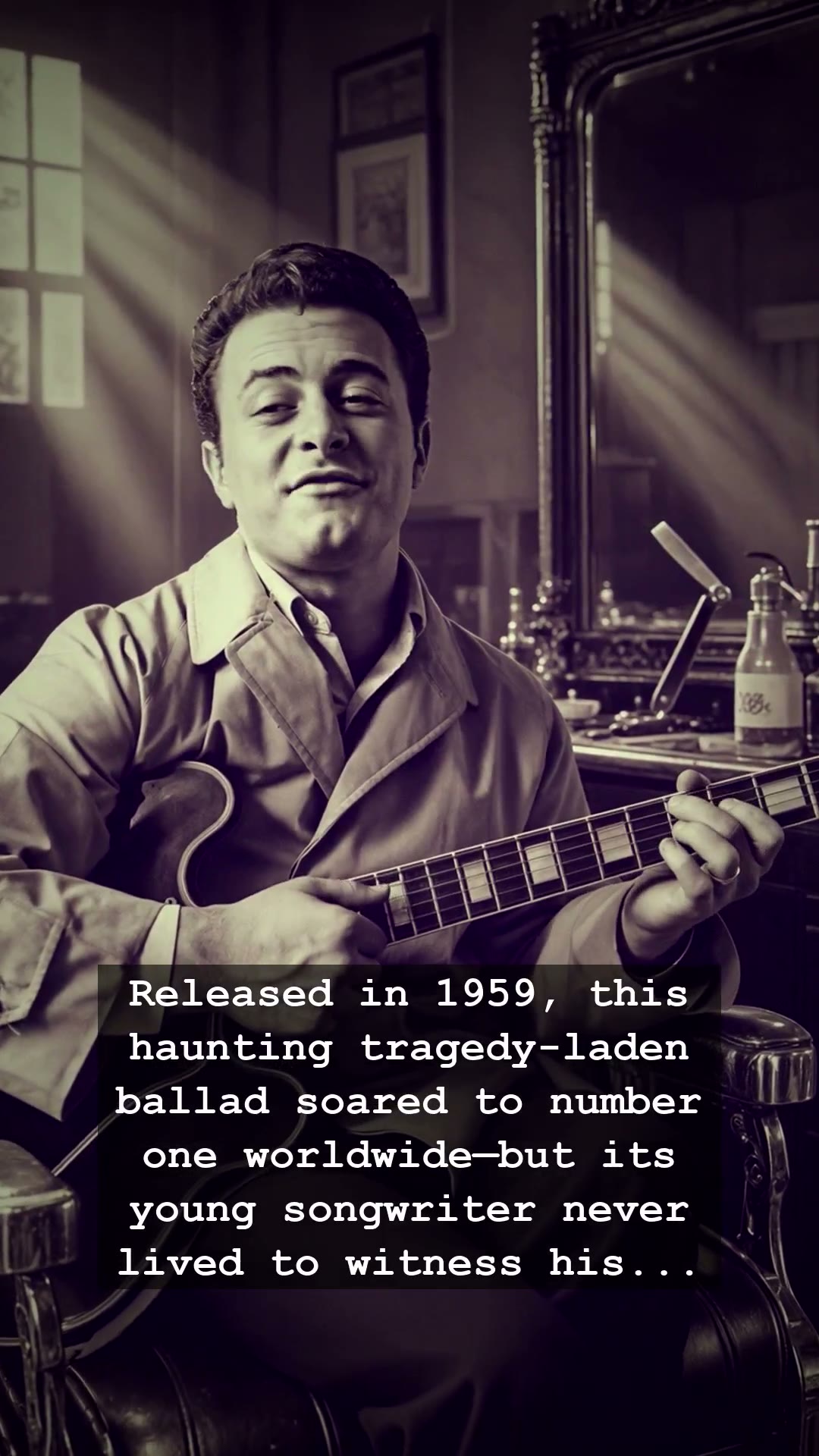
It was 1959, the dawn of a golden era where rock and roll was still finding its rebellious footing, and the airwaves were dominated by the glow of the jukebox. That year, a haunting, melody-soaked ballad titled Running Bear soared to the top of the global charts, turning Johnny Preston into an overnight sensation. With his velvet voice and the dramatic, primitive drum beats that defined the track, Preston seemed destined for a lifetime of stardom. Yet, behind the glitz of the radio hits and the rising fame, there lay a chilling shadow. While the world danced to the song, few listeners knew that the man who poured his soul into writing the track never lived to hear his own masterpiece climb the ladder to number one.
The genius behind the lyrics was J.P. Richardson, famously known as The Big Bopper. A charismatic figure of the late fifties, Richardson crafted the narrative of Running Bear with a tragic, star-crossed intensity that echoed the spirit of the times. He was a man brimming with talent, poised to become a staple of the American music landscape. But fate, as it often does in the history of rock and roll, had a cruel twist waiting just around the corner. In February of 1959, the infamous plane crash that took the lives of Buddy Holly and Ritchie Valens also claimed the life of Richardson, silencing his vibrant voice forever, mere months before his composition became a worldwide phenomenon.
Johnny Preston was the vessel chosen to carry Richardson’s legacy to the masses. When Preston stepped into the studio, the tragedy was still fresh, the industry was in shock, and the world of music felt as though it had lost its innocence. Preston delivered a performance that was raw, haunting, and undeniably authentic. The song itself, telling the story of two lovers from warring tribes meeting their end in a river, took on a ghostly, prophetic weight. Every time the record spun on a turntable, it felt as though the ghost of the songwriter was pleading with the listener, adding a layer of melancholy that elevated the track beyond a simple pop hit.
This era was defined by such high-stakes drama and sudden, shocking losses. From the flickering lights of the early television specials to the iconic sound of records playing in diners across the country, the late fifties were a time of rapid transition. Johnny Preston became the face of a song that served as both a commercial triumph and a memorial. For those who lived through it, listening to the track today is like stepping back into a sepia-toned memory, a time when music was the heartbeat of a generation struggling to balance joy with the inevitable weight of mortality.
Decades later, the legend of Johnny Preston and the tragic origins of his biggest hit continue to captivate those who love the deep lore of musical history. It serves as a reminder that every great song carries a human story, often one far more complex than the melody suggests. As the needle drops on that vintage vinyl, remember the man who didn’t live to hear the applause, and the singer who immortalized his sorrow in song. It is a story of fame that arrived too late, and a legacy that will never truly fade.