
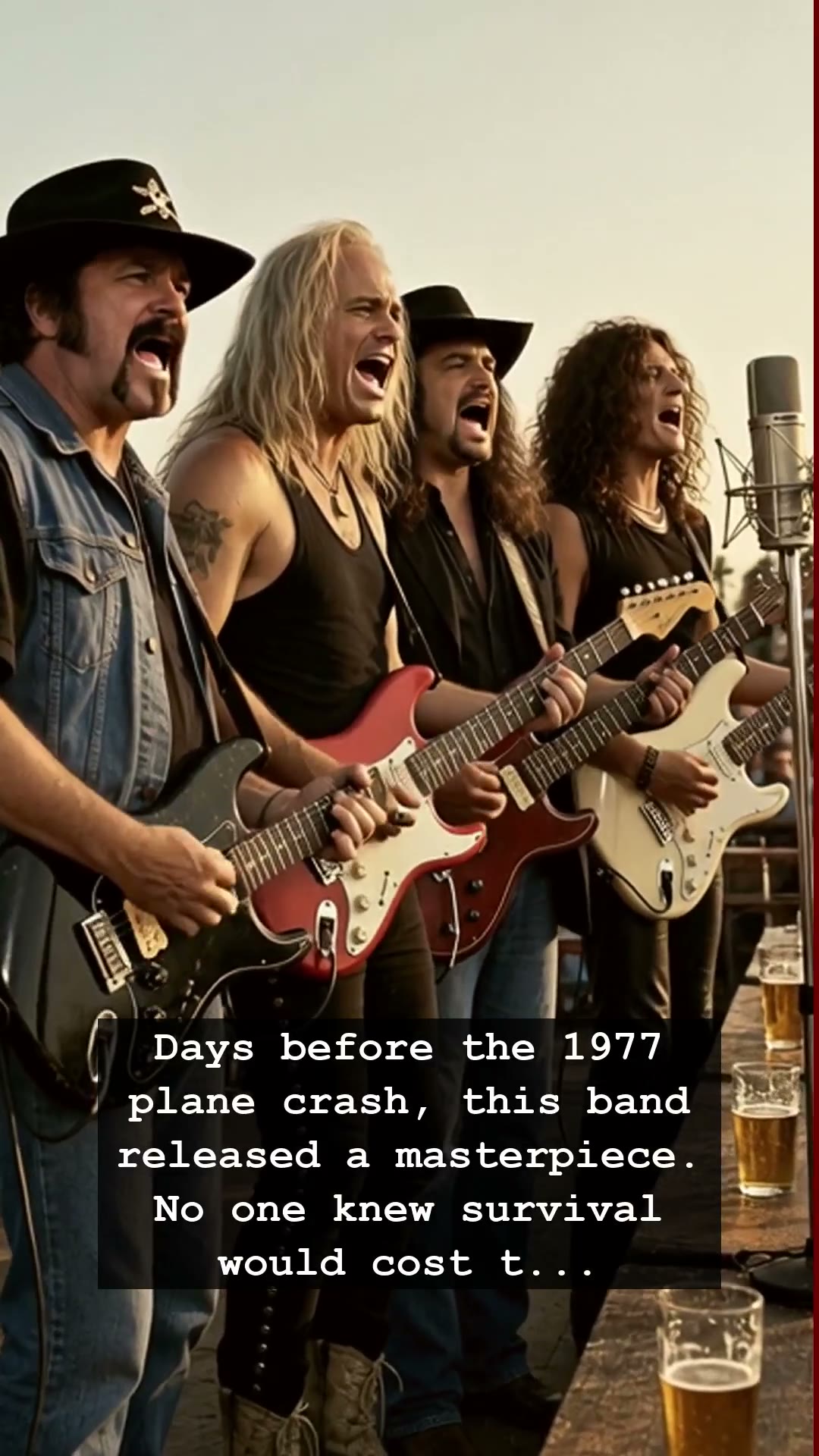
The year was 1977, and the airwaves were humming with the raw, rebellious spirit of Southern rock. For Lynyrd Skynyrd, the road had been long and winding, leading them to the release of their final original lineup album, Street Survivors. The cover art, depicting the band members wreathed in flames, felt like a bold statement of their heat and intensity. Yet, just three days after the record hit the shelves, a chilling silence fell over the world of music. A fatal plane crash in the swamps of Mississippi shattered the band, their legacy, and the lives of those who walked away from the wreckage. Among the survivors, guitarist Allen Collins stood as a broken witness to a dream that had turned into an unimaginable nightmare.
Allen Collins was more than just a gifted musician; he was the sonic architect behind some of the most iconic guitar riffs in rock history. Alongside Gary Rossington, his intricate interplay defined the band’s signature sound. But in the immediate aftermath of that October day, the accolades and the gold records felt like hollow artifacts. Collins, though alive, carried the crushing weight of survivor’s guilt. The crash didn’t just take his brothers-in-arms; it took the very essence of the band they had built from the ground up in the hot, humid nights of the American South. The music that once fueled their rise to stardom now played like a haunting soundtrack to a tragedy that defied comprehension.
To understand the magnitude of what Allen Collins endured, one must look at the era. This was a time of Jukebox anthems, the rise of arena rock, and a culture that viewed rock stars as untouchable gods. When reality crashed into that dense woodland, it tore the veil off the myth of invincibility. Collins’ journey in the years that followed was one of profound complexity. He struggled to find his footing, eventually forming the Allen Collins Band, but the shadow of the wreckage never truly lifted. His later years were marked by more pain, including the tragic loss of his wife and a physical paralysis that stole his ability to play the instrument he had mastered so thoroughly.
Yet, the legacy of Allen Collins remains deeply etched in the annals of Southern rock. When we listen to the soaring leads of Free Bird today, we aren’t just hearing a masterpiece of improvisation; we are hearing the spirit of a man who lived through the fire. The resilience displayed by Collins throughout his life, despite the profound heartbreak he faced, serves as a testament to the enduring power of music to bridge the gap between absolute despair and a flicker of memory.
His story serves as a somber reminder that behind every legendary track, there is a human soul grappling with the unpredictable turns of fate. As we revisit the dusty vinyl records of the seventies, we remember Allen Collins not just for the crash, but for the brilliant, incendiary fire he brought to the stage. He remains a symbol of an era where rock and roll was life, death, and everything in between. May the notes he played continue to echo, honoring a man who survived the impossible only to keep the music alive.