
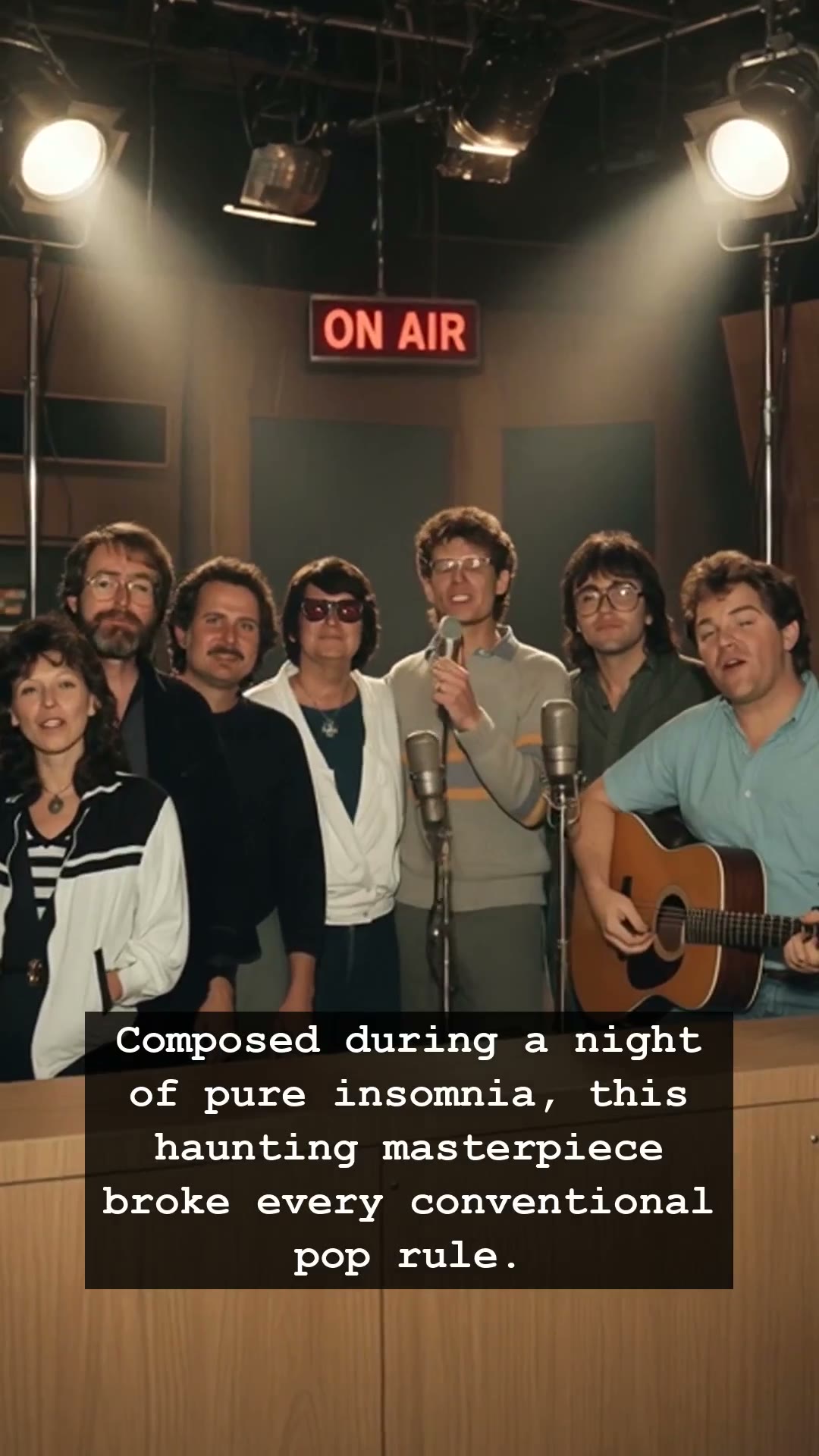
It was 1963, a year defined by the crackle of vinyl on jukeboxes and the growing hum of a changing America. While the world was obsessed with the upbeat pop formulas of the early sixties, one man sat alone in the hollow silence of a sleepless night, grappling with the ghosts of his own past. Roy Orbison was not a conventional performer; he was a master of melancholic operatics who understood that pain, when transmuted into a melody, could last forever. As the moonlight filtered through his window, he didn’t reach for a typical love song structure. Instead, he crafted a surreal, haunting masterpiece that defied every rule of pop music ever written: In Dreams.
Most chart-topping tracks of that era followed a predictable path: verse-chorus-verse-bridge. But Roy Orbison cared little for the constraints of the three-minute radio format. He treated music like a cinematic landscape, allowing his voice to swell and retreat like an incoming tide. When he recorded the song, he took the listener on a jarring, beautiful descent into the subconscious. The track famously shifts through various tempos and keys, moving from a conversational intimacy to a soaring, orchestral crescendo that feels almost predatory in its emotional intensity. It was raw, it was deeply personal, and it was utterly terrifying to the record executives of the time.
Roy Orbison was already a man marked by the heavy shadows of his own history, having faced profound personal tragedies that would have broken a lesser soul. Perhaps that is why his voice carried such a distinctive, trembling vibrato—it sounded like a man standing on the edge of a cliff, singing to the abyss. When he sang, he wasn’t just performing; he was exorcising the demons that kept him awake during those long, lonely nights. This vulnerability made him a unique outlier in an industry that preferred polished idols and manufactured smiles. In the era of the burgeoning transistor radio and the first inklings of a cultural shift, he remained an enigmatic, black-clad figure of sorrow.
Decades later, the song found a new life as a cornerstone of surrealist cinema, most notably in the dark, neon-soaked world of David Lynch, where it became a haunting anthem for the brokenhearted. It serves as a reminder that the most powerful art often stems from our deepest moments of isolation. Whether you heard it on a worn-out record player in your childhood living room or discovered it much later, the song retains that same hypnotic power. It transcends the specific era of its creation, remaining a testament to the fact that some emotions are simply too large for a standard musical structure to contain.
Today, we look back at the career of Roy Orbison as a masterclass in emotional honesty. He didn’t just sing songs; he orchestrated experiences that forced us to feel the weight of our own memories. Even now, when those opening chords strike, the world seems to go quiet, pulling us back into that same sleepless room in 1963. While the trends of the music industry have shifted from the jukebox to the digital stream, the haunting brilliance of his work remains untouched by time. Close your eyes, listen closely, and you might just find yourself drifting into his dream.