
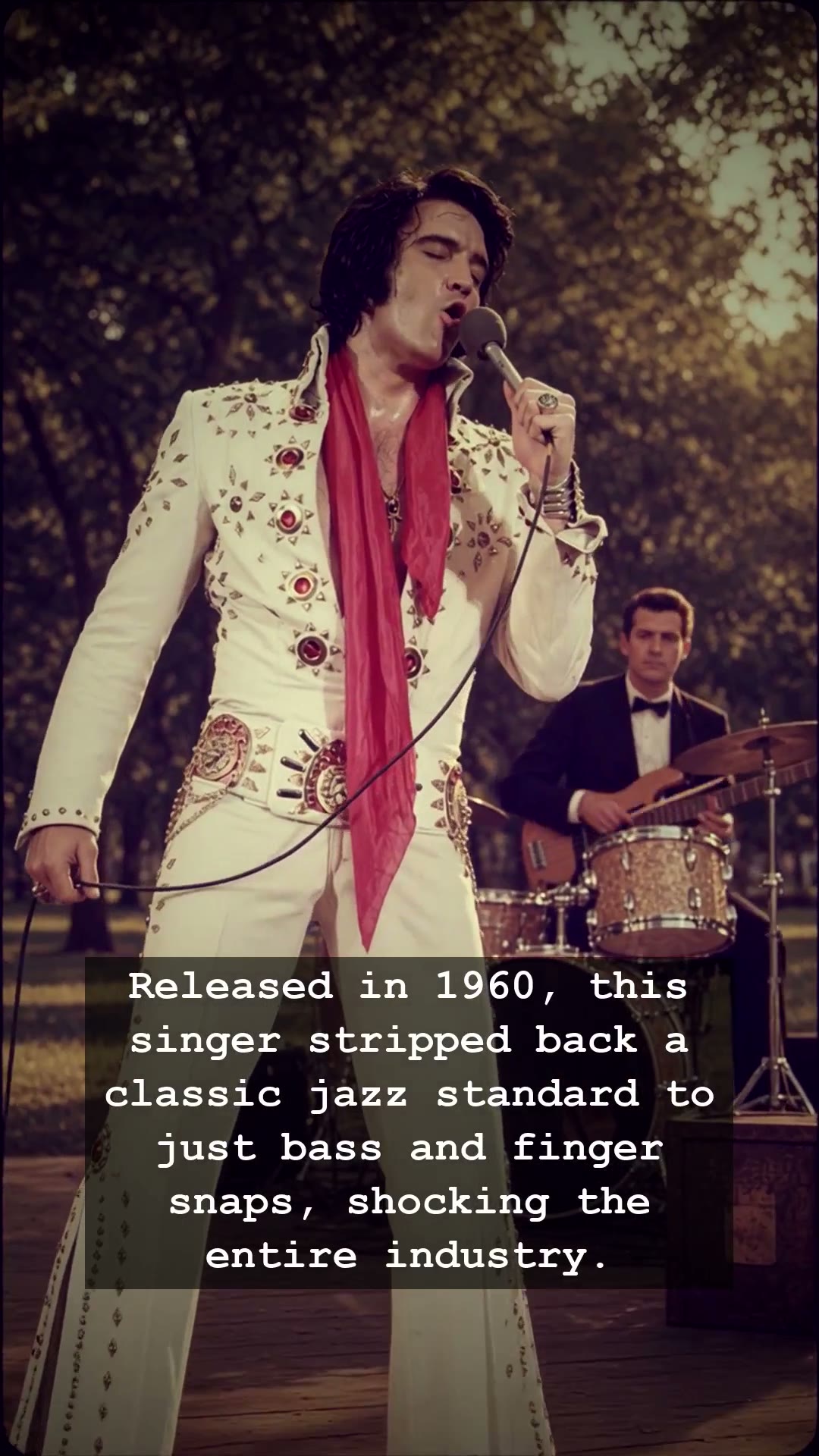
It was 1960, and the world was still reeling from the cultural earthquake that Elvis Presley had triggered throughout the previous decade. While his early hits were characterized by the frantic, hip-shaking energy of rockabilly, Elvis was restless. He craved more than just the screaming adoration of teenagers; he wanted to prove he was a musician capable of nuance. When he stepped into the studio to record Fever, a song famously immortalized by Peggy Lee, he didn’t lean into the grandeur of a big band or the polish of a symphonic arrangement. Instead, he made a choice that left his producers and the industry establishment absolutely baffled: he stripped the track down to nothing but a walking bass line, the snap of his fingers, and his own breathy, intimate vocals.
At the time, this minimalist approach was viewed as professional suicide. The music industry of the early 1960s was obsessed with lush, wall-of-sound production, and the idea of a superstar like Elvis Presley delivering a performance so stark and eerie felt like a direct challenge to the status quo. The raw, guttural resonance of his voice, combined with the skeletal instrumentation, created an atmosphere that felt dangerously close and personal. For the traditionalists who expected the usual spectacle, this wasn’t just a song—it was a provocation. It turned a familiar jazz standard into a dark, nocturnal meditation on obsession that felt miles away from the bright, jukebox-ready pop hits dominating the airwaves.
This recording session captured the King of Rock and Roll at a fascinating crossroads. Elvis Presley was grappling with the crushing weight of global fame, the stifling nature of his management, and the looming realization that the rock ‘n’ roll landscape was beginning to shift toward new horizons. By choosing to record Fever in such a stripped-back manner, he wasn’t just interpreting a standard; he was reclaiming his own artistic narrative. There is a palpable tension in the recording that suggests a man trying to find a quiet space within a life that had become an unceasing, deafening roar.
Decades later, the impact of this performance remains undeniable. In an era where production often masks the soul of a singer, Elvis Presley reminds us that the most powerful tool in the studio is, and always will be, the voice itself. That signature bass line continues to echo through the halls of music history, serving as a blueprint for every artist who chooses to prioritize raw emotion over studio trickery. It remains a testament to the fact that sometimes, the most revolutionary sound in the room isn’t the loudest, but the one that feels the most honest.
As we look back on the legacy of the man from Tupelo, it is these moments of rebellion that define him more than the gold records or the sequined jumpsuits. He was a master of his craft who knew exactly how to make the world stop and listen, even when he did so by barely making a sound. The legend of that 1960 studio session lives on, proving that Elvis Presley was always one step ahead of the people who tried to keep him inside a box. When you listen to Fever today, you are hearing the sound of a legend daring to be different, and that is a rhythm that will never go out of style.