
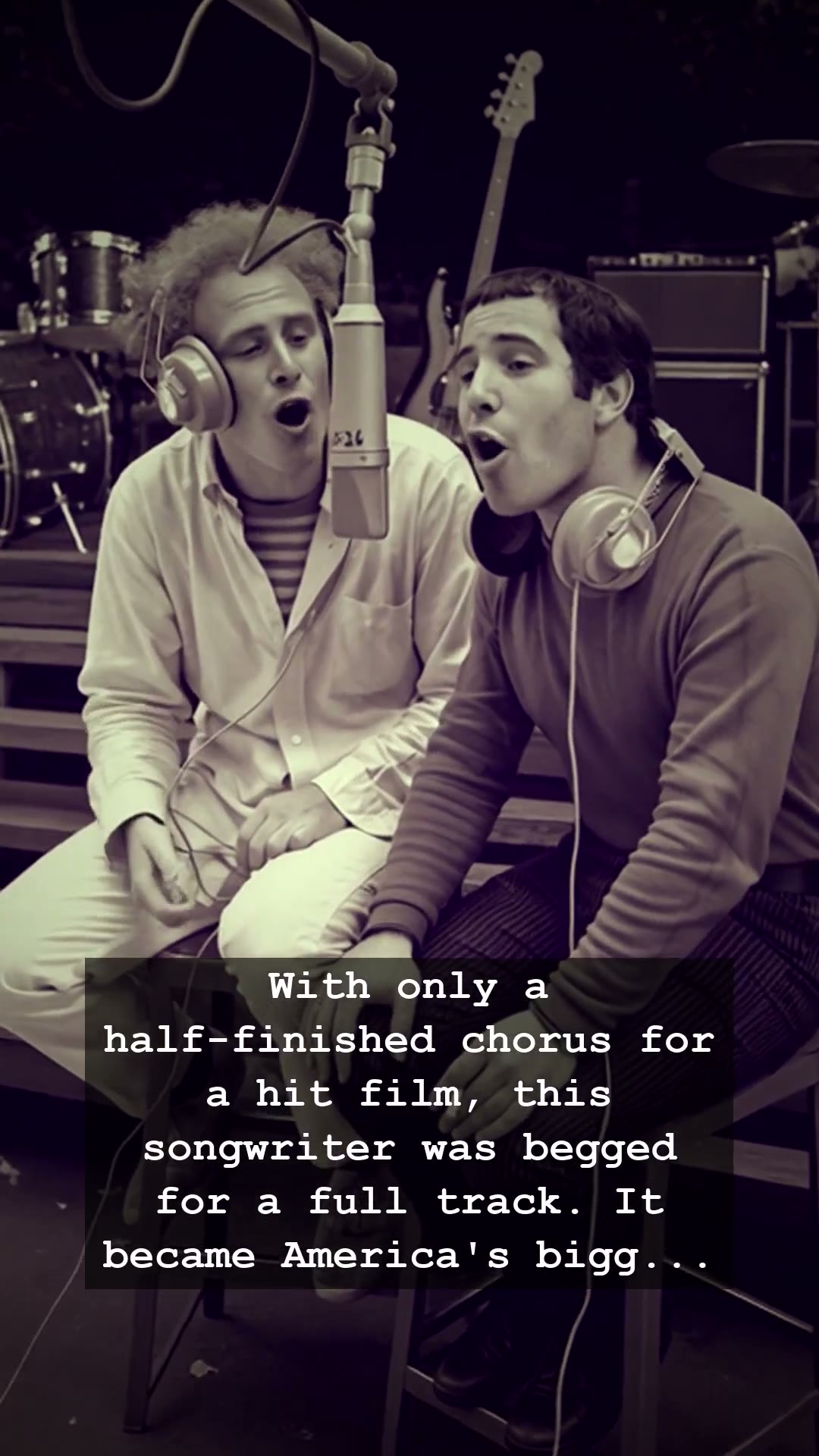
It started as a nervous, half-finished melody scribbled on a notepad, a fragment of an idea that seemed destined for the cutting room floor. In 1968, Mike Nichols, the ambitious director behind the counter-culture masterpiece The Graduate, was desperate. He needed a sound that captured the restless, shifting soul of America, but he didn’t have a finished song. He turned to a young duo who were already making waves in the folk scene. He begged Paul Simon for a complete track, literally pulling it out of him under the pressure of a looming release date. What emerged from that creative friction wasn’t just a film score addition; it became the biggest folk-rock anthem of a generation: Mrs. Robinson.
At the time, Simon and Garfunkel were balancing on the knife-edge of superstardom. The folk movement was evolving, and their harmonized melodies provided the perfect soundtrack for a society caught between the rigid structures of the post-war era and the blossoming rebellion of the late sixties. As you listen to the rhythmic, building guitar strum that defines the song, you can almost feel the static of an old transistor radio in a wood-paneled living room. It was the era of the jukebox and the communal record store, a time when a song didn’t just top the charts; it defined the collective mood of an entire nation.
The genius of the track lies in its bittersweet longing. While the lyrics focused on the enigmatic Mrs. Robinson, the song became a vessel for a much larger cultural anxiety. Paul Simon had a knack for weaving mundane details into something mythic, and that specific tension between him and Art Garfunkel—their famously fragile, often icy relationship—added a layer of raw, unpolished humanity to their studio sessions. They were two boys from Queens who had conquered the world, yet they were constantly navigating the shadows of their own internal conflicts and the heavy price of fame.
Beyond the screen, the success of the song accelerated the duo’s trajectory into the history books. It solidified their status as the voices of the folk-rock revival, bridging the gap between traditional storytelling and the modern, experimental sounds that would soon dominate the airwaves. Every time the chorus hits, it carries the weight of 1968—the protests, the cultural shifts, and the undeniable magic of a melody that was never supposed to exist in the first place.
Today, the legacy of Simon and Garfunkel remains etched into the bedrock of American music. Whenever you hear the opening chords, you aren’t just listening to a radio hit; you are stepping back into a moment of pure, cinematic serendipity. It reminds us that sometimes, the greatest art isn’t born from careful planning, but from a desperate director, a late-night session, and the undeniable chemistry of two artists whose voices were perfectly tuned to the frequency of their time. Next time you hear the song, listen closely to the harmonies, and you might just hear the ghost of an era that changed everything.