
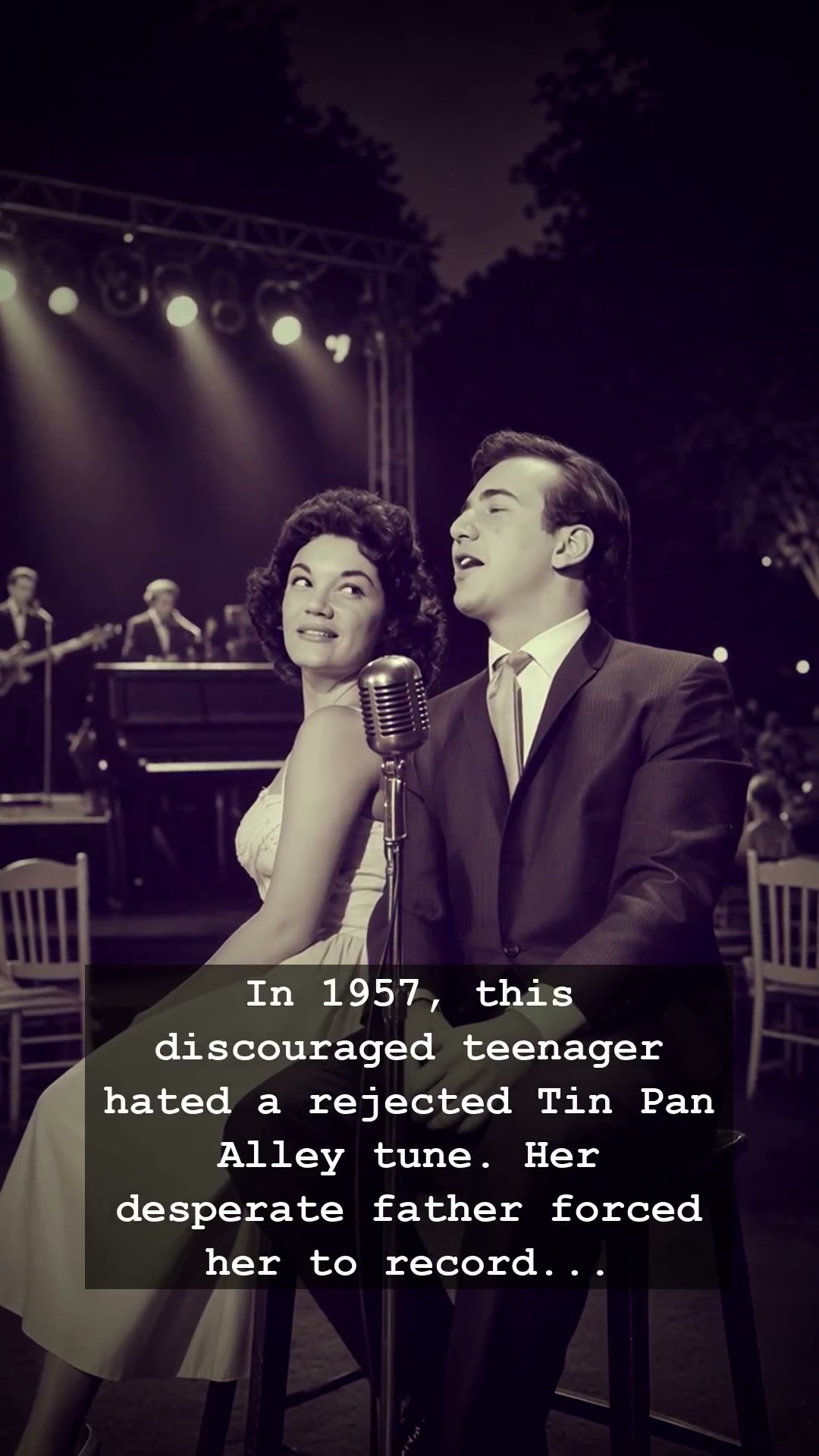
In the smoke-filled air of a 1957 recording studio, a teenage girl sat in tears, convinced that her career was dead before it had even begun. To the world, she was a nobody, but her father saw a vision that she desperately fought against. Connie Francis was ready to walk away from music entirely, tired of the rejection and the cold indifference of the industry. Her father, however, was not about to let his daughter’s potential dissolve into nothingness. He demanded she record a song that everyone else had already discarded—a dusty, forgotten 1923 tune called Who’s Sorry Now?. Little did they know, this act of parental coercion would change the course of pop music history.
At the time, Connie Francis was just another young hopeful trying to make a mark in the competitive landscape of Tin Pan Alley. She viewed the song as a tired relic, something that belonged in a museum rather than on a jukebox. Yet, the pressure to please her father outweighed her own artistic instincts. As she stepped into the booth, something shifted. She channeled all her teenage frustration, heartbreak, and fear into the melody. The resulting track was raw, vulnerable, and undeniably captivating. It wasn’t just a cover; it was a revelation that transformed a dated piece of music into a modern anthem for the late fifties.
When the song finally hit the airwaves, the explosion was seismic. It reached the ears of the legendary Dick Clark, who invited the budding star to perform on American Bandstand. The moment Connie Francis graced that iconic television stage, the world took notice. The girl who had been ready to hang up her microphone just weeks prior suddenly found herself at the center of the American music zeitgeist. The transition from a discouraged teenager to a household name happened almost overnight, a phenomenon that still serves as one of the most remarkable underdog stories in the history of pop.
This breakthrough captured the essence of the transition era, moving away from the pure rock and roll rebellion toward the more polished, soulful pop that would define the early sixties. While the world was obsessed with the flashiness of newly minted stars, Connie Francis brought a sense of grounded, emotional gravity that listeners craved. Her ability to deliver a song with such haunting sincerity turned Who’s Sorry Now? into a timeless record that felt both nostalgic and fresh, perfectly mirroring the shifting cultural tides of an evolving America.
The legacy of that accidental hit remains firmly embedded in our musical consciousness today. It reminds us that behind every polished chart-topping record, there is often a messy, human drama unfolding behind closed doors. Whether it was the pressure of the studio, the expectations of family, or the sheer luck of the right song at the right moment, Connie Francis navigated the turbulent waters of fame with a resilience that is rarely seen. Decades later, her story continues to resonate as a testament to the power of perseverance in an industry that rarely gives second chances. Next time you hear those opening notes, remember the girl who almost walked away, and how one forced melody turned her into an eternal icon.