
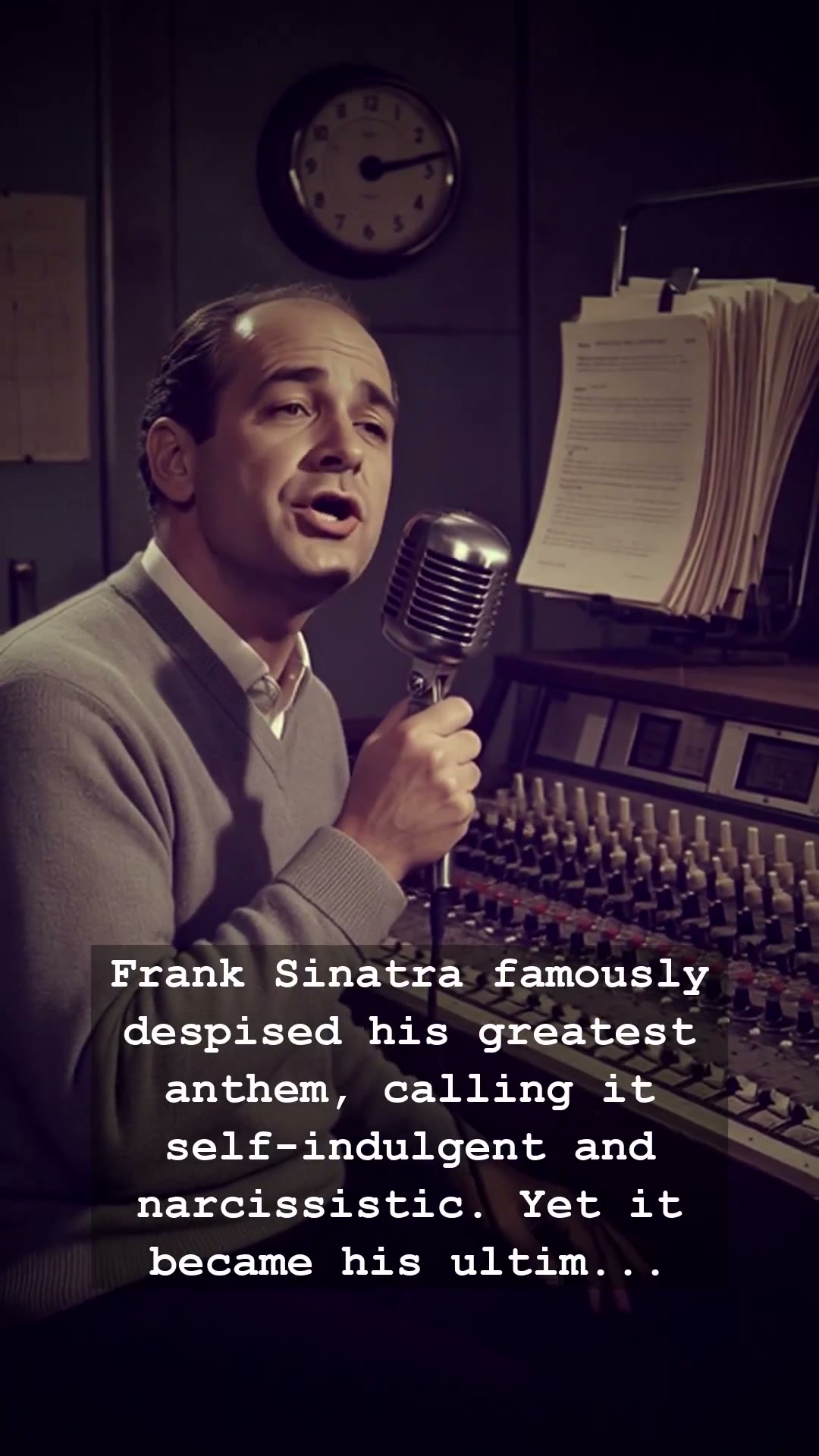
Picture a dimly lit lounge in the twilight of the 1960s, the thick air hazy with cigarette smoke, the clinking of whiskey glasses echoing against the backdrop of a velvet-draped stage. In this golden era of American music, Frank Sinatra reigned supreme as the ultimate icon of cool. Yet, behind the tuxedo and the charismatic smirk, there existed a profound artistic restlessness. Most fans remember My Way as the definitive declaration of a life lived without regret, a bold, brassy anthem of individual triumph. But the truth hidden in the shadows of the recording studio is far more complex. To the man who breathed life into it, the song was a nuisance, a self-indulgent piece of theater that felt increasingly hollow with every passing performance.
Frank Sinatra famously despised the track. He once remarked to his inner circle that the song was narcissistic and lacked the genuine soul he poured into his earlier standards. It was a strange irony that one of the twentieth century’s most legendary voices would grow to loathe his most famous signature hit. As the cultural tide shifted from the jazz-soaked nights of the Rat Pack era toward the raw, electric energy of the burgeoning rock scene, Sinatra felt tethered to a song that didn’t reflect his internal reality. While the world saw an invincible legend, Frank Sinatra saw a caricature of himself that he could no longer escape.
This tension defined the late-career arc of Frank Sinatra. In an era where the Jukebox was being slowly replaced by the ubiquity of the radio and the rising dominance of MTV, Sinatra struggled to reconcile his classic crooner identity with the changing expectations of his audience. My Way became a burden, a mandatory encore that demanded he perform a version of himself that felt scripted and stagnant. He complained that it was self-aggrandizing, a far cry from the nuanced vulnerability he brought to his interpretations of Cole Porter or George Gershwin. Yet, the song’s relentless march toward becoming a global cultural phenomenon proved unstoppable.
Despite his personal disdain, the sheer force of Frank Sinatra’s delivery elevated the track into the rafters of history. It captures that specific, mid-century yearning for autonomy, a sentiment that resonated deeply with the generation defined by the turbulence of the post-war American experience. It was the soundtrack to weddings, funerals, and lonely late-night drives, transcending the singer to become a universal totem of human resilience. Even if the man who sang it felt it was purely theatrical, the world embraced the honesty found in its defiance.
Decades later, the irony remains as potent as the melody itself. We often project our own stories onto the voices we idolize, turning their art into the backdrop of our own lives. Whether or not Frank Sinatra loved it never truly mattered to the millions who found solace in his phrasing. He gave the world the anthem it desperately needed, even if he had to choke down his own pride to deliver it. His disdain only adds another layer of intrigue to a legacy already carved in stone, reminding us that even our greatest masterpieces can feel like ghosts of the people we once were.