
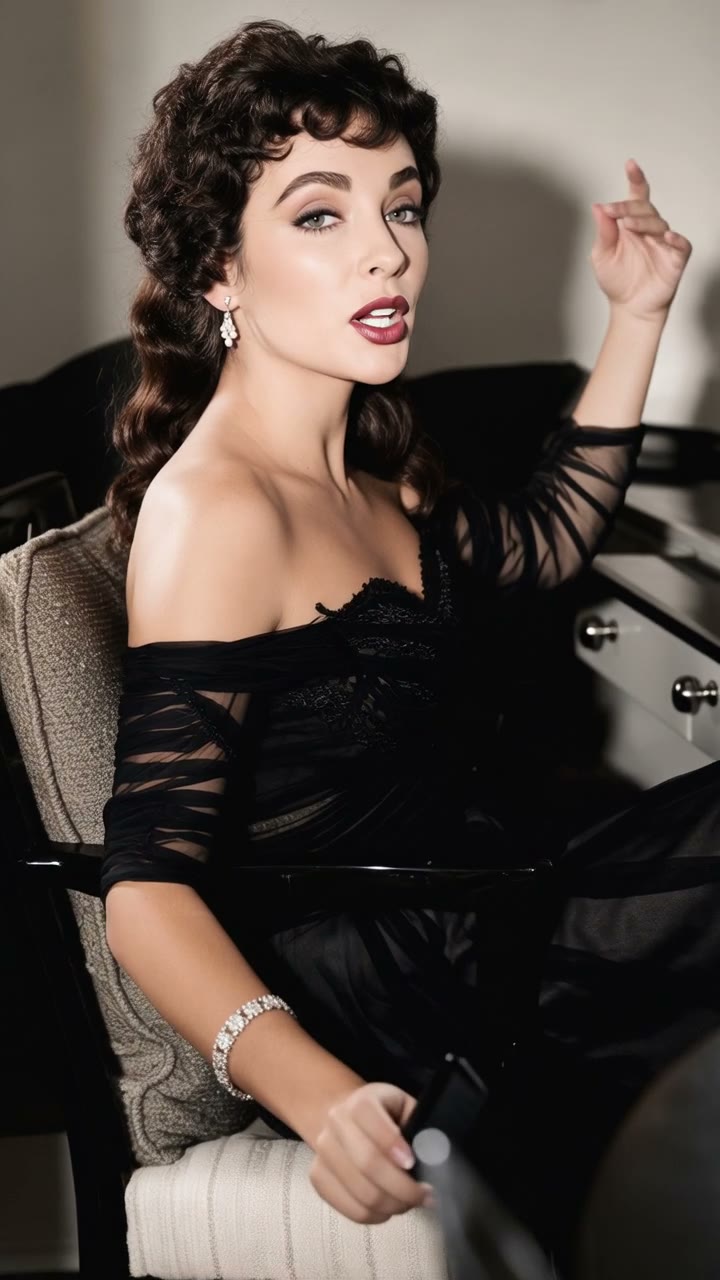
In the mid-1960s, the silver screen was dominated by the radiant, larger-than-life image of Elizabeth Taylor. To the public and the press, she was the ultimate Hollywood icon, a starlet whose personal life often overshadowed her undeniable talent. Yet, beneath the glamour and the flashbulbs of the Golden Age, a different woman was waiting for the right moment to break through. That moment arrived in 1966 with the release of Who’s Afraid of Virginia Woolf?, a film that did not just change a career; it fundamentally altered the course of American cinema, thanks to the visionary guidance of director Mike Nichols.
Mike Nichols, then a burgeoning talent transitioning from his successful comedy career into film, saw something in Elizabeth Taylor that the rest of the world had ignored. He saw the vulnerability, the grit, and the raw emotional power that a traditional Hollywood studio head would have spent years suppressing. By casting her as Martha, a woman aged beyond her years and weathered by complex domestic torment, Nichols challenged the industry’s perception of his leading lady. He stripped away the heavy layers of studio-mandated polish and allowed the camera to capture a performance that was deeply, terrifyingly human.
This partnership was a masterclass in the art of Method Acting. On the set, Nichols pushed Elizabeth Taylor to venture into emotional territories that were often uncomfortable and inherently risky. He demanded a level of authenticity that redefined what it meant to be a movie star. The result was a visceral, haunting portrayal that left audiences speechless during that unforgettable Oscar night. It was no longer just about the beauty; it was about the profound intensity of a performance that felt like a public confession. Her win for Best Actress was a testament to the fact that her craft had finally caught up to her legend.
Looking back, this era represents a pivotal shift in the New Hollywood movement. The transition from the carefully curated stars of the fifties to the complex, flawed characters of the late sixties and seventies owes much to the trust between Taylor and Nichols. Their collaboration turned the film into a blockbuster of human emotion, proving that audiences were ready for darker, more challenging narratives. It was a time when the cinema felt like a mirror held up to our own messy, beautiful lives, moving away from the artificial sheen of the past.
Decades later, the legacy of their work continues to resonate with those who remember the smell of old cinema houses and the tactile thrill of renting a VHS tape. We honor Elizabeth Taylor not just for the jewels or the fame, but for the bravery she displayed under the keen eye of Mike Nichols. They taught us that behind every glamorous facade, there is a story worth telling. Even today, watching their masterpiece reminds us that true greatness in film is found in the moments where the actor finally stops performing and simply begins to exist.