
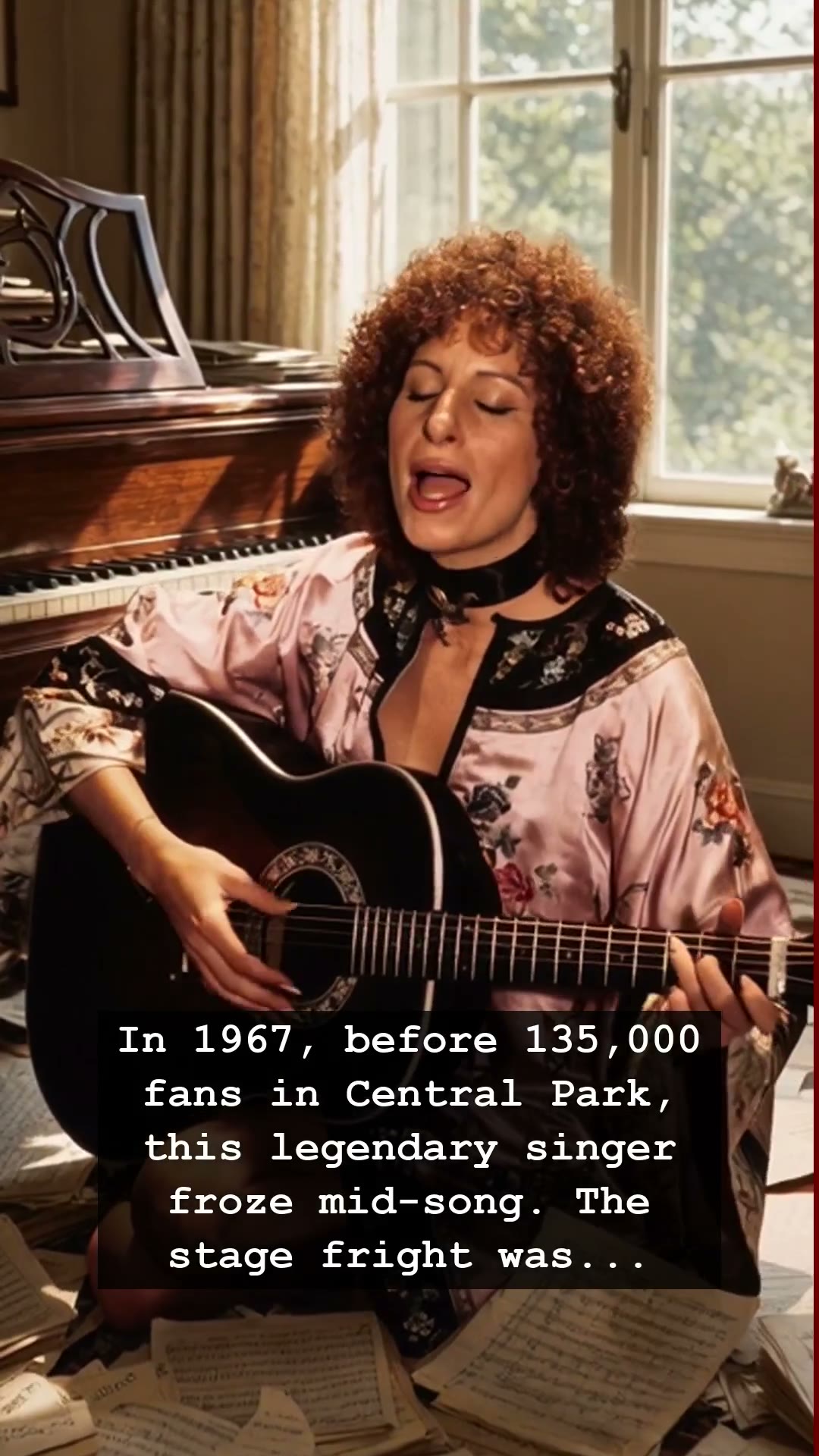
It was the summer of 1967, a time when the world felt like it was shifting on its axis. The air was thick with the scent of rebellion, flower power, and the promise of a new musical dawn. In the heart of New York City, 135,000 people had crammed into Central Park, a sea of faces illuminated by the soft glow of dusk, all gathered for a single purpose: to witness the transcendent voice of Barbra Streisand. She was already an icon, a shimmering star of the Broadway stage and a rising titan of the recording industry. But beneath the spotlight, where the applause should have been a warm embrace, Barbra Streisand found only a suffocating void.
As the orchestra swelled and the crowd reached a fever pitch of anticipation, the unimaginable happened. Mid-song, the music continued to swirl around her, but Barbra Streisand went completely silent. Her mind, usually a precise instrument of melody and lyric, went blank. She stood frozen, the massive crowd blurring into an indifferent landscape of shadows. In that terrifying second, the weight of perfectionism—a ghost that haunted her throughout her career—crashed down upon her. She had forgotten every single lyric. The silence that followed felt like a physical blow, a moment of profound vulnerability that turned a triumphant evening into a personal nightmare.
That night in Central Park became a defining fracture in the history of live performance. The sheer scale of the panic was too much to bear. It wasn’t just a simple mistake; it was an emotional breakdown broadcast to a massive audience. The trauma of that evening was so corrosive that Barbra Streisand made a vow that seemed impossible to keep: she would walk away from live concerts entirely. For nearly three agonizing decades, the woman with the most distinct voice of her generation retreated into the controlled, safe harbor of the film studio. She became a prisoner of her own excellence, terrified that the vulnerability of a live stage would once again expose the cracks in her armor.
During those long years away from the microphone, the world moved on. The Jukeboxes of the seventies played her ballads while the era shifted into the neon pulse of Disco and the gritty reality of the eighties. Fans often wondered why she wouldn’t step out from behind the screen. It wasn’t until the mid-nineties that the world truly understood the depth of the shadow cast by that night in the park. Her return to the stage wasn’t just a comeback; it was a reclamation of her own narrative, a healing process for a performer who had been hiding from the ghost of her own memory.
Looking back, the story of Barbra Streisand’s long hiatus serves as a haunting reminder of the cost of fame. It highlights the brutal pressure placed on the icons of our past, for whom a single lapse in judgment or focus could feel like a total collapse. Her eventual return proved that even the greatest stars are fragile, and their resilience is often found in the very moments they fear the most. Even today, the legacy of that frozen night in 1967 reminds us to hold our legends with a little more grace, knowing that behind the glamour, they are fighting the same human battles as the rest of us.