
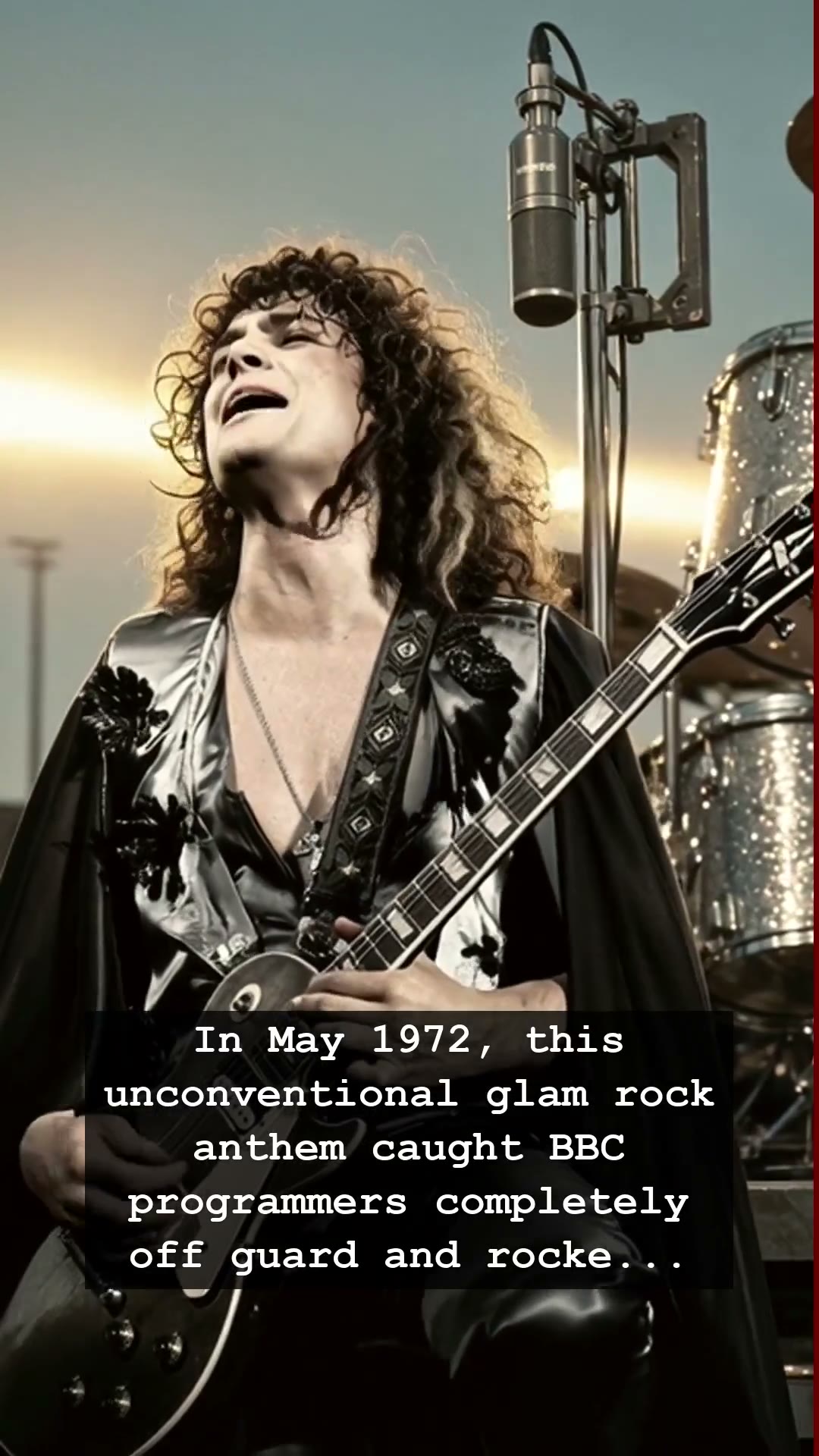
In the spring of 1972, the airwaves were undergoing a seismic shift. While the polished melodies of pop still held sway, a new, glittering monster was clawing its way up the charts, completely blind-siding the suits at the BBC. When the song Metal Guru by T. Rex first hit the airwaves, it didn’t just climb the rankings; it obliterated them. It was a bizarre, infectious piece of sonic alchemy that left music programmers scratching their heads, wondering how a band covered in sequins and glitter could command such absolute, fanatic devotion from the British public.
Marc Bolan, the enigmatic frontman of T. Rex, was not just a musician; he was an architect of a new reality. With his cascading curls, platform boots, and a stage presence that flickered like a strobe light, Bolan had transformed T. Rex from a humble acoustic duo into the pioneers of the Glam Rock movement. Before the era of MTV and the dominance of the synthesizer, Bolan was already capturing the imagination of a generation bored with the earnest, introspective folk music of the late sixties. He brought the fantasy back to the forefront, turning every performance into a neon-soaked spectacle that demanded to be seen as much as it was heard.
The success of Metal Guru was not a fluke; it was the culmination of a meteoric rise that started with the song Ride a White Swan. By the time 1972 rolled around, T. Rex was the epicenter of a cultural phenomenon known as T. Rextasy. Teenagers were not just buying records; they were mimicking Bolan’s every move, mirroring his flamboyant fashion, and treating his lyrics as the gospel of the underground. The BBC, accustomed to more traditional structures, simply didn’t know how to categorize this wall of sound, which blended primitive boogie-woogie rhythms with futuristic, celestial lyrics that felt like they had been beamed down from another planet.
Behind the glitter and the chart-topping success, however, lay the pressures of a lifestyle that would eventually consume its brightest stars. Bolan’s relationship with his bandmates and his internal battles with the newfound weight of fame created a volatile environment. The same energy that fueled the infectious riffs of T. Rex also pushed Bolan toward a darker path, a reality hidden behind the smiles and the camera flashes of the seventies. It is a cautionary tale of how quickly a shooting star can burn out when the spotlight becomes too intense to bear.
Even decades later, the influence of T. Rex remains undeniable. They carved a path for the stadium rockers and the glam icons who would follow in their footsteps, from the theatricality of David Bowie to the raw power of the arena rock bands of the eighties. Whenever you hear those opening chords today, you are transported back to a time when music was an act of rebellion. The story of T. Rex is a reminder that in the face of mediocrity, all you need is a little bit of magic, a whole lot of grit, and the courage to change the world one anthem at a time.