
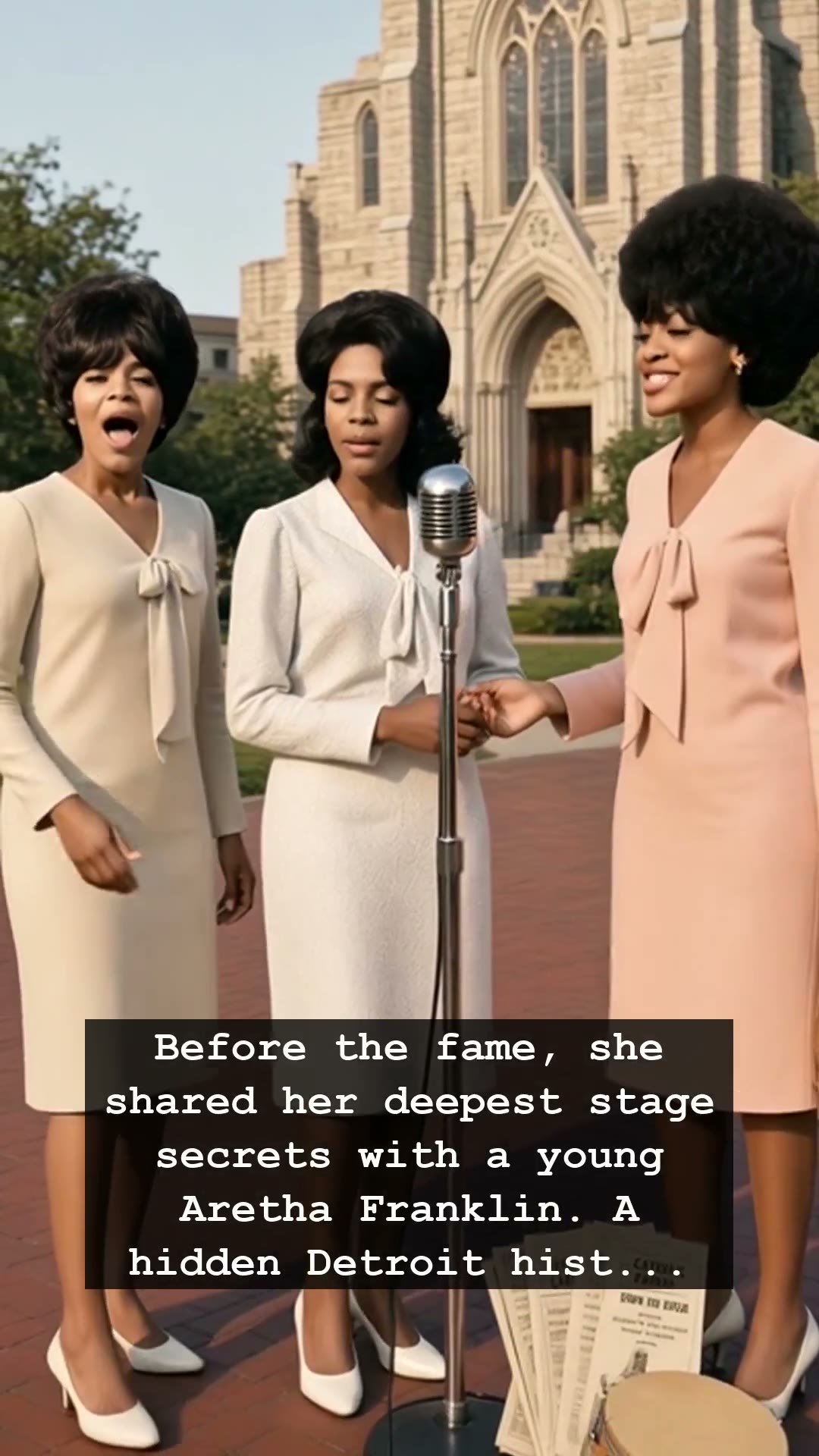
Before the glitter of The Supremes captured the world and the iconic Motown sound defined an entire generation, there was a raw, unfiltered Detroit that history often chooses to overlook. In the humid, crowded gospel churches of the late 1950s, a young, powerhouse talent named Florence Ballard shared the stage with a burgeoning prodigy named Aretha Franklin. Long before the global superstardom, the furs, and the sold-out arenas, these two voices were weaving through the pews, bound by a sisterhood of gospel rhythms and the shared dream of escaping the industrial grit of their hometown. It was a time of innocence, where music wasn’t a product of a boardroom, but a desperate, beautiful prayer for something more.
Florence Ballard was the heartbeat of the original trio that would eventually become the legendary Supremes. Her voice carried a richness that grounded the group, a deep, soulful resonance that resonated with the street-corner cool of early Motown. Many fans today remember her only for the messy, heartbreaking departure from the spotlight, but that narrative ignores the true fire that defined her beginning. Between sets and rehearsals, Florence and Aretha Franklin shared secrets of vocal technique and the biting pressures of growing up in a city that demanded perfection. It was a fragile, fleeting connection, a moment in time before the fame machine stripped away their autonomy.
As the 1960s roared to life, the transition from local stages to international fame proved to be a double-edged sword. While Motown’s polished aesthetic and carefully curated image propelled the group into the pantheon of pop culture, it also began to fracture the foundation of who Florence Ballard truly was. The relentless pace of world tours, the pressure to conform, and the inevitable internal friction led to a decline that was as public as it was painful. While the world was dancing to the upbeat tempo of their chart-toppers, the woman behind the voice was quietly being pushed into the shadows. It is one of the great tragedies of soul music history that a talent of her magnitude was eventually eclipsed by the very machine she helped build.
We look back at the era of the jukebox and the transistor radio, hearing those tracks and remembering a simpler time, yet the story of Florence Ballard serves as a somber reminder of the dark side of the dream. Her struggle with the pressures of the industry remains a poignant chapter in the annals of American music. It wasn’t just about the chart positions; it was about the loss of identity in a world that favored the brand over the person. Her legacy is one of resilience and raw, unvarnished talent that deserved far more than the tragic silence that met her final years.
Today, we keep the music alive to honor those who laid the path, but we also owe it to them to remember the humanity behind the hits. Whenever you hear the unmistakable melody of an early Motown classic, listen closely for the strength in Florence Ballard’s delivery. She was more than a footnote in a successful group; she was a pioneer who walked the same path as the Queen of Soul, leaving behind a melody that still whispers to us from the golden age of American music. Do you remember the voice, or have you only heard the echoes of the fall?