
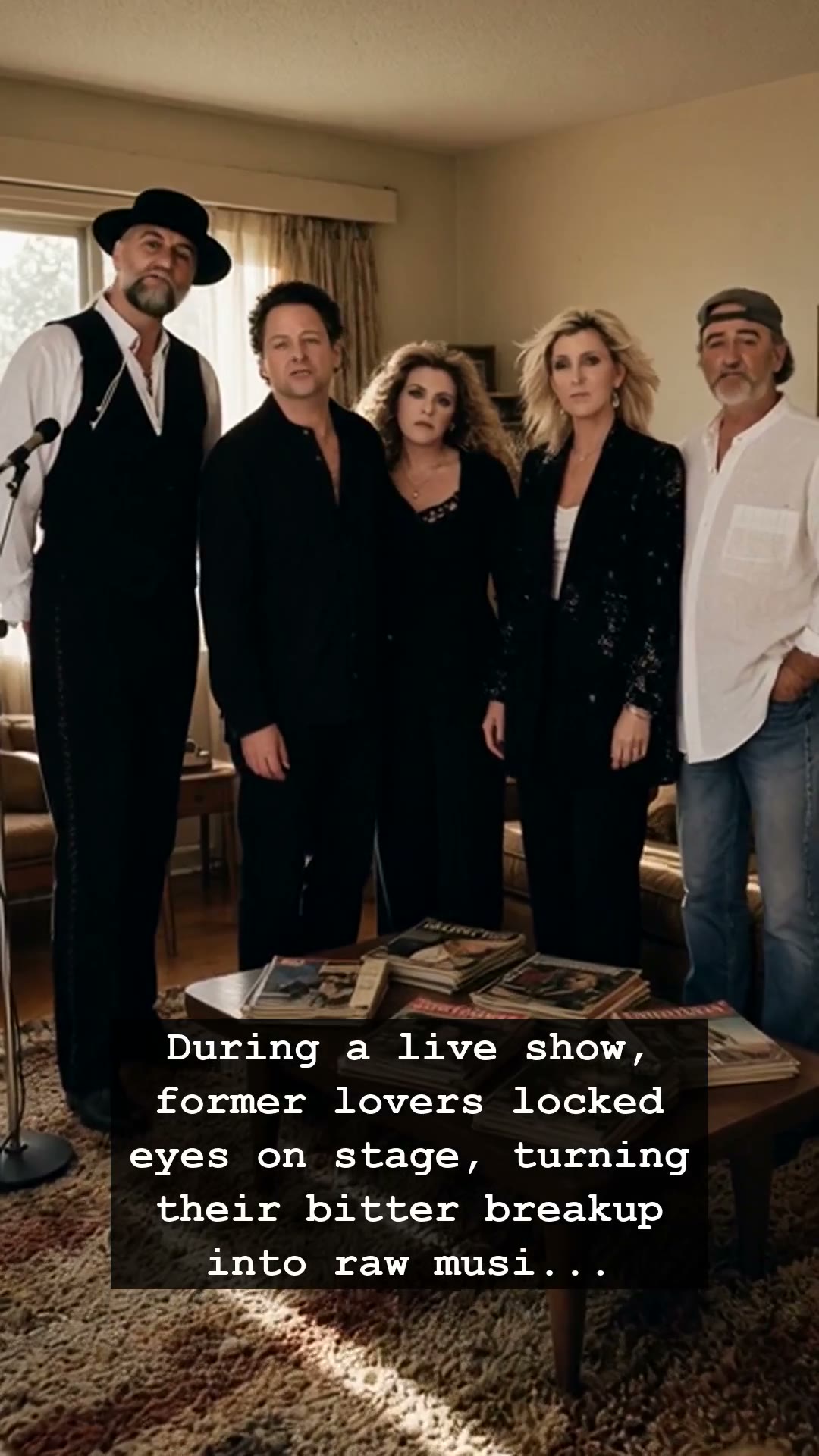
The year was 1997, and the air inside the arena was thick with a tension that had been fermenting for two decades. Under the blinding white glare of the stage lights, Fleetwood Mac stood before an audience that expected magic, never realizing they were witnessing a silent, brutal war. As Stevie Nicks leaned into the microphone to deliver the lines of Silver Springs, she locked eyes with Lindsey Buckingham. It was not a look of professional camaraderie or nostalgic warmth; it was a cold, piercing dagger of unresolved agony. For the thousands in the crowd, it was a legendary performance, but for the band, it was an exorcism of demons that had haunted them since the mid-seventies.
To understand this friction, one must travel back to the mid-seventies, a time when cocaine-fueled excess and creative brilliance collided in the recording studios of California. Fleetwood Mac was more than just a band; it was a collection of fractured souls held together by the glue of hit records. Rumours, the album that turned them into global icons, was essentially a diary of their mutual destruction. While the rest of the world danced to the beat of the late seventies, the members of Fleetwood Mac were busy dissecting each other’s infidelities and shattered promises through lyrics that felt less like songs and more like legal depositions set to a melody.
By the time they reached the 1997 reunion concert, the wounds had arguably never fully healed. The genius of Fleetwood Mac lies in this exact contradiction: their greatest music was born from the wreckage of their personal lives. Every guitar note Lindsey Buckingham struck seemed to carry the weight of a decade of resentment, while Stevie Nicks countered with a vocal delivery that dripped with raw, unfiltered history. It was musical theater of the highest order, where every bar was a battleground and every chorus was a plea for a closure that remained perpetually out of reach.
The magic of this era is why the legend of Fleetwood Mac continues to resonate with generations born long after the vinyl records stopped spinning. They represented the darker side of the American Dream—the reality that behind the fame, the sold-out tours, and the platinum plaques, human beings were struggling with the same messy, irrational heartbreaks as anyone else. There was no artifice in that 1997 performance; it was a snapshot of genuine human pain, preserved in amber for us to revisit decades later.
Looking back, we realize that we didn’t just love Fleetwood Mac for their infectious harmonies or the sleek production that defined the sound of the late seventies. We loved them because they were honest. They gave us permission to be broken, to be angry, and to turn our own private catastrophes into something beautiful. Even today, when that unmistakable rhythm kicks in, we are transported back to that stage, where two former lovers stood across from each other, singing their way through the ruins of a love that refused to die. Perhaps that is the greatest legacy of Fleetwood Mac: the proof that even the most bitter endings can leave behind a masterpiece.