
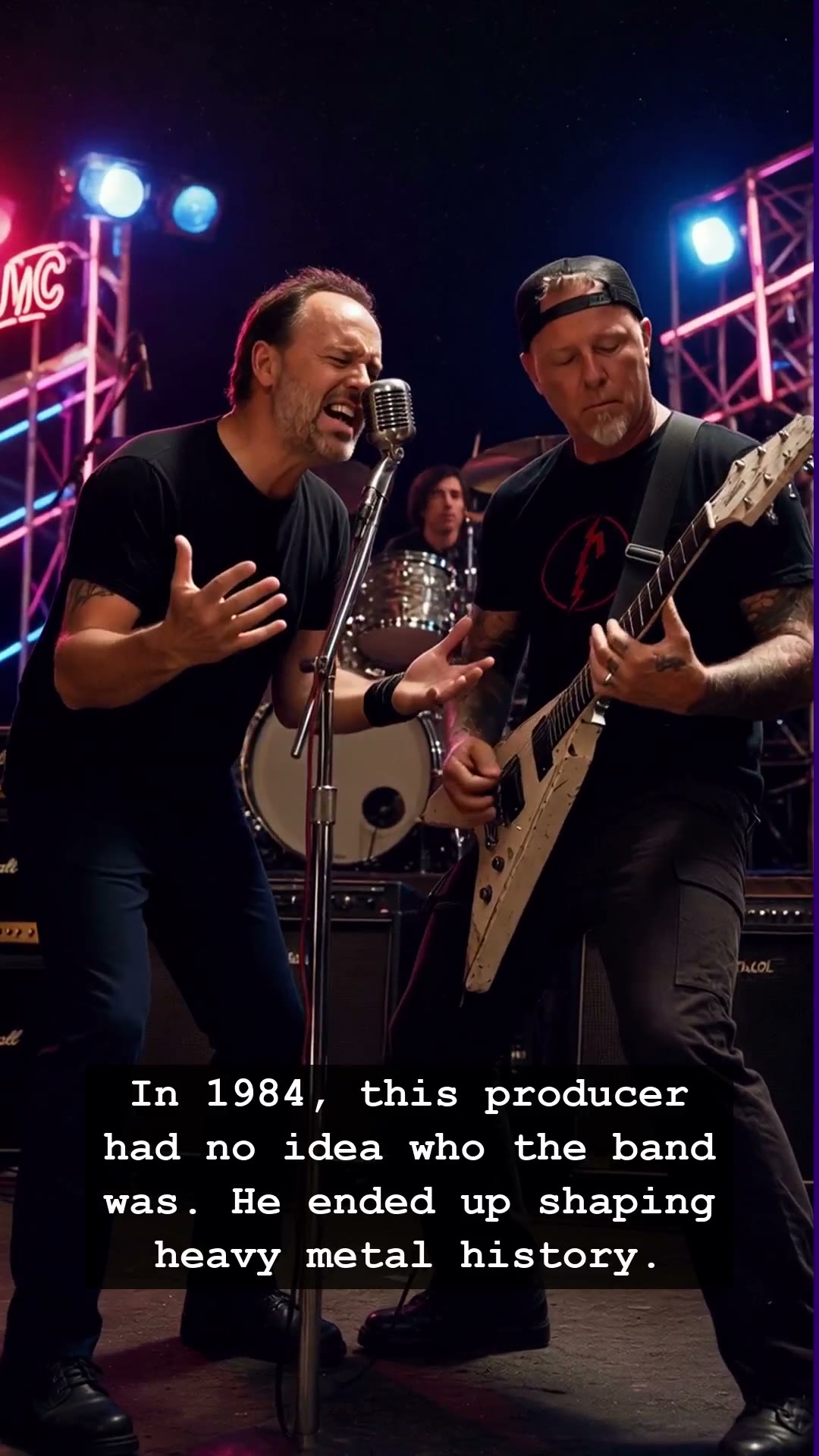
In 1984, the world of music was still reeling from the glossy production of the MTV era, but inside a quiet Danish studio, a quiet revolution was brewing. Flemming Rasmussen, a producer who had built his reputation on intricate, clean soundscapes, walked into the Sweet Silence Studios expecting nothing more than a routine gig. He had never heard of the four scrappy, long-haired Americans standing before him. He certainly had no idea that the band, a fledgling thrash outfit called Metallica, would soon shatter every convention of heavy music. Flemming Rasmussen did not just record an album; he bridged the gap between raw, basement-level aggression and the pristine, arena-ready power that would define the next decade of metal.
The atmosphere in Copenhagen was thick with ambition and the distinct, gritty tension of a band desperate to escape their underground roots. Metallica was young, volatile, and technically raw. When they handed their demo tapes to Flemming Rasmussen, they were seeking a sonic identity they hadn’t yet been able to capture themselves. Rasmussen possessed the rare patience to look past the youthful angst and recognize a singular vision. He didn’t try to sanitize their sound or force them into the radio-friendly structures that dominated the mid-eighties; instead, he pushed them to experiment with studio techniques that were unheard of for a thrash band at the time. He became the calm, technical anchor to their chaotic, high-voltage storm.
Working under the watchful eye of Flemming Rasmussen, the band crafted Ride the Lightning, an album that stands today as a blueprint for modern metal production. Rasmussen’s approach was revolutionary; he taught them how to layer guitars without losing the bite and how to capture the organic resonance of the drum kit, moving away from the thin, mechanical sound of earlier hardcore acts. He allowed the compositions to breathe, letting the epic, cascading bridges and blistering solos command the space. In the process, he became an honorary fifth member, navigating the internal friction and the intense creative pressure that usually tears rising bands apart.
Looking back from our modern age of digital perfection, the work Flemming Rasmussen did in that dimly lit studio feels almost artisanal. There was no auto-tune, no MIDI triggers, and no safety nets. Every heavy, driving riff was tracked with sweat and persistence. He understood that the soul of rock and roll lived in the imperfections, the minor timing slips, and the sheer human effort behind every chord. His influence shaped not just that specific record, but the very sound of the entire genre, setting a standard for depth and clarity that countless bands still chase today.
Decades later, the legacy of that partnership remains untarnished. Flemming Rasmussen proved that a great producer is more than a technician; he is a therapist, a strategist, and a curator of raw talent. He took a group of misfits and helped them find a language that resonated with millions. As we continue to revisit those old cassettes and vinyl records, we are reminded that sometimes, the most profound changes in history happen when two worlds collide unexpectedly. Whether you are a lifelong metalhead or a casual listener, the fingerprints of Flemming Rasmussen are forever etched into the foundation of heavy metal, serving as a reminder of the power of artistic collaboration.