
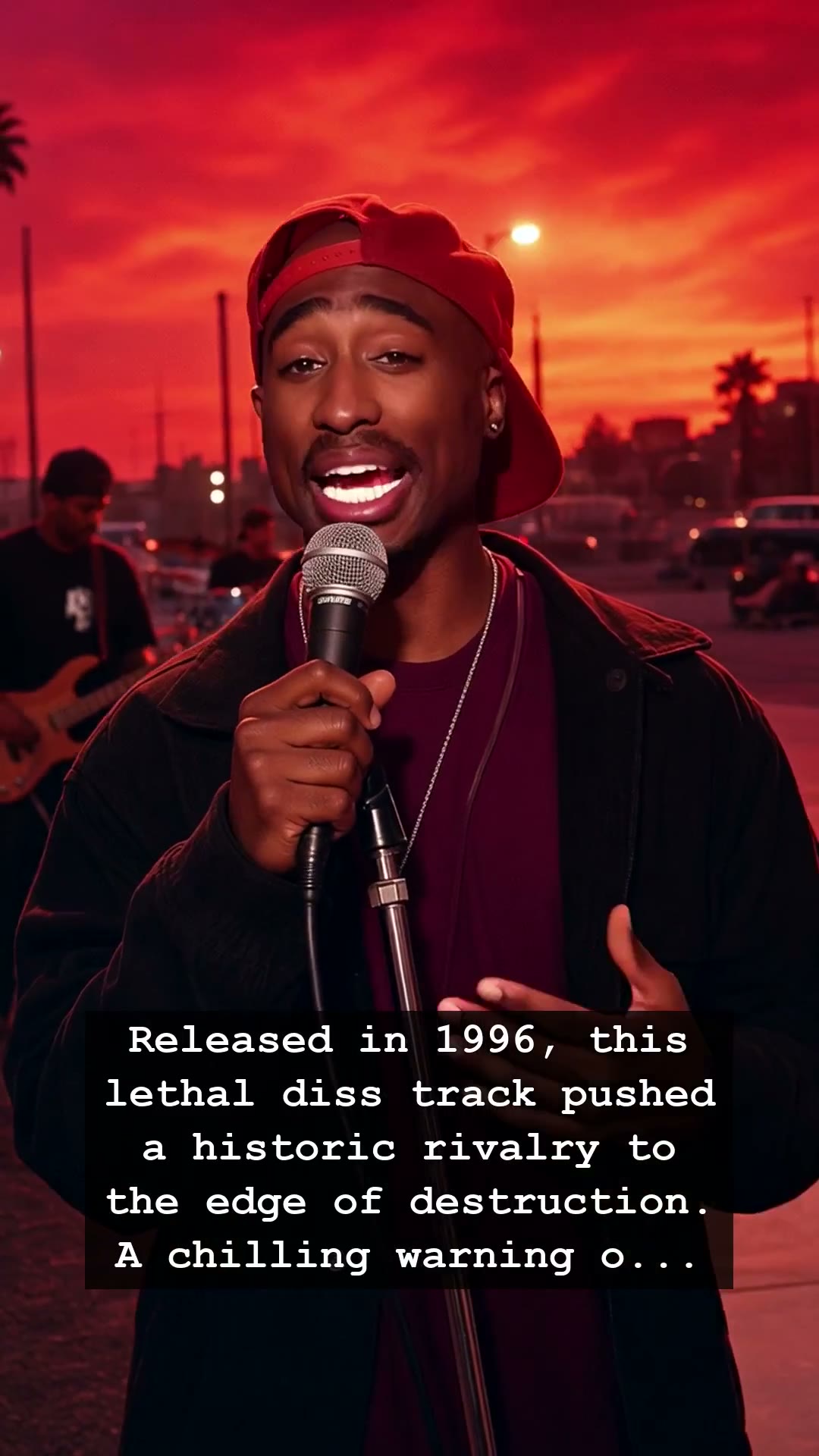
The year was 1996, a time when the hum of the Walkman and the flickering glow of MTV defined the cultural pulse of a generation. In the hazy, high-stakes atmosphere of the mid-nineties, music was more than just sound; it was a battlefield. Amidst this backdrop, one song arrived like a lightning strike, vibrating through car speakers from the streets of Los Angeles to the subways of New York. Hit ‘Em Up by Tupac Shakur was not merely a diss track; it was a sonic declaration of war that pushed the East Coast versus West Coast hip-hop rivalry to the very edge of total destruction. Listening to it today brings back the chilling realization that we were witnessing a countdown to tragedy.
Tupac Shakur, a poet and a firebrand, stood at the center of this storm. Known for his raw, unfiltered intensity, Tupac turned his art into a mirror of his deepest angers and betrayals. When he stepped into the recording booth for Hit ‘Em Up, he wasn’t just performing; he was incinerating bridges. The track was vicious, personal, and unapologetically aggressive. For those of us who grew up in that era, the song represents a haunting duality: it showcases the peak of lyrical prowess while simultaneously documenting the toxic pressure cooker that fame had become. It was the sound of a man who felt the walls closing in, daring the world to look him in the eye as he stood his ground.
Behind the heavy basslines and the aggressive cadence lay a darker reality of industry politics and personal vendettas. The rivalry between Bad Boy Records and Death Row Records had escalated from boardroom disagreements into a genuine, life-threatening conflict. As the media stoked the flames, the artistic community became increasingly fractured. Tupac Shakur, arguably the brightest star of his time, found himself caught in a spiral where the distinction between his public persona and his private survival blurred. The silence that followed the release of the track felt heavy, a stagnant air that preceded the fatal events in Las Vegas just months later.
Looking back, it is impossible to divorce the music from the melancholy of the outcome. Hit ‘Em Up remains a visceral time capsule of 1996, a year defined by the shifting tectonic plates of pop culture. It reminds us of a time when the stakes in hip-hop felt absolute, where lyrical content could trigger real-world repercussions. Tupac Shakur was a complex, contradictory force of nature, and his final artistic outbursts still carry the weight of his unfulfilled potential and the chaotic energy of the decade.
Even decades later, the shadow of that coastal war lingers in the collective memory of Gen X and Millennials. The tragedy of Tupac Shakur serves as a sobering lesson on the intersection of ego, ambition, and the darker side of fame. As we revisit these classic tracks, we are reminded that music is often a reflection of the human spirit at its most vulnerable. Do you remember the moment you first heard the track and felt the shift in the air? The legacy of that era remains etched into our history, forever echoing through the speakers of time.