
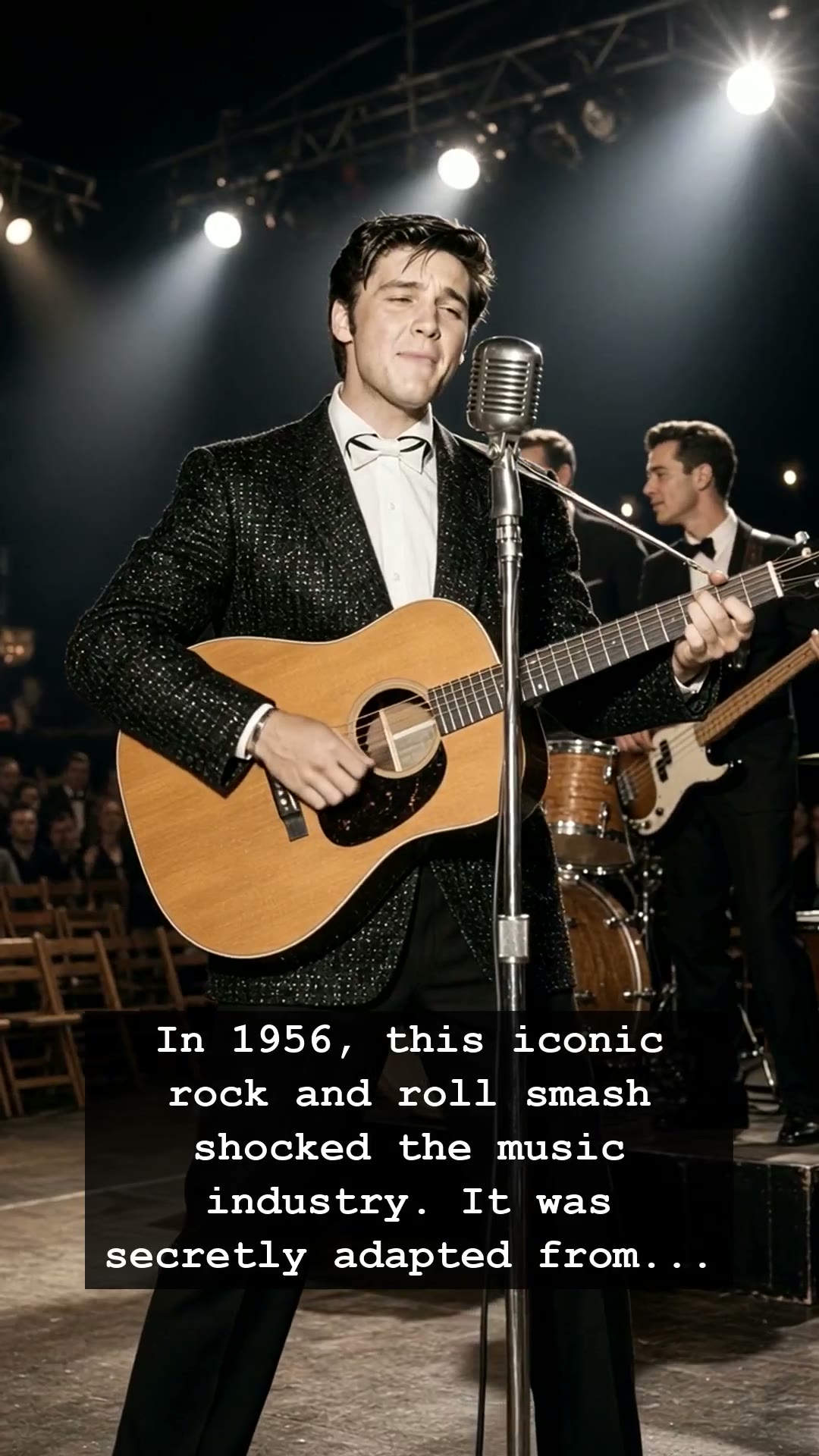
In 1956, the world was spinning on the axis of a young man with a pompadour and a swivel in his hips. Elvis Presley was not just a singer; he was a cultural earthquake, shaking the very foundations of American morality. His music was the soundtrack of a generation shedding its post-war skin, finding release in the raw, unpolished energy of a new sound called Rock and Roll. Yet, beneath the glitter and the screaming fans at the Jukebox, a quiet, legal storm was brewing. It was a scandal that threatened to dismantle the golden reputation of the King himself, rooted in a melody that was far older than the radio waves that carried it to millions of eager listeners.
At the heart of the controversy was a track that had audiences dancing in the aisles, but behind the scenes, legal eagles were sharpening their talons. The song, which quickly became an emblem of mid-century cool, was actually a clever adaptation of a haunting 1861 Civil War tune. This wasn’t a mere homage; it was a structural transformation that caught copyright holders completely off guard. As the song climbed the Billboard charts, attorneys realized that the catchy hook had been lifted from a somber song of the battlefield, a relic of a divided nation that had been repurposed for the rebellious youth of the Eisenhower era. This discovery sparked a fierce ownership battle, highlighting the murky waters of early music publishing.
Elvis Presley often found himself at the center of such creative crossfires. In an era before the digital age, when music was pressed onto spinning vinyl and distributed via physical record stores, the lines between inspiration and imitation were often dangerously blurred. The industry was a wild frontier, and those who managed the King often prioritized the momentum of his fame over the meticulous vetting of song origins. For Elvis, it was about the feeling, the magnetism, and the way he could make a song his own with just a flick of his voice or a sharp intake of breath. He breathed life into notes that had been dormant for nearly a century.
This incident provides a fascinating window into the mid-1950s, a time when television was beginning to dictate culture and the power of a single broadcast could make or break a career. The tension between the old world of traditional publishing and the burgeoning, chaotic energy of the rock era was palpable. Fans did not care about the paperwork; they cared about the electric charge in the room when Elvis took the stage. The legal drama was a footnote to them, yet it serves as a stark reminder of the pressures of stardom and the immense machinery required to keep an icon like Elvis Presley at the pinnacle of his success.
Today, we look back at the mid-century rock explosion with a sense of wonder, marveling at how a simple song could bridge the gap between a 19th-century soldier’s dirge and a 20th-century pop anthem. The story remains a testament to the fact that every great hit has a hidden history, a secret shadow cast by the bright lights of fame. Whether it was the influence of Motown or the grit of early rock, the music of this era still vibrates with a truth that transcends its origins. As we turn the dial on our radios, it is worth remembering the ghosts in the machine that helped shape the soundtrack of our lives.