
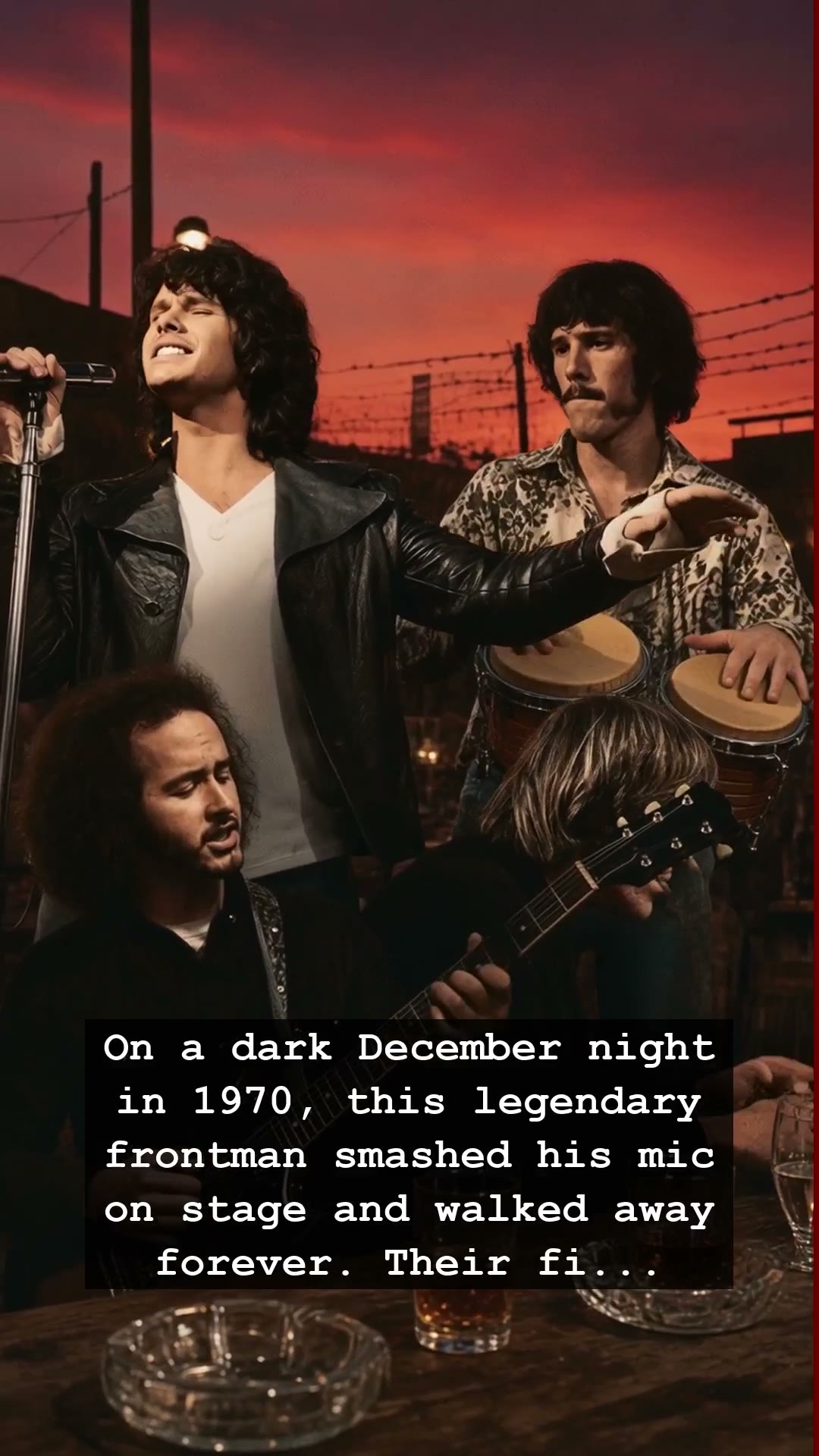
The air inside the Warehouse in New Orleans was thick with sweat, cheap beer, and the unmistakable tension of a band on the brink of disintegration. It was December 12, 1970, and the crowd had come expecting the high-octane spectacle they associated with The Doors. Instead, they witnessed a man falling apart in real-time. Jim Morrison, the lizard king of rock, was not merely performing; he was unraveling. As the set dragged on, the poetic fire that once fueled anthems like Light My Fire had flickered into a smoldering, erratic desperation. In a sudden, violent motion that silenced the room, Morrison smashed his microphone repeatedly into the stage floor, shattering the stand and his own remaining composure. He knelt, stared into the void of the audience, and walked off into the darkness, never to return for another live show with his brothers-in-arms.
To understand the gravity of that night, one must remember the era. The late 1960s had been a fever dream of psychedelic exploration, but by 1970, the hangover of the hippie movement had settled in. The Doors were pioneers of a dark, cinematic sound that defined the West Coast aesthetic, yet they were increasingly suffocated by the pressure of fame. For Jim Morrison, the stage had morphed from a platform of artistic expression into a cage. He was exhausted by the persona the media had built for him, and the rest of the band—Ray Manzarek, Robby Krieger, and John Densmore—were tired of the unpredictability that threatened to derail their musical legacy.
This final performance wasn’t just a bad night at the office; it was the inevitable conclusion of a volatile chemistry that had burned too bright. When Morrison walked off that stage, the music industry was undergoing a seismic shift. The raw, bluesy energy of the late sixties was slowly giving way to the polished production of the coming decade. Yet, in that moment of destruction, The Doors left behind a haunting, unscripted epitaph. It was a cold, stark reality check for every fan in the room, proving that even the biggest legends of the rock world were subject to the crushing weight of their own demons.
Decades later, the legend of The Doors remains deeply etched into the fabric of American rock culture. We look back at that final New Orleans night not with judgment, but with a strange, melancholic reverence. It serves as a reminder that behind every iconic melody and every sold-out arena show lay human beings struggling to survive the chaos of their own making. The microphone smashed to pieces on that stage stands as a monument to the end of an era, a final, jagged exclamation point on a story that, like all great legends, had to eventually burn out.
As we revisit the discography of The Doors today, their music still echoes with a haunting urgency. Whether you hear them on a dusty vinyl record or a streaming service, the ghost of Jim Morrison’s raw, unfiltered presence remains undeniable. It begs the question: if we could go back to that December night in 1970, would we even know how to stop the breaking point? Perhaps some endings are meant to be exactly as they happened—tragic, abrupt, and forever unforgettable.