
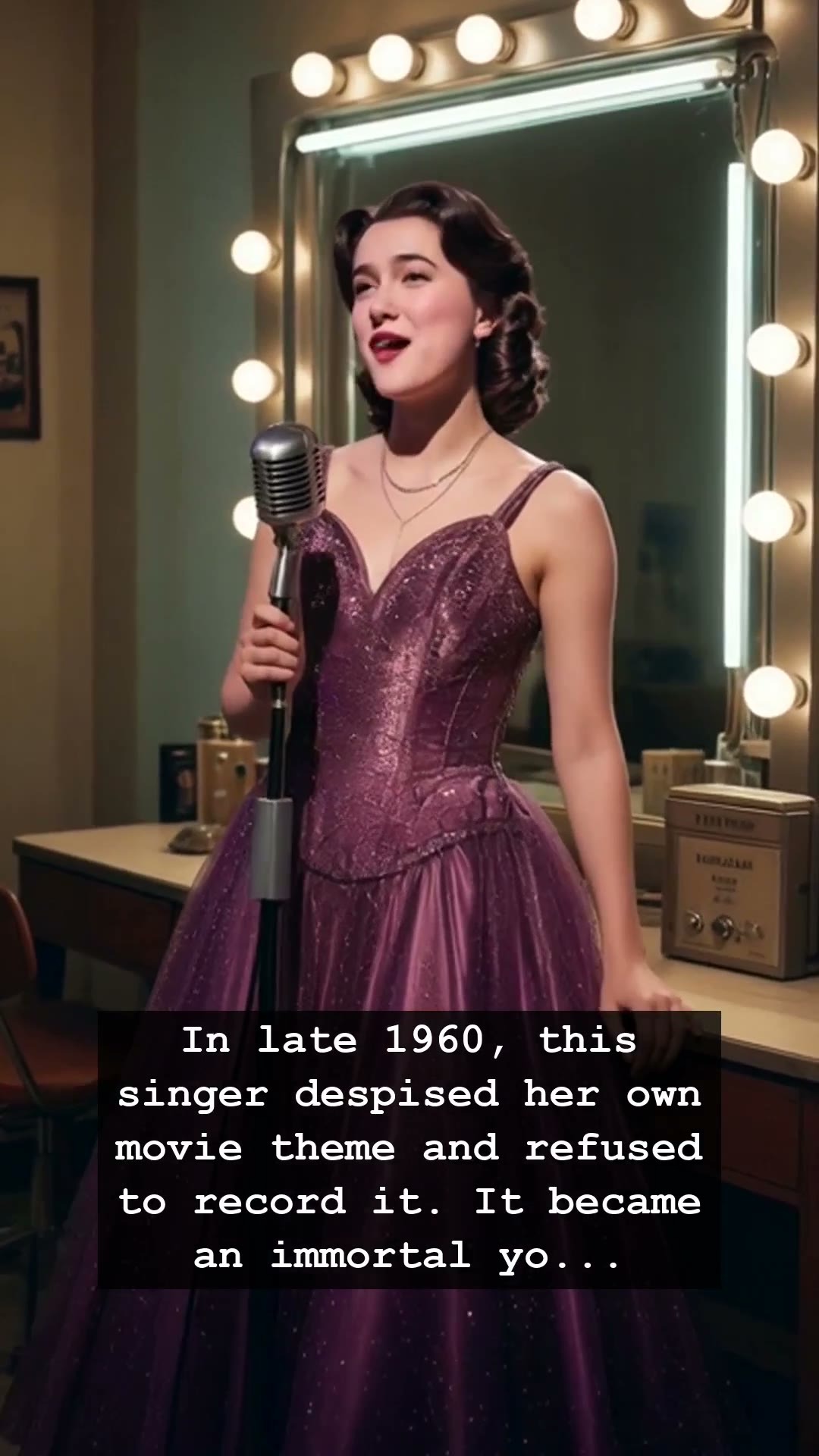
In the winter of 1960, the airwaves were dominated by the flicker of early television and the warm, crackling glow of the Jukebox. Connie Francis, the undisputed sweetheart of American pop, stood inside a sterile recording booth, her arms crossed in defiance. She was staring down a piece of sheet music that she considered nothing more than a cheesy, disposable movie theme. To the young starlet who had already tasted the top of the charts, the song felt beneath her. She flatly refused to record it, convinced that her career deserved more substance than this sugary, melodic filler.
But the music industry of the golden era was not a democracy, and Connie Francis soon found herself cornered by a relentless, stubborn producer. He saw something in the melody that she couldn’t—or wouldn’t—see. After hours of tense negotiation and a fair amount of arm-twisting, she finally stepped up to the microphone. She sang the track with a reluctant professionalism, her voice dripping with the very longing and vulnerability that would soon capture the hearts of millions. She didn’t know it then, but she had just recorded the ultimate soundtrack for a generation of American youth, a song that would become an immortal anthem of the decade.
That song was Where the Boys Are. As soon as it hit the airwaves, it transcended its status as a mere movie tie-in. It became a cultural phenomenon, resonating with teenagers who were navigating the transition from the innocence of the fifties to the turbulent social shifts of the sixties. For Connie Francis, the song became a double-edged sword; she despised its simplicity, yet it remained the defining moment of her storied career. It was a classic case of an artist wanting to be remembered for their craft, only to be forever linked to a song they deemed unworthy of their talent.
Looking back at that era, it is fascinating how the most accidental hits often carry the deepest nostalgia. The success of Connie Francis during this period was not just about the music; it was about the atmosphere of the American dream. Whether listeners were hearing it on a crackling transistor radio or on a grainy screen at the local cinema, the voice of Connie Francis provided the emotional backdrop for their own coming-of-age stories. It remains a testament to the fact that sometimes, the songs we least want to sing are the ones the world needs most.
Today, when that familiar, soaring melody plays, it transports us back to a time of diners, drive-ins, and the bittersweet sting of teenage longing. The friction between the artist and her own hit serves as a reminder of the raw, often messy reality behind the polished veneer of mid-century pop stardom. Connie Francis might have initially rejected the song, but she ultimately cemented her place in history because of it. It is a timeless lesson in how a simple melody can become an indestructible piece of our shared cultural memory, surviving long after the neon lights of the fifties have dimmed.